News / Chronicle
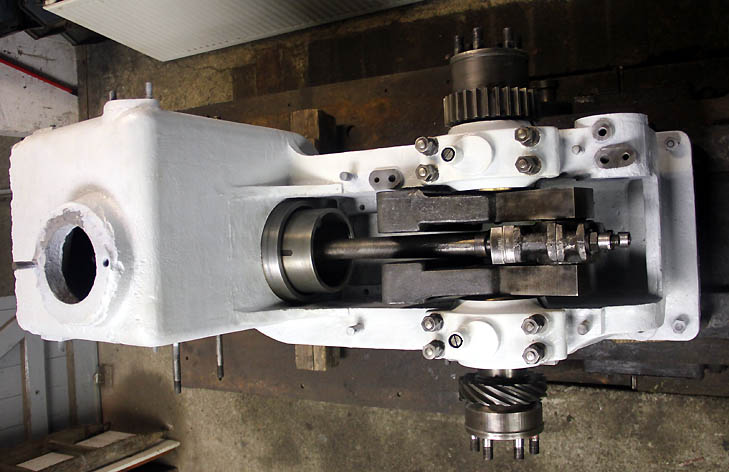
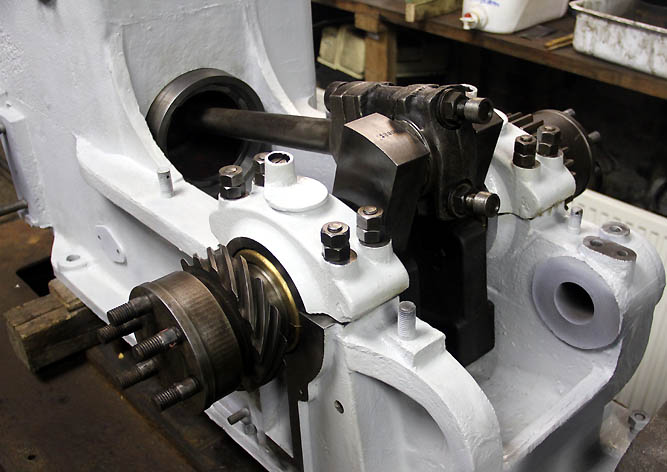
Januar 2016
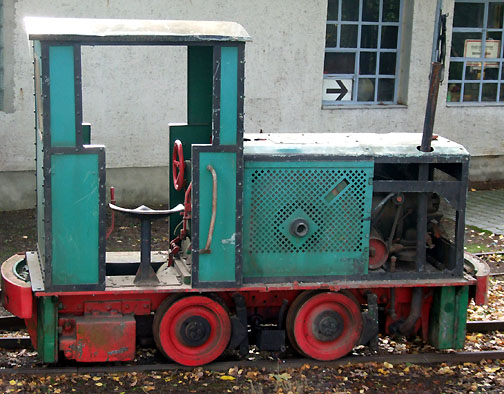
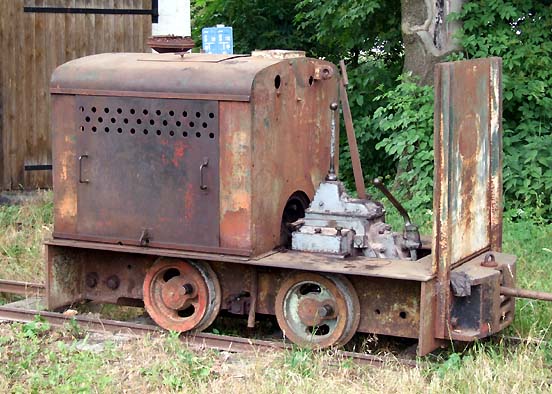
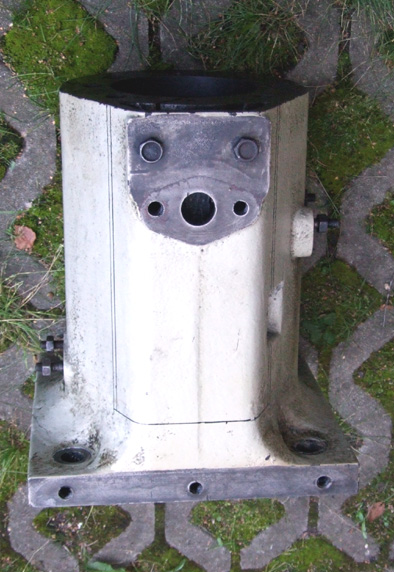
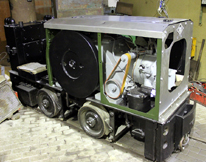
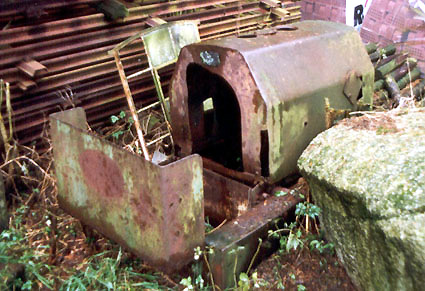
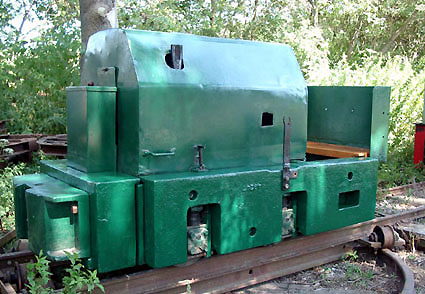
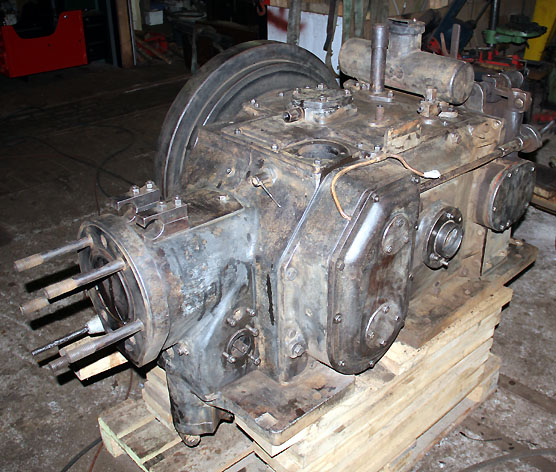
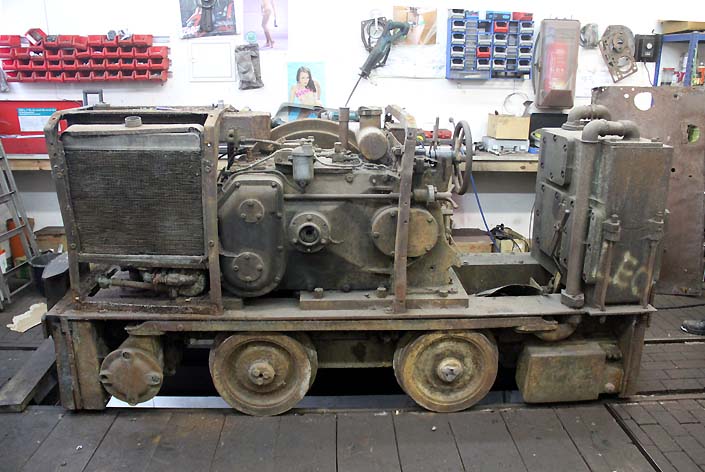
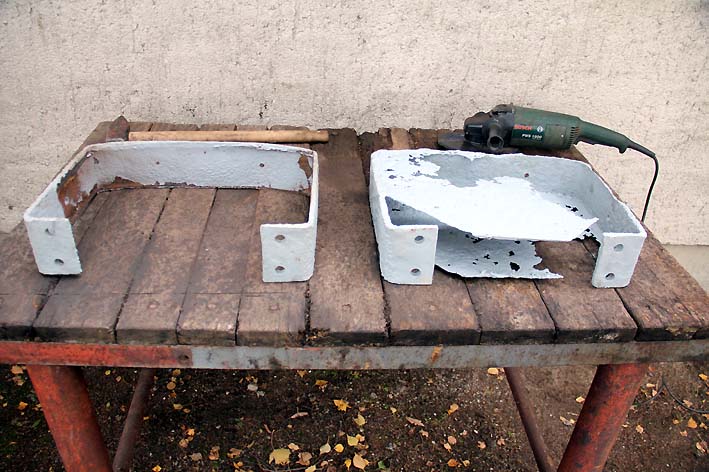
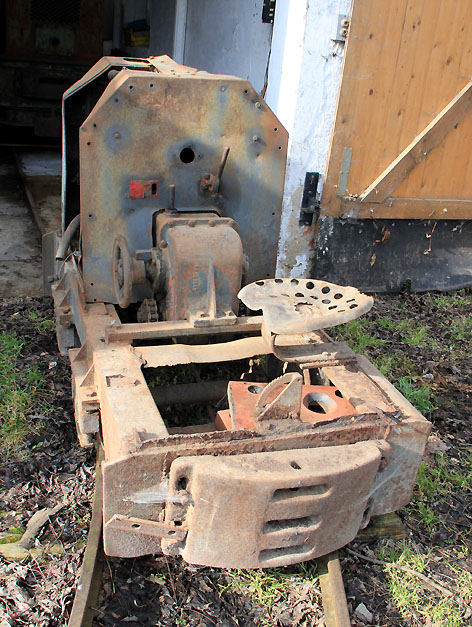
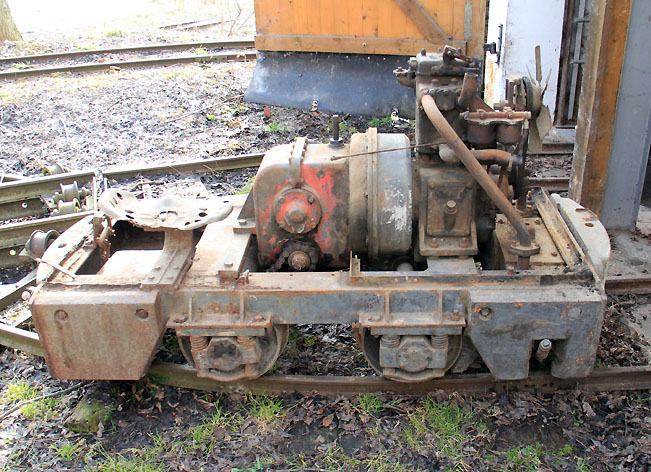
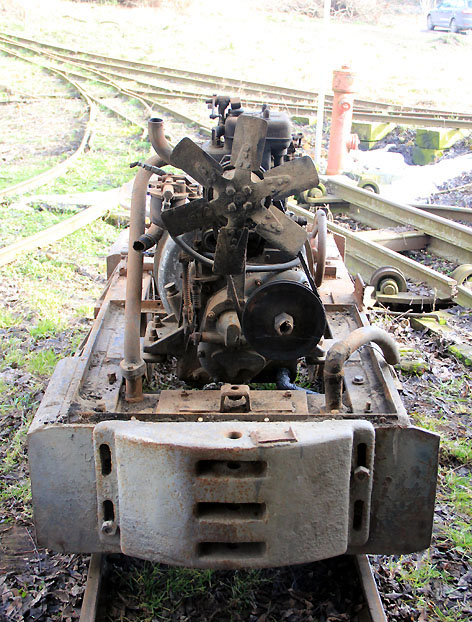
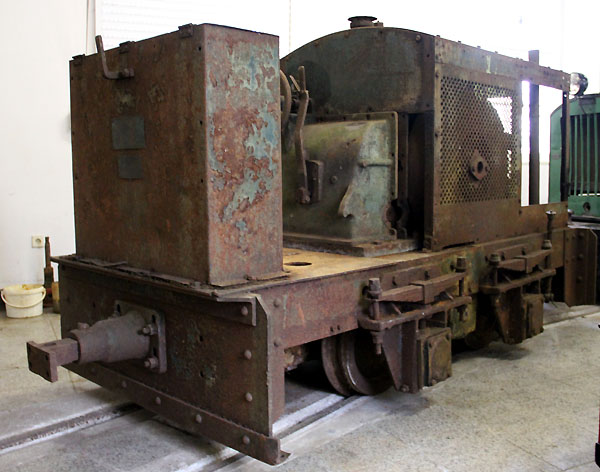
After having demonstrated its work capability
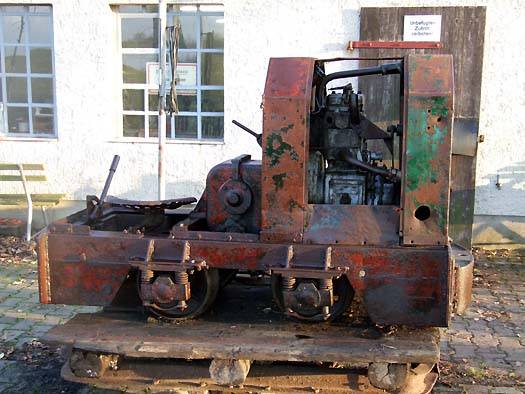
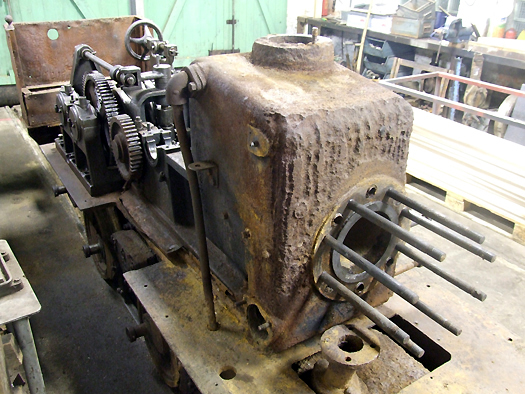
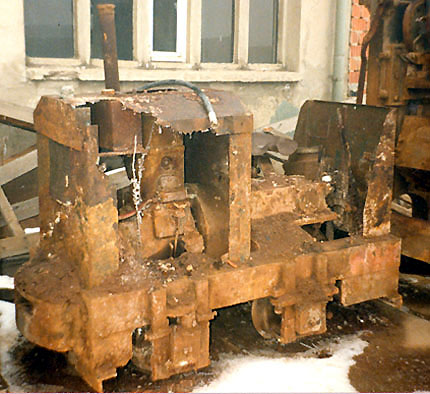
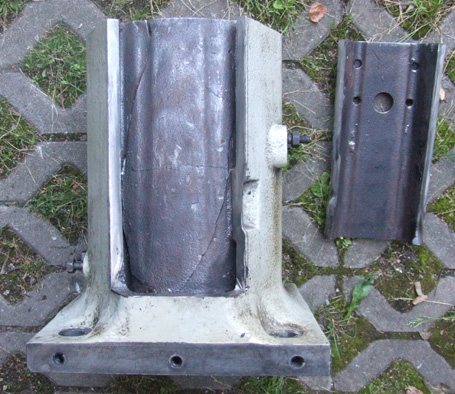
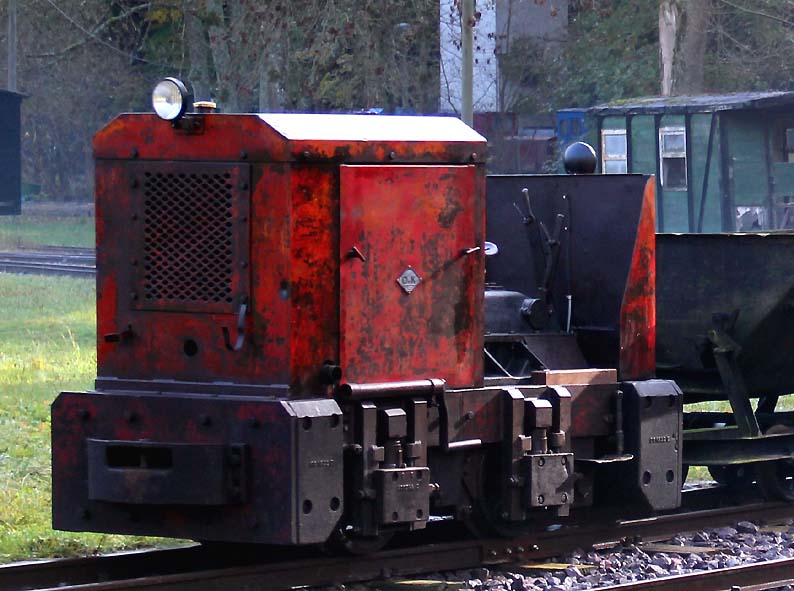
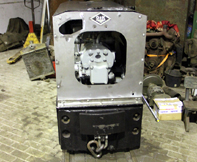
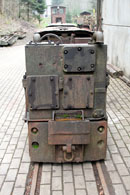
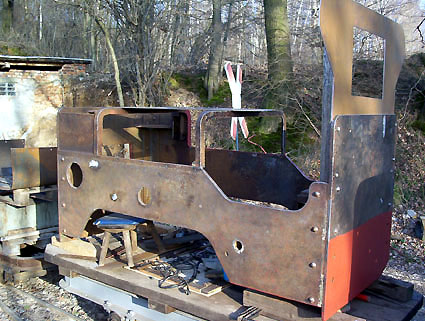
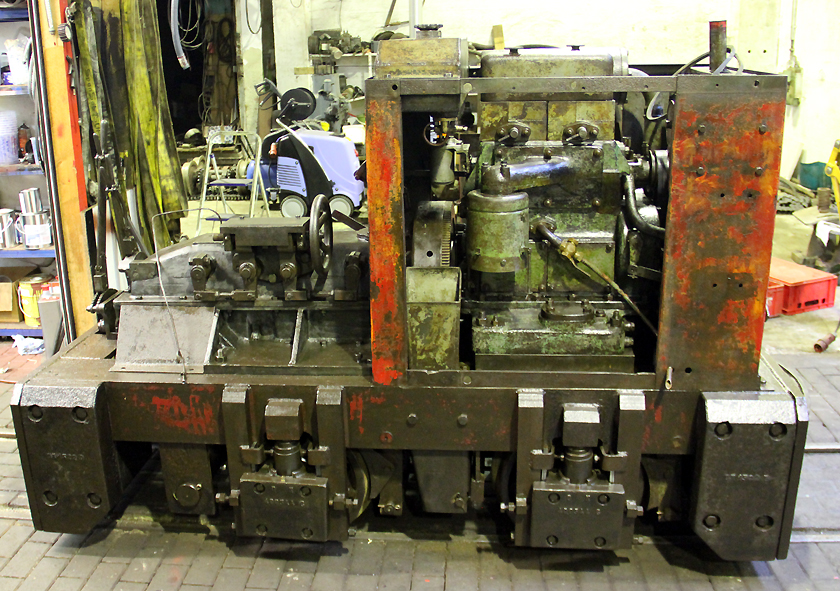
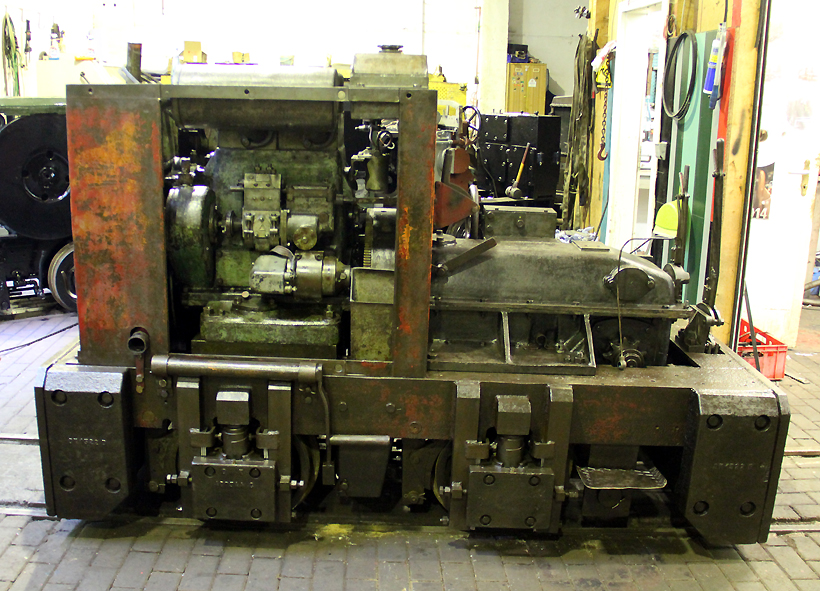
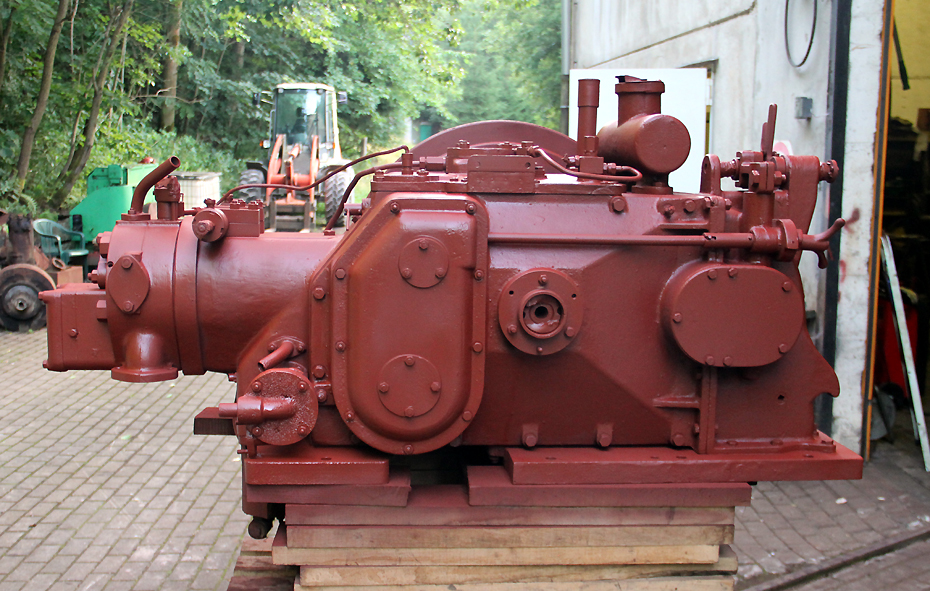
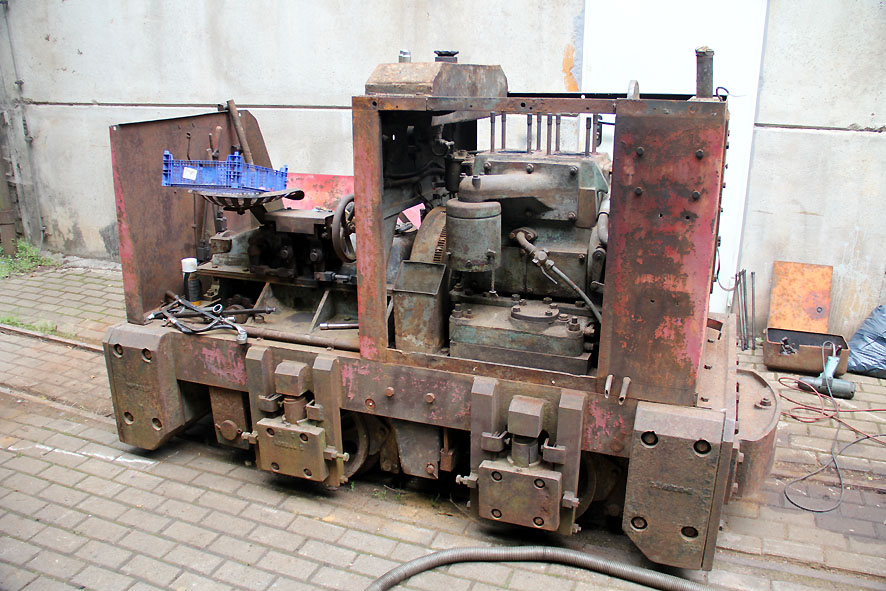
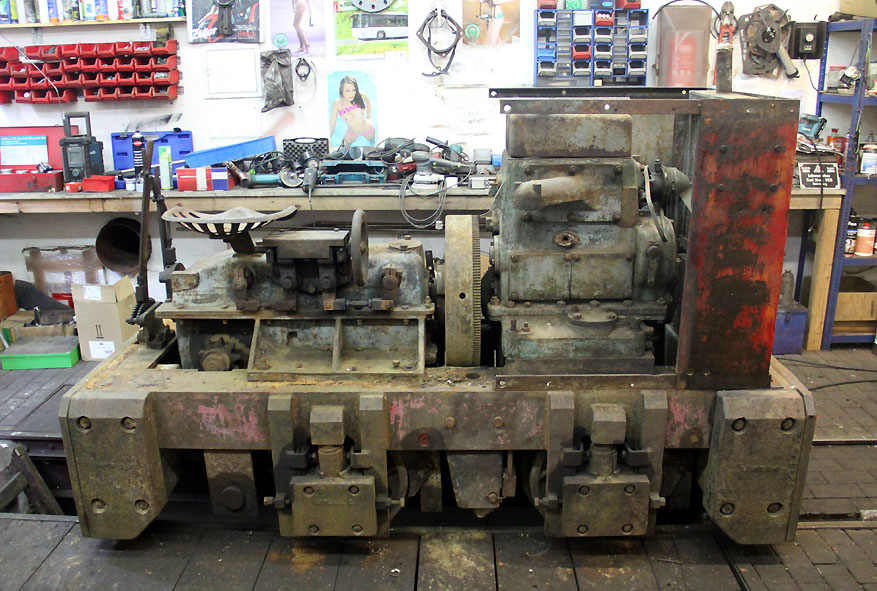
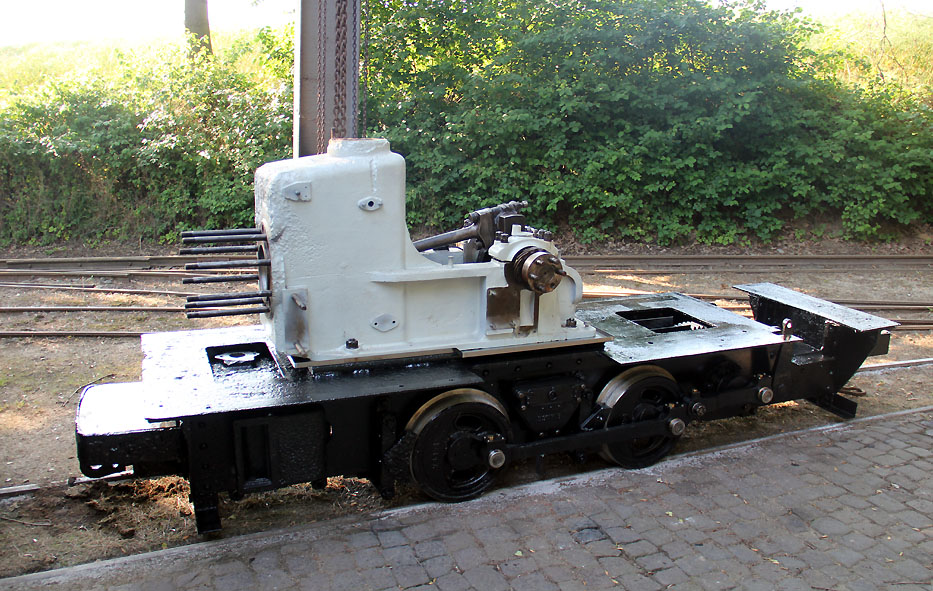
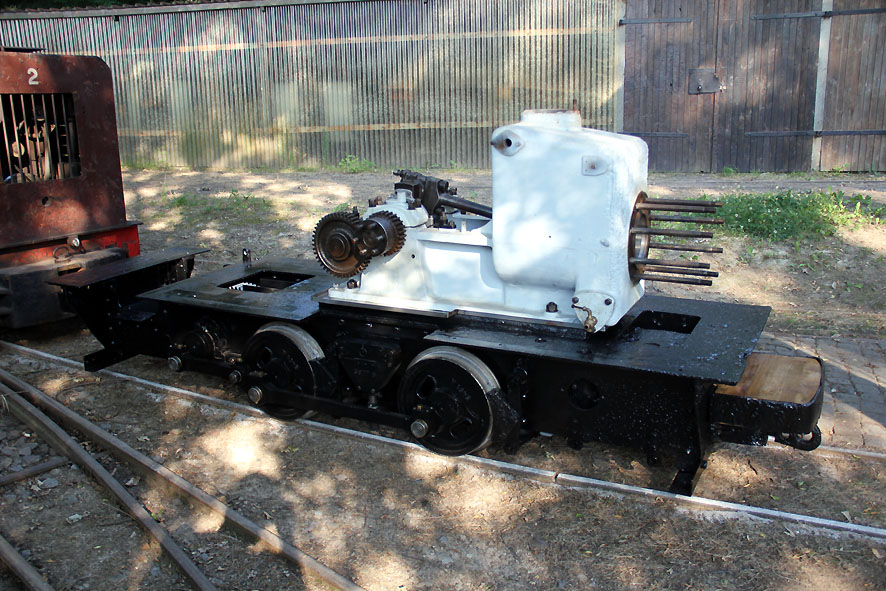
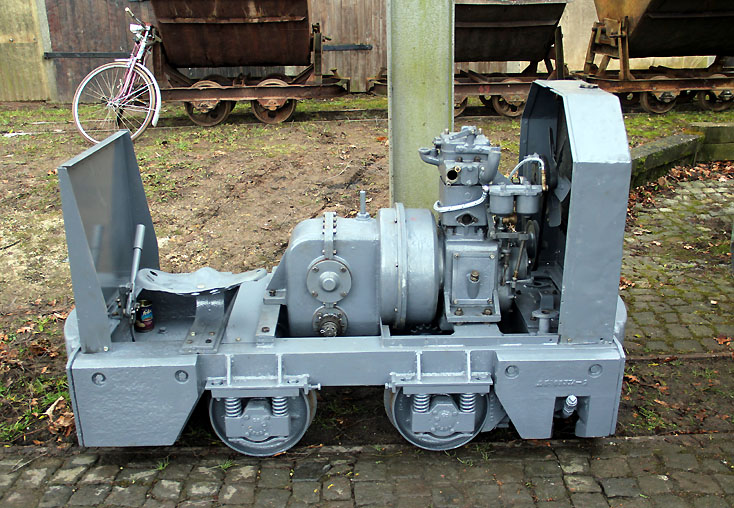
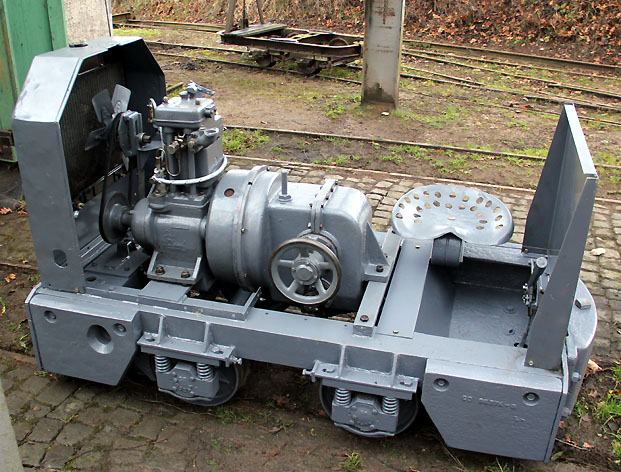
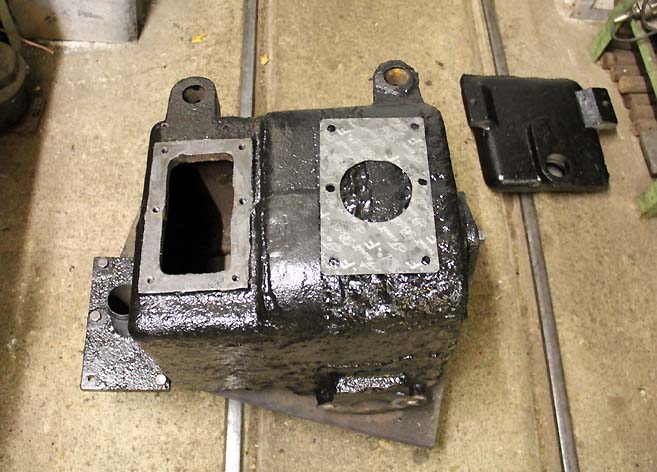
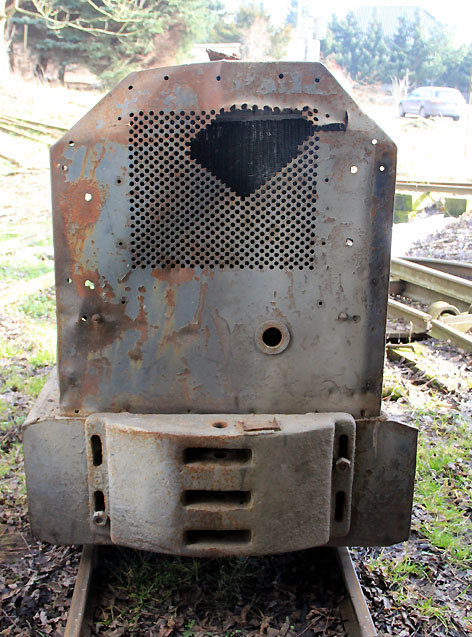
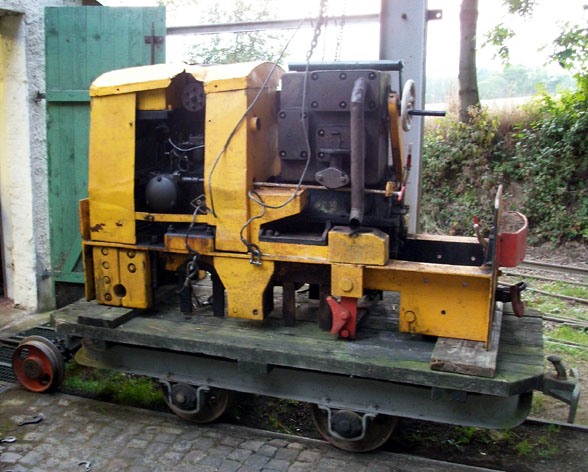
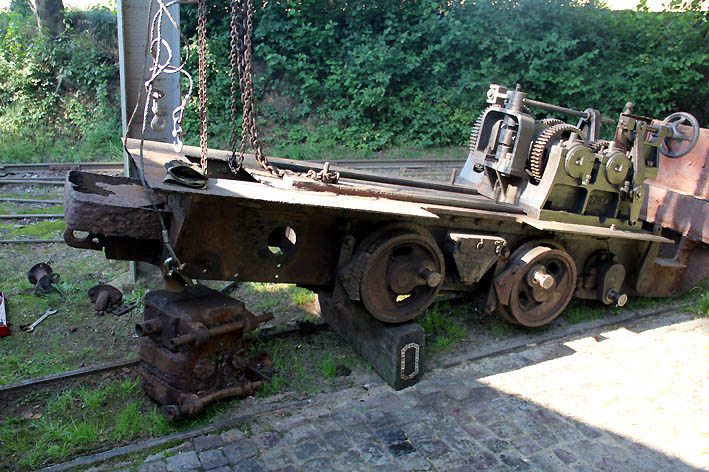
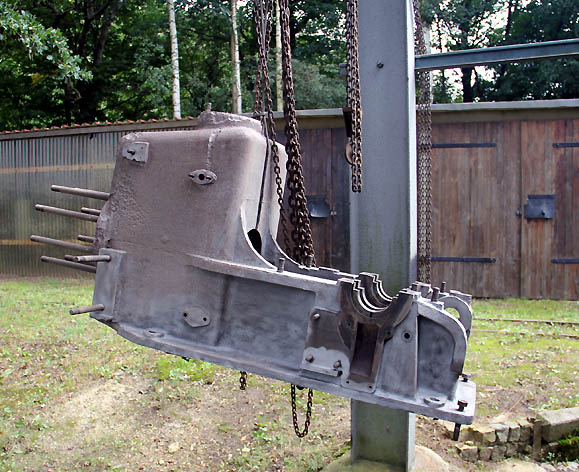
"naked" in October last year, now LD2 no. 6331
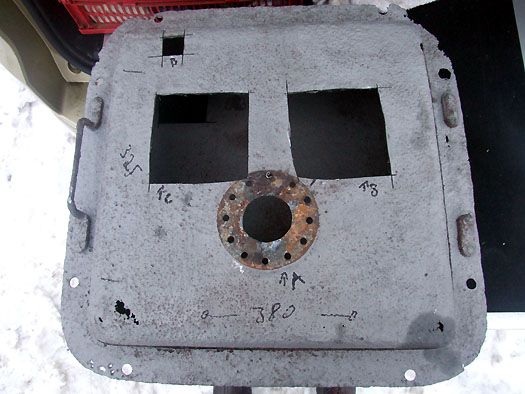
must get their housing back. All sheets were either not available
or so deformed that they could not be restored. So they have to
be completely replaced, which means a lot of effort.
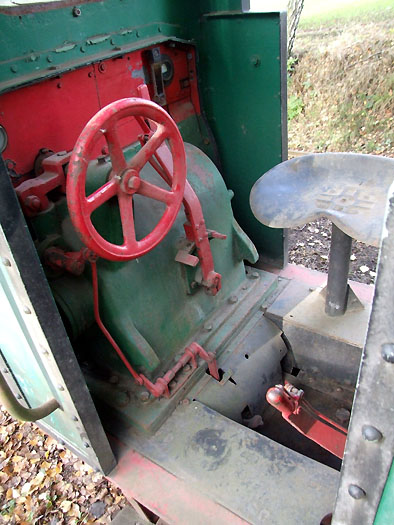
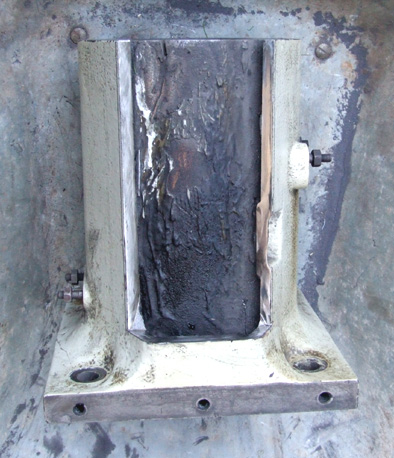
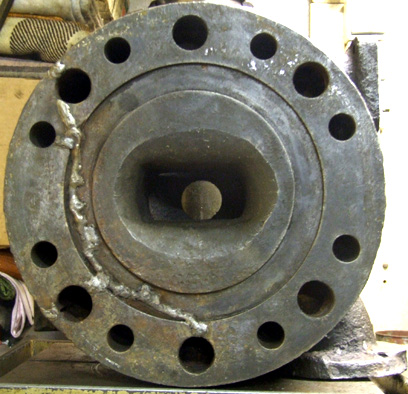
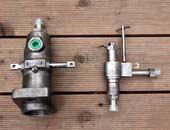
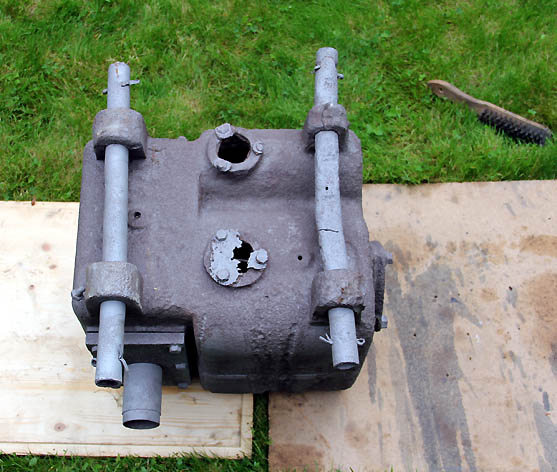
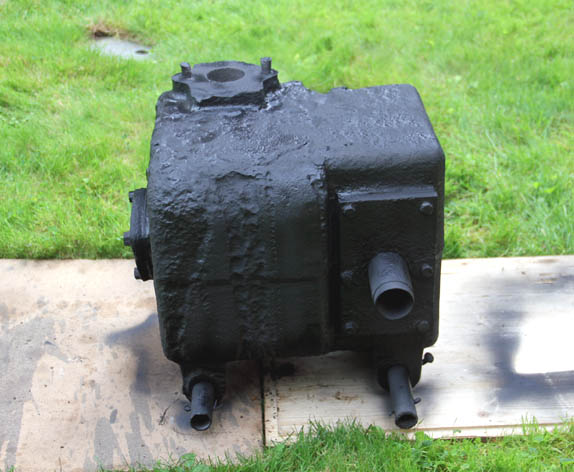
At the same time the reconstruction of compressed air starting
device is carried out. Their most important part - the valve body
in the cylinder head - fortunately is still remaining. But all
other components incl. the air cylinder must be remade. By the
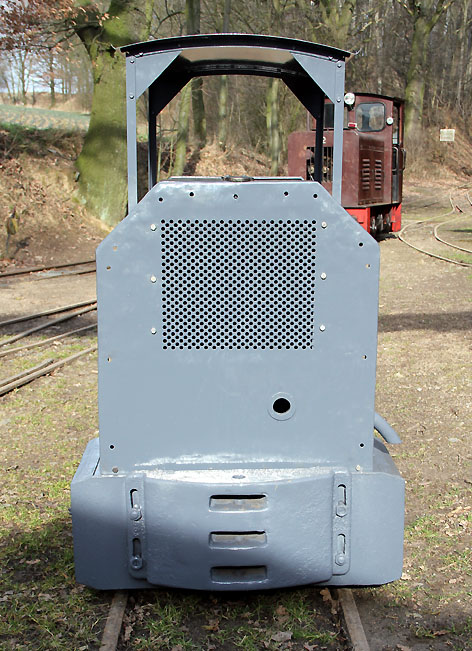
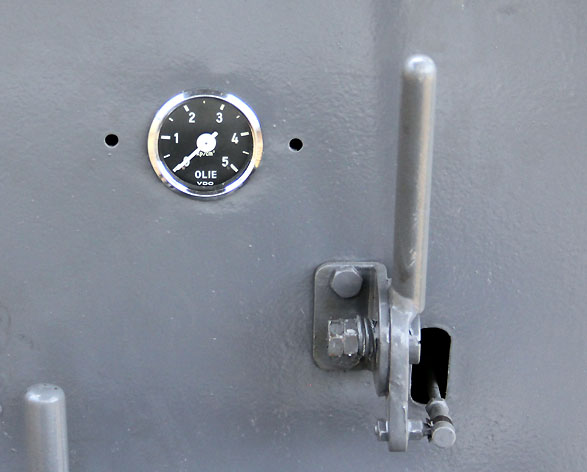
way the "crooked" hole in the front panel is original
and enabled the view on the pressure manometer.
November 2015
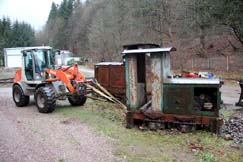
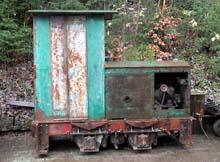
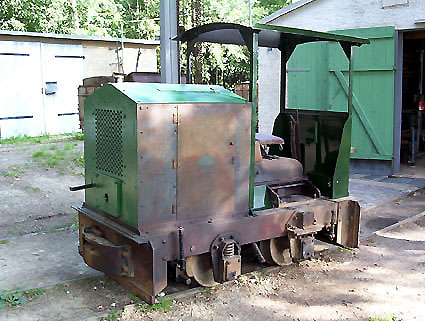
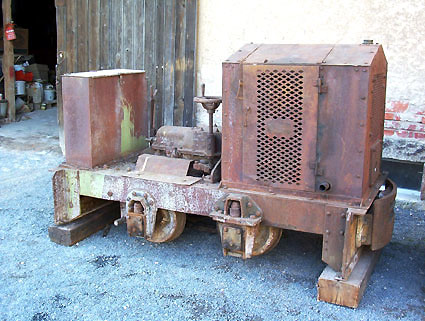
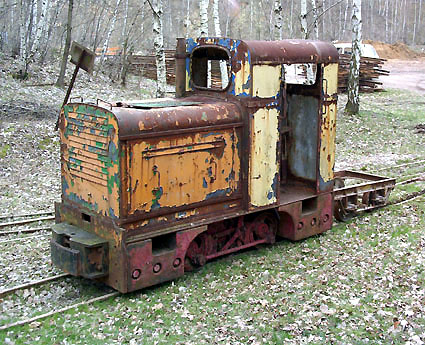
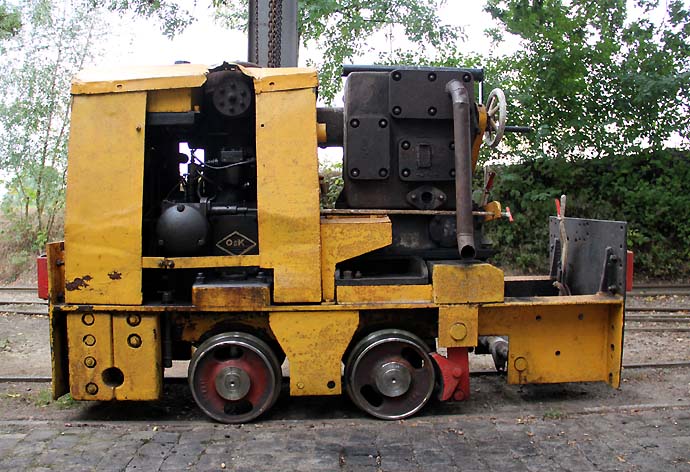
After finishing the restoration of the
MD2 no. 1633 there was a good opportunity to tackle the
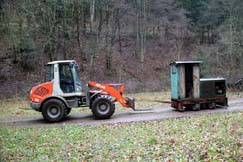
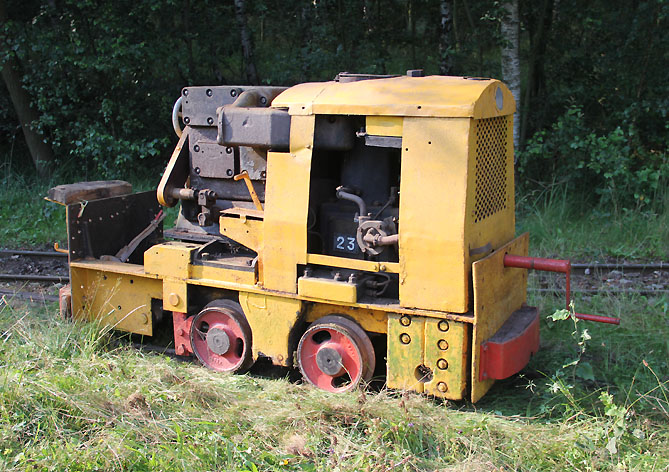
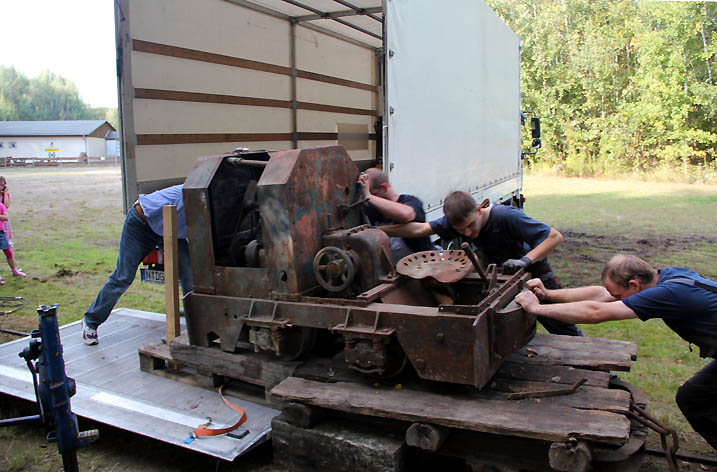
LD2 no. 10378, which was also mounted by O & K Sesto,
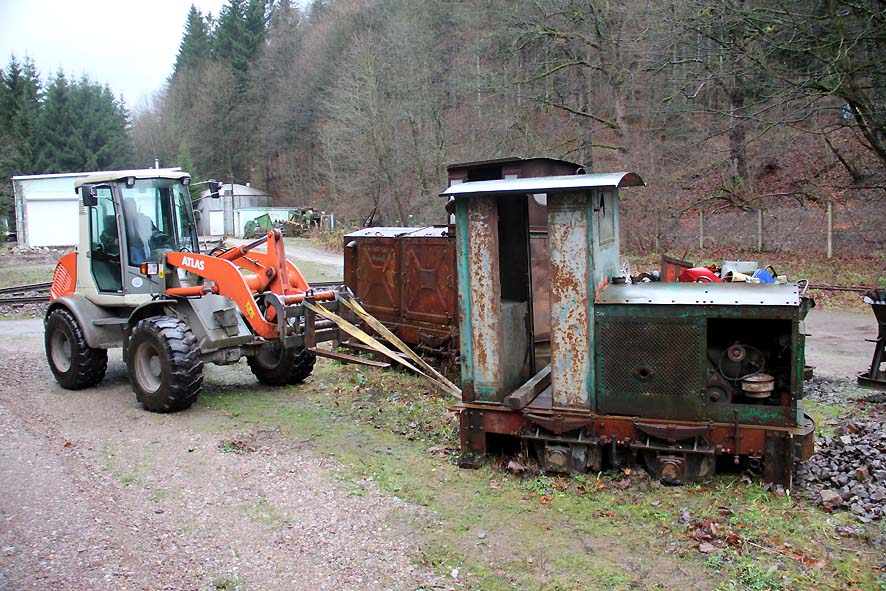
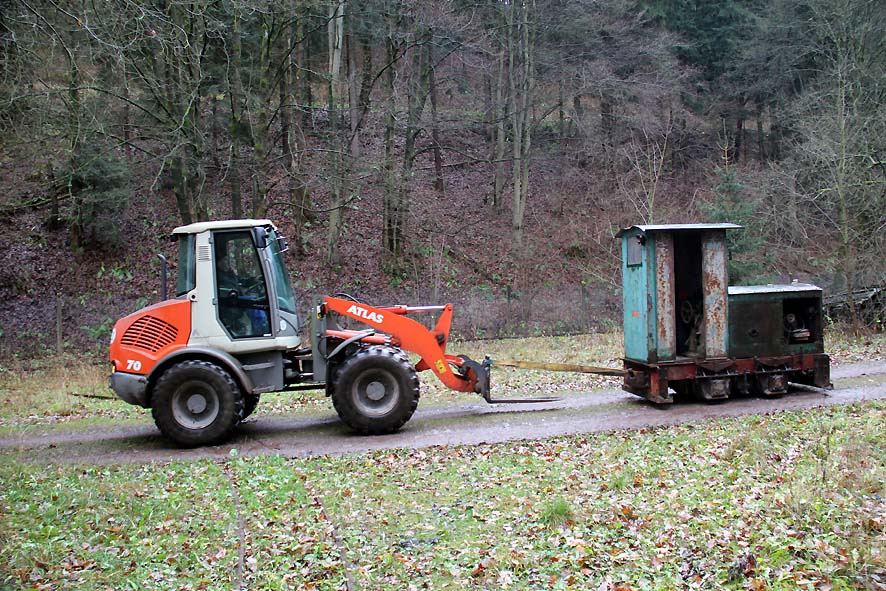
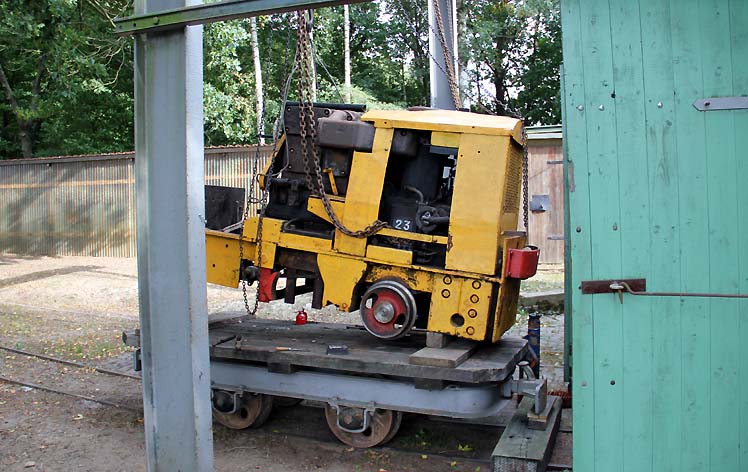
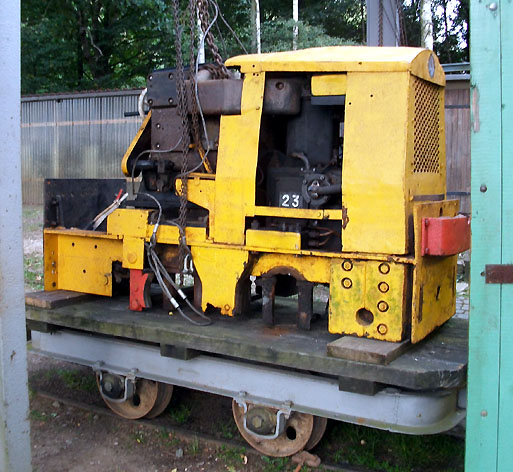
just 23 years earlier. For this purpose she was dragged from her
temporary stand to a place nearby the workshop, because of its
gauge of 750mm not on the existing 600mm-track, but on the roadway.
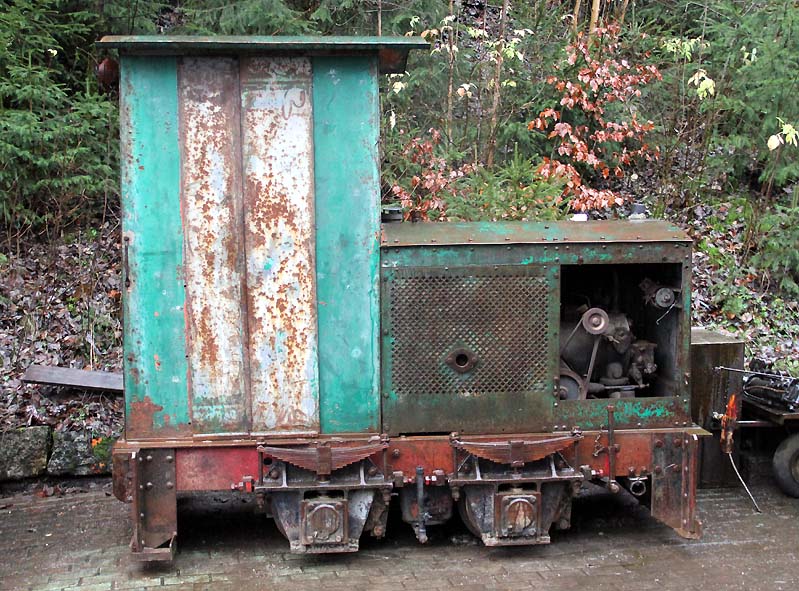
After releasing the fixed brakes this was not a problem. The condition
of the locomotive is very good and the 46 years stay under roof
didn’t harm the machine seriously. However, a quick re-commissioning
is avoided by the necessary re-gauging.
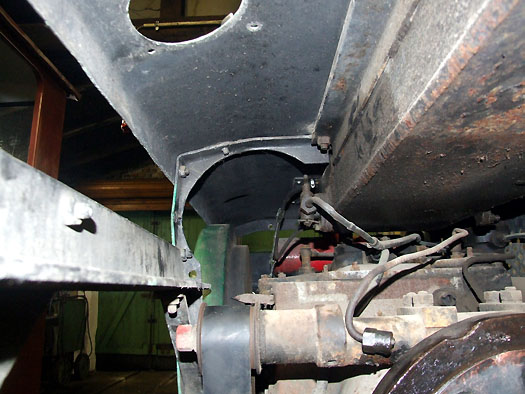
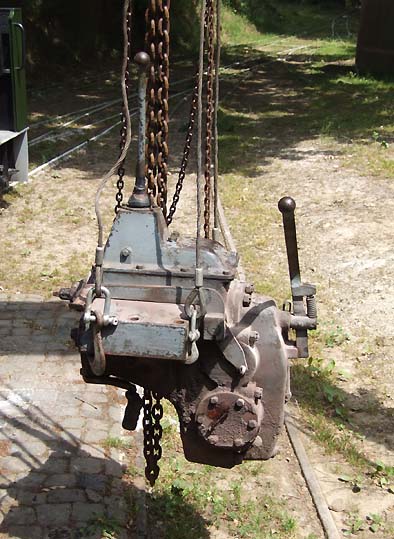
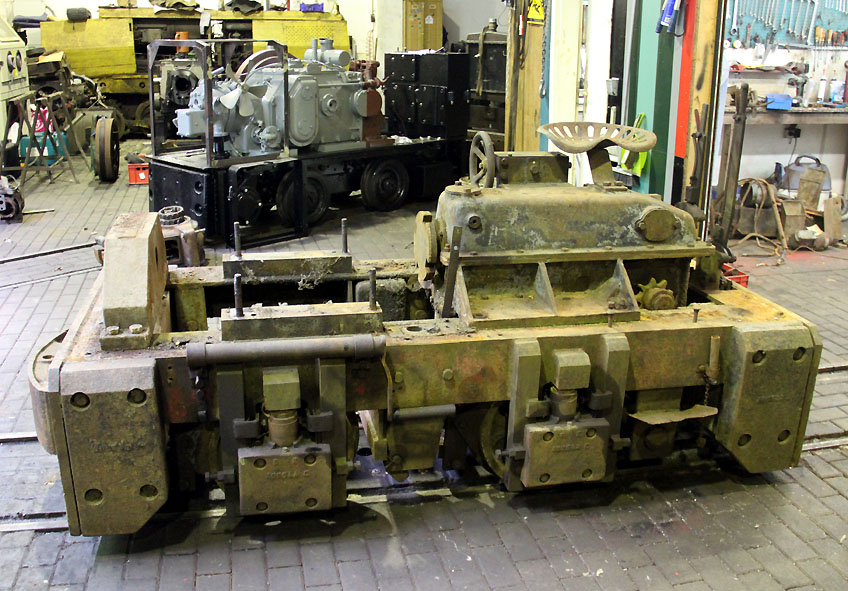
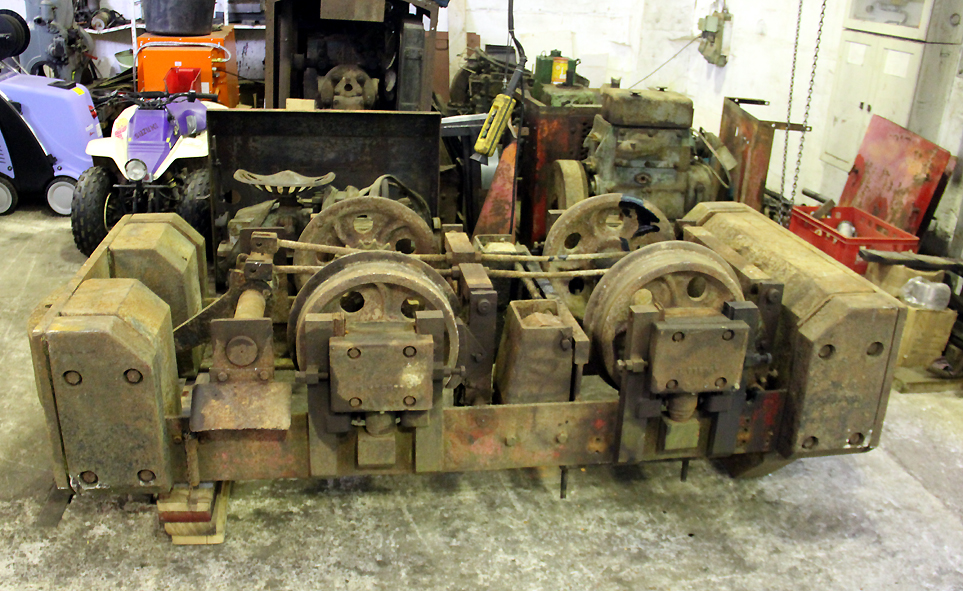
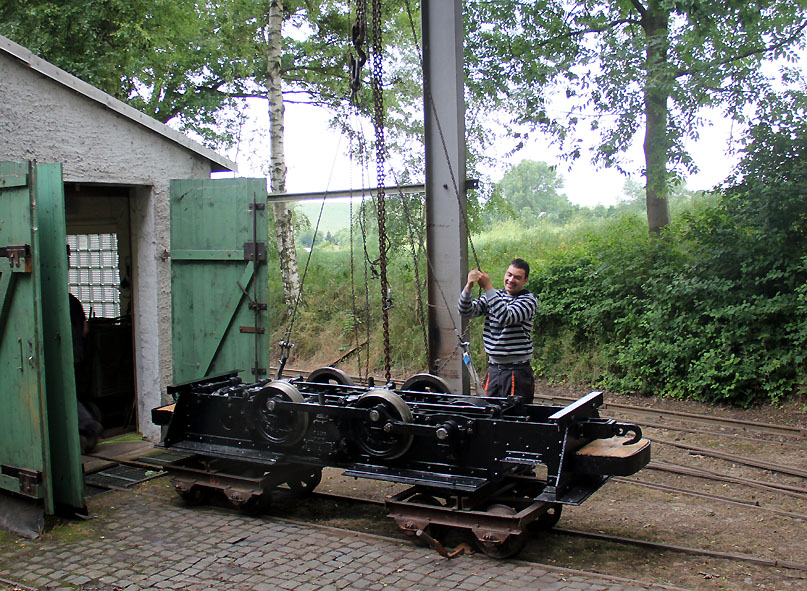
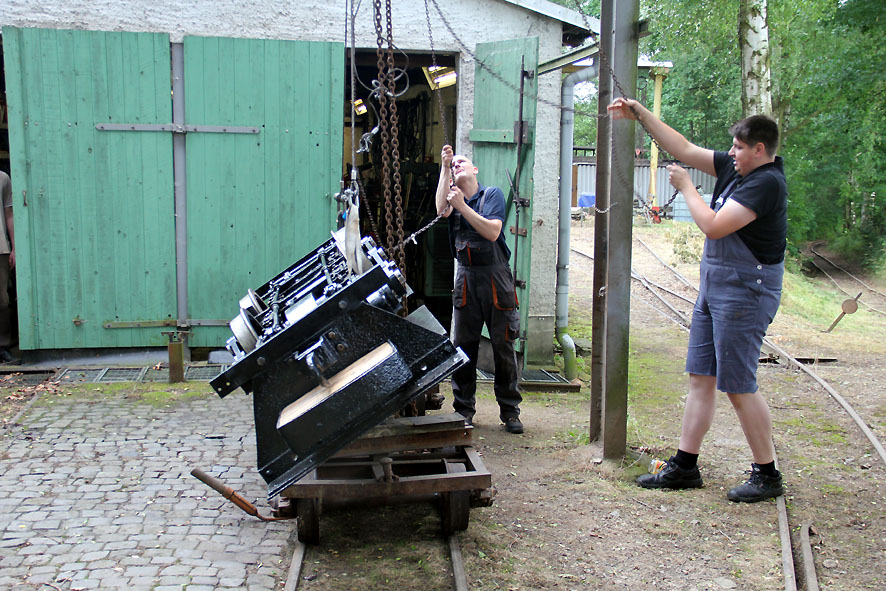
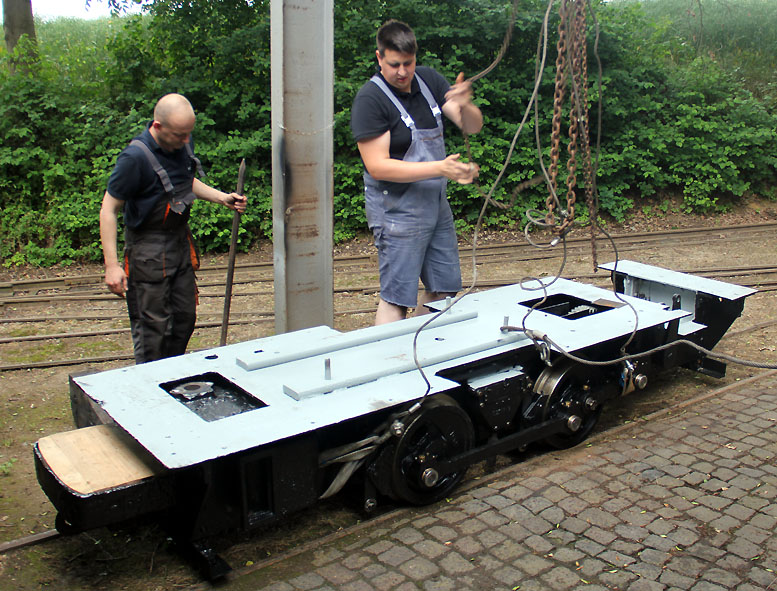
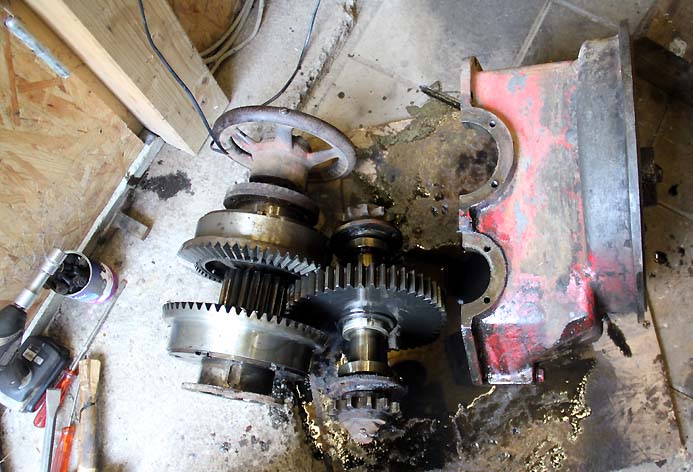
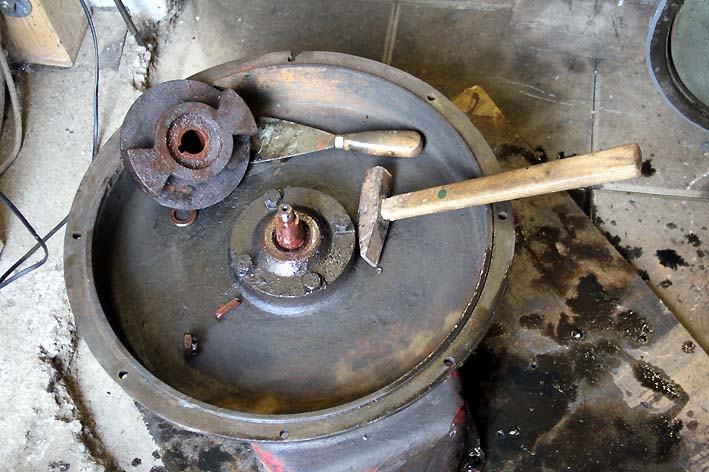
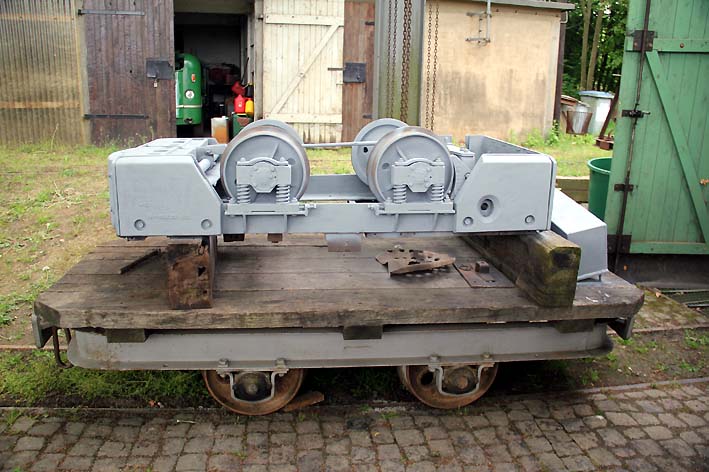
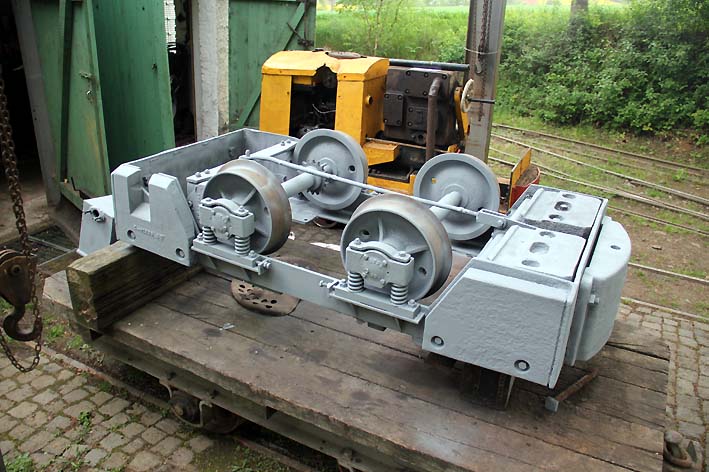
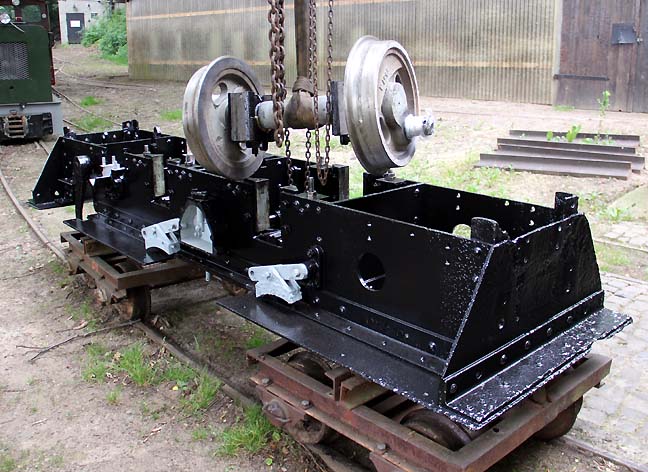
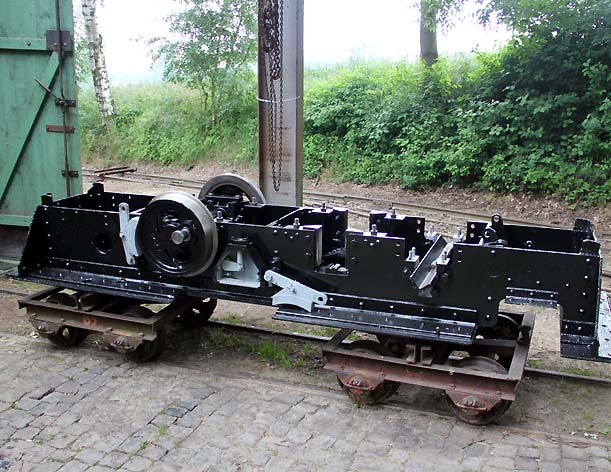
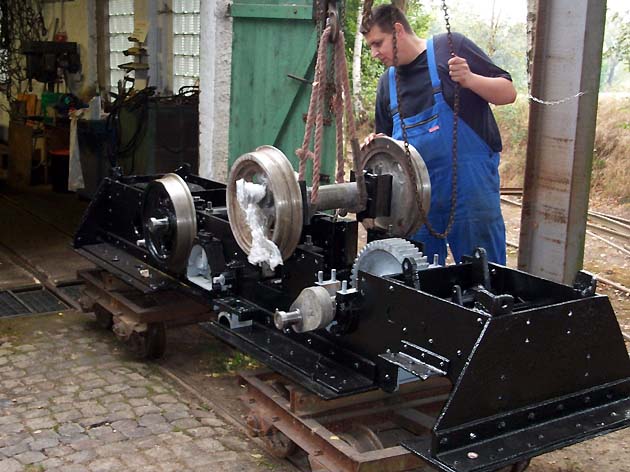
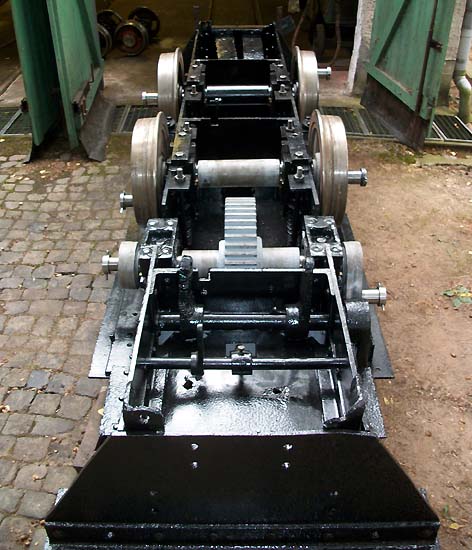
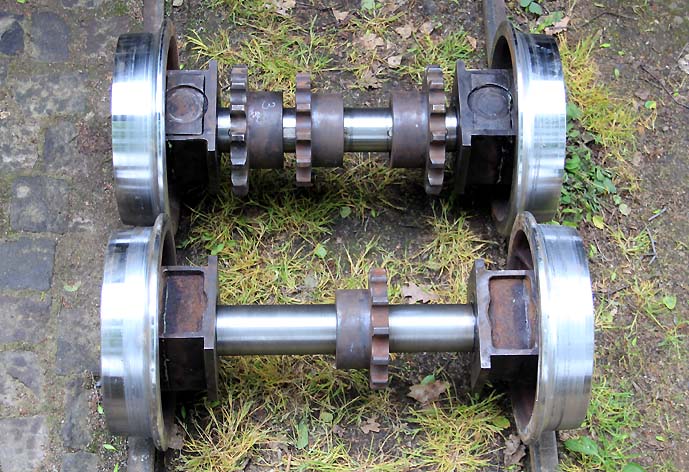
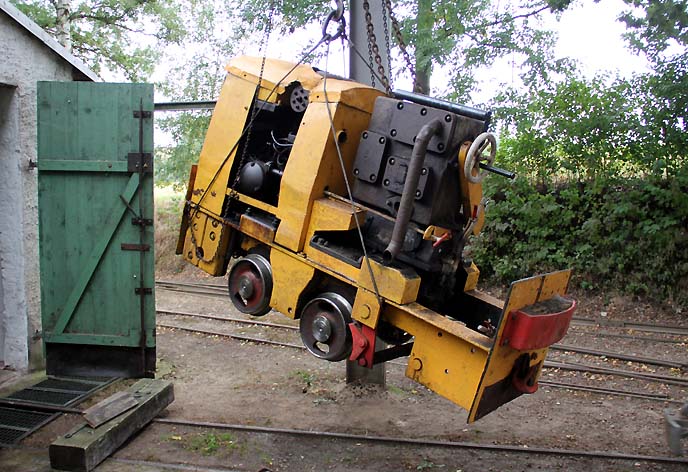
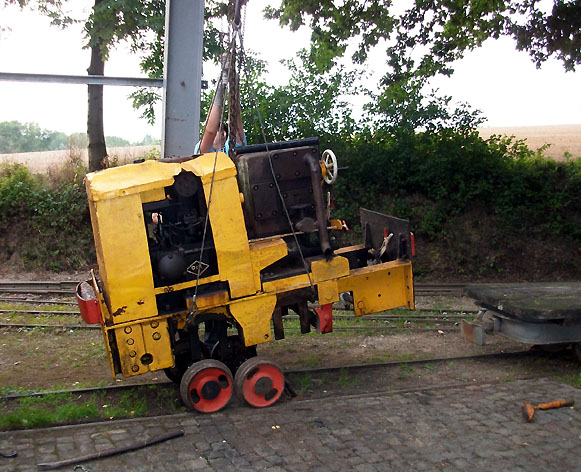
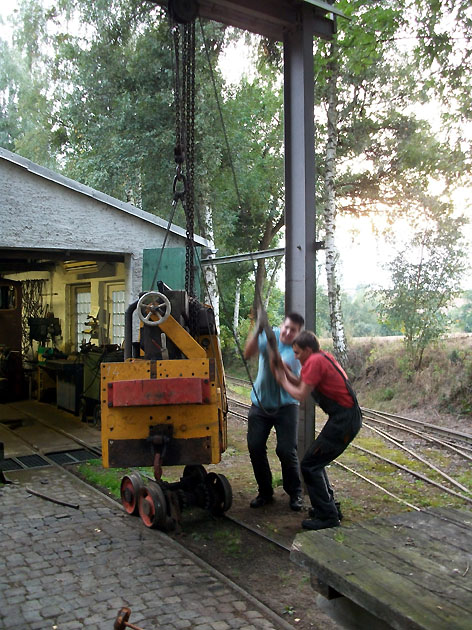
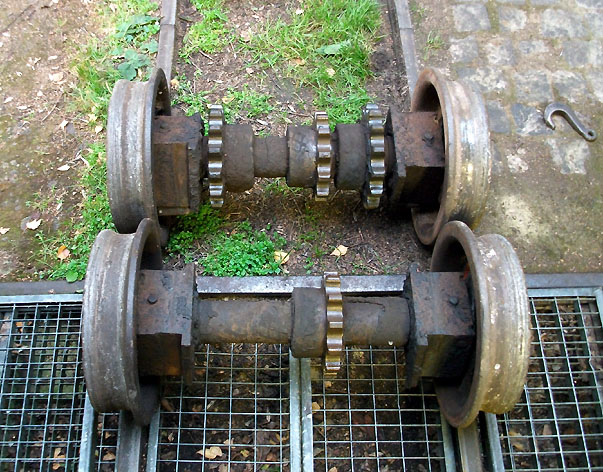
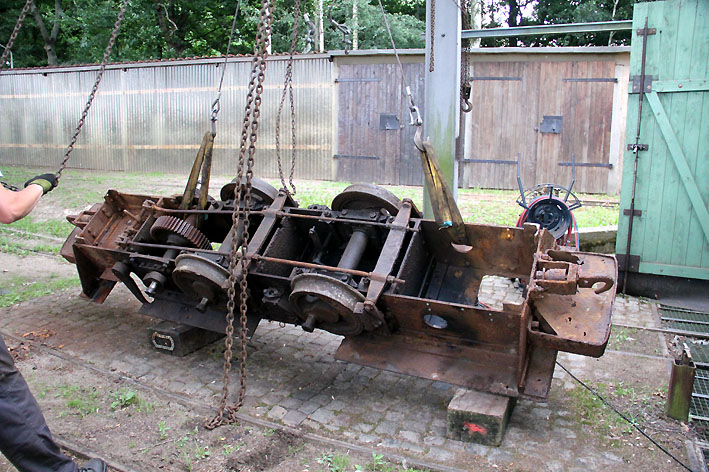
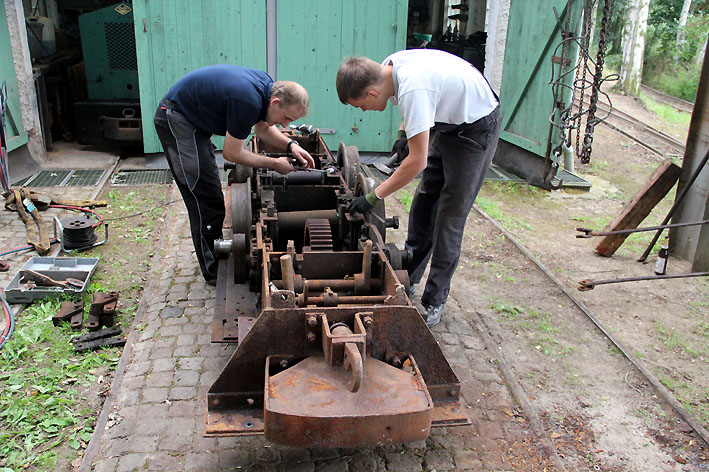
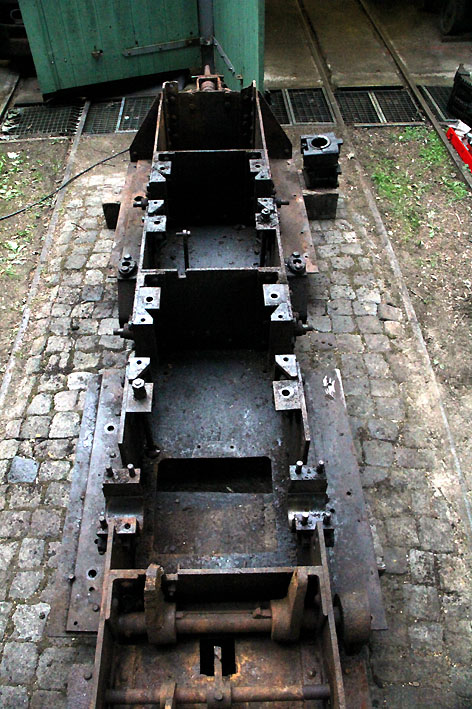
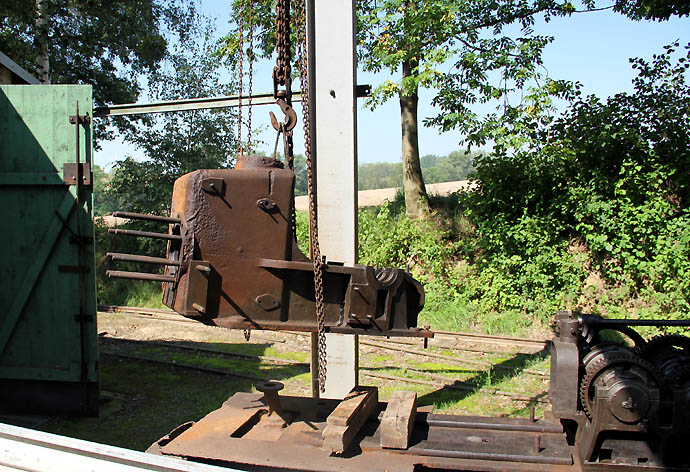
For it the frame has to be upturned and all upper parts like motor,
bonnet and gearbox dismounted.
Because at the LD2 not enough original color remains - in contrast
to the MD2, here an "OWATROL restoration" appears not
advised. Presumably the not original cab will be rebuilt into
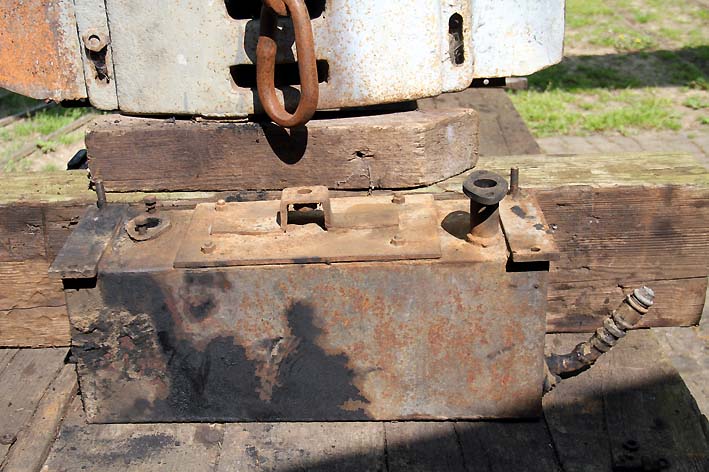
the factory version. The necessary, initial weight box is still
present.
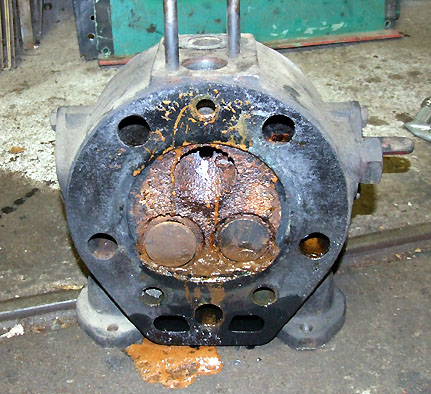
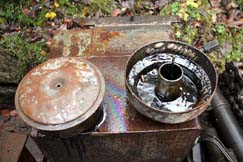
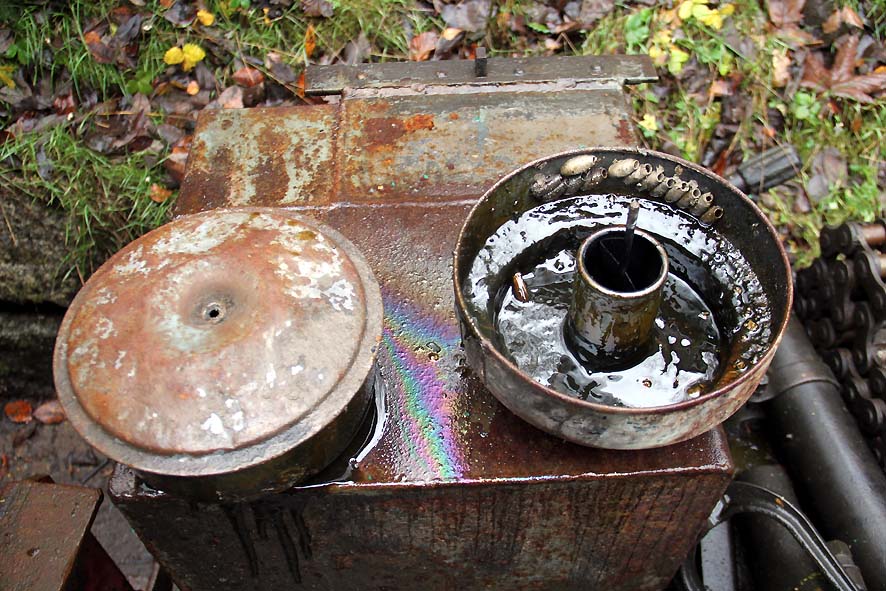
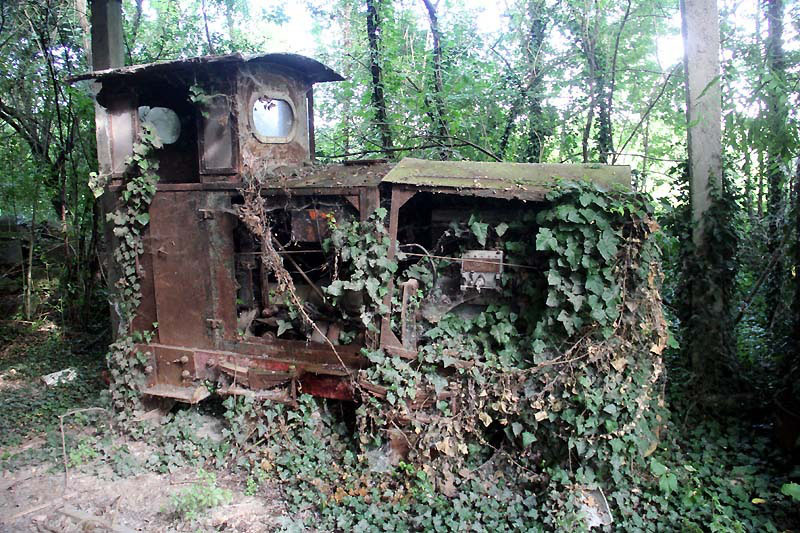
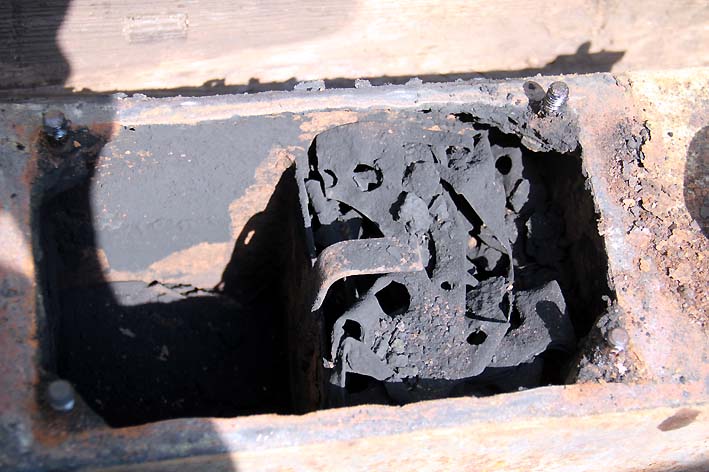
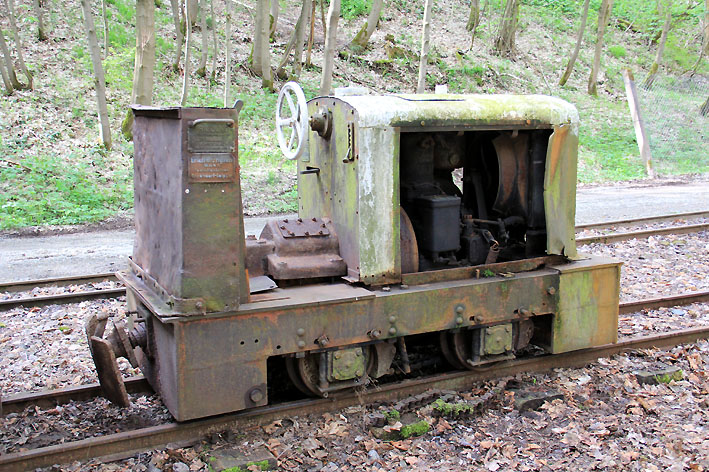
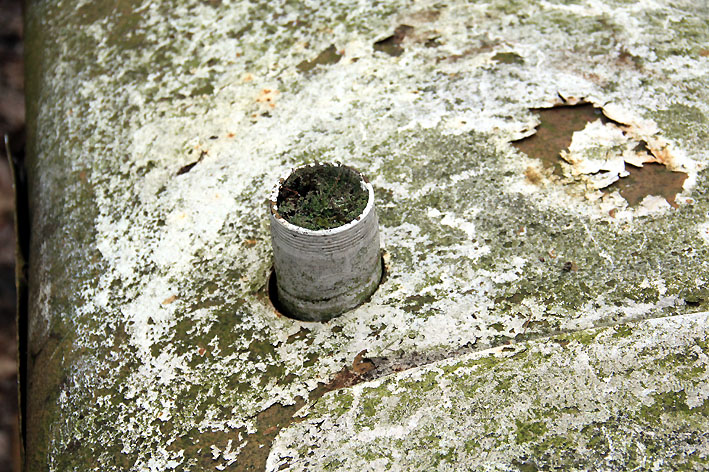
That nature also chooses at first sight inhospitable places as
retreat, could be seen in the air filter of the LD2. Although
contained oil therein was dangerously close, insects similar to
sedges left their homes in the air gap.
October 2015
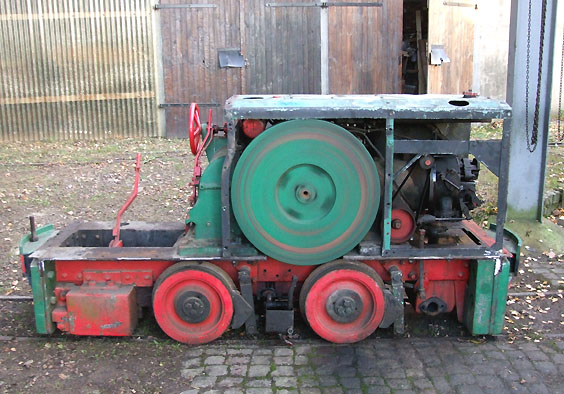
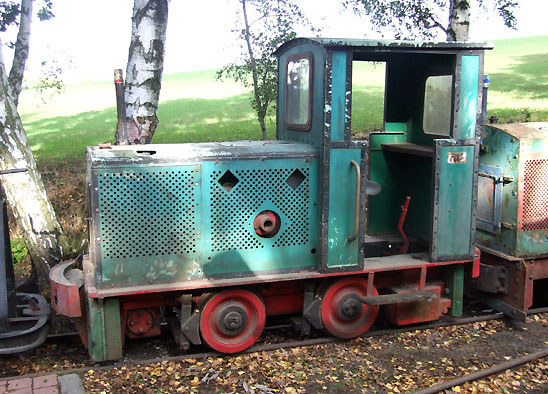
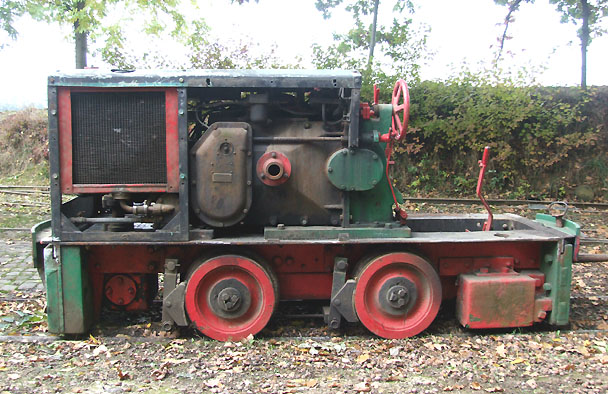
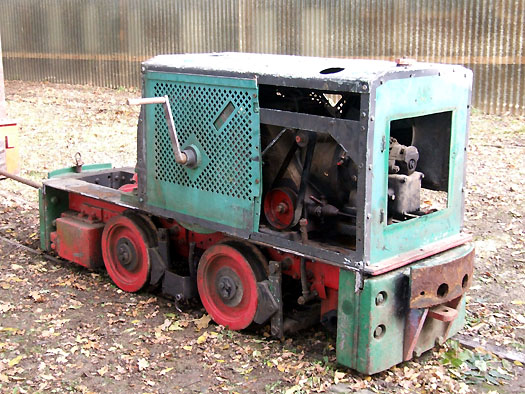
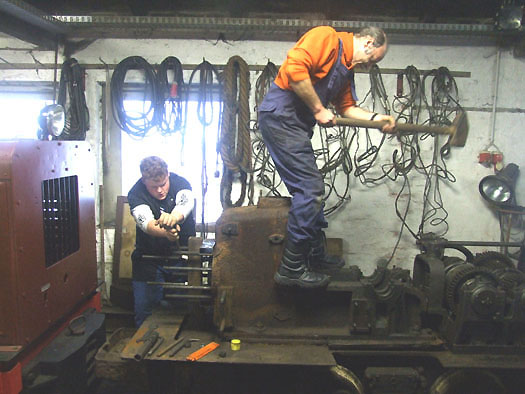
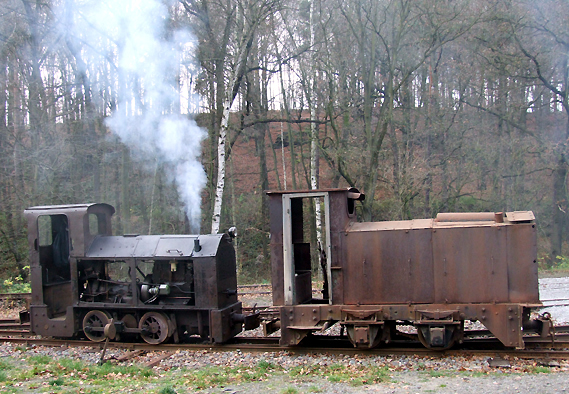
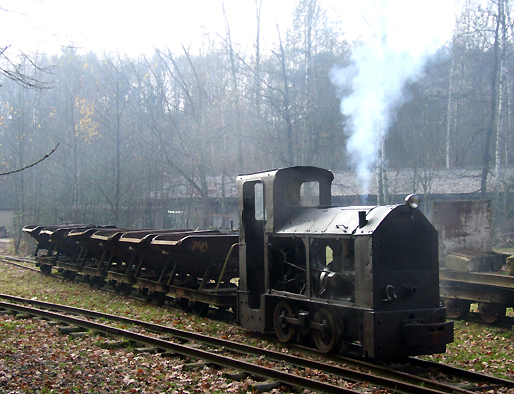
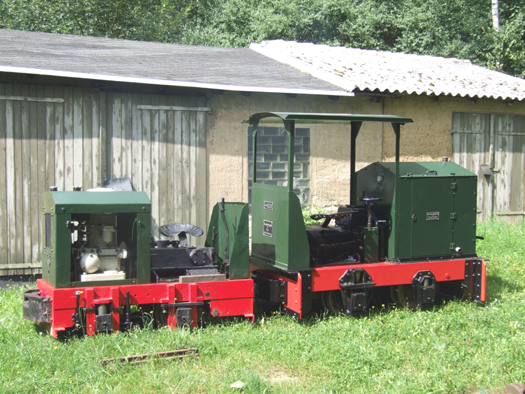
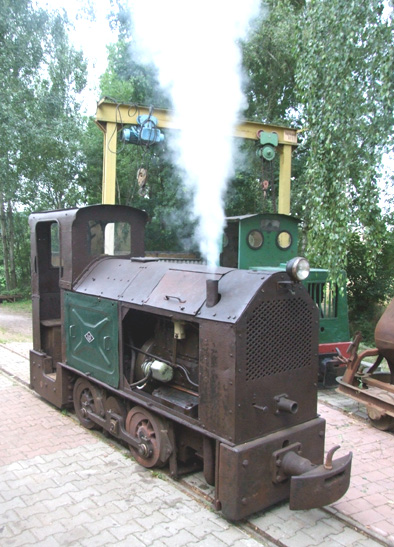
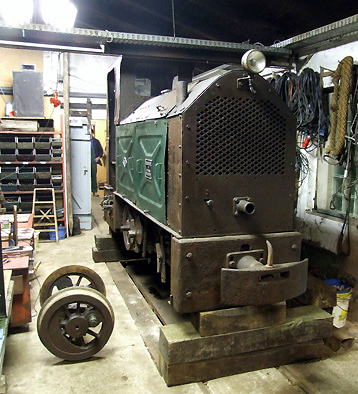
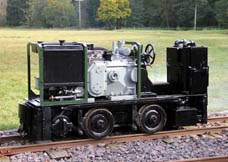
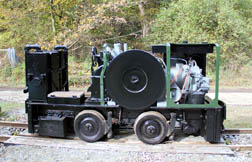
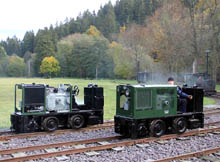
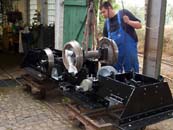
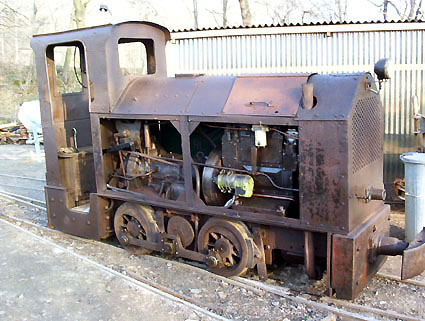
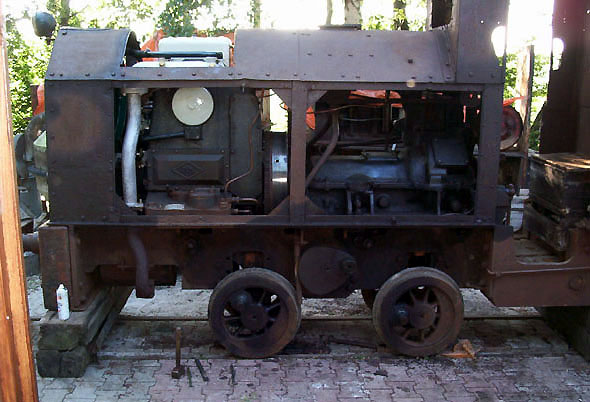
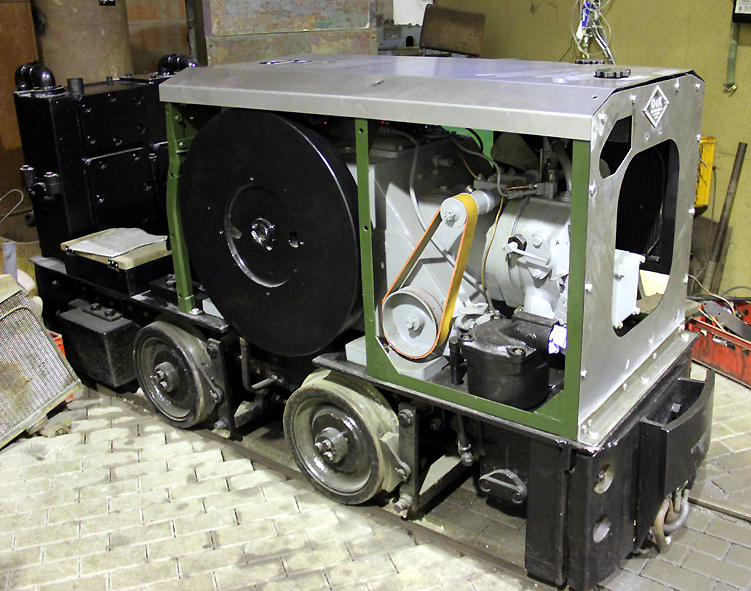
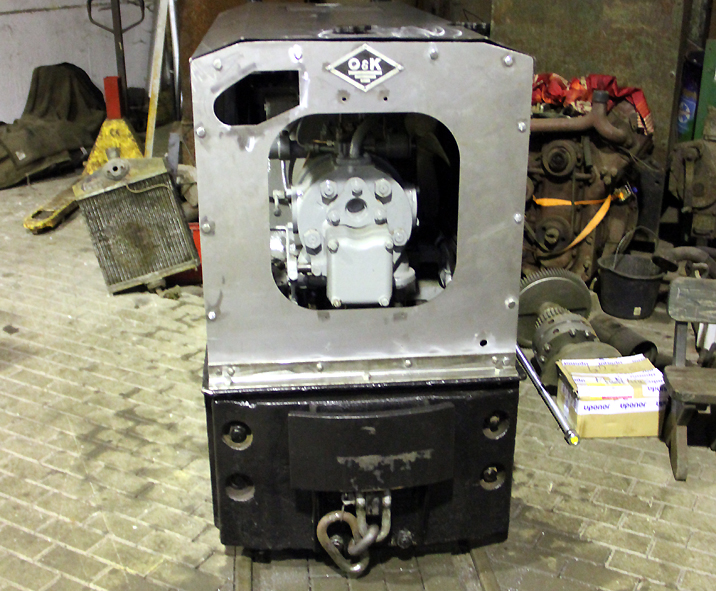
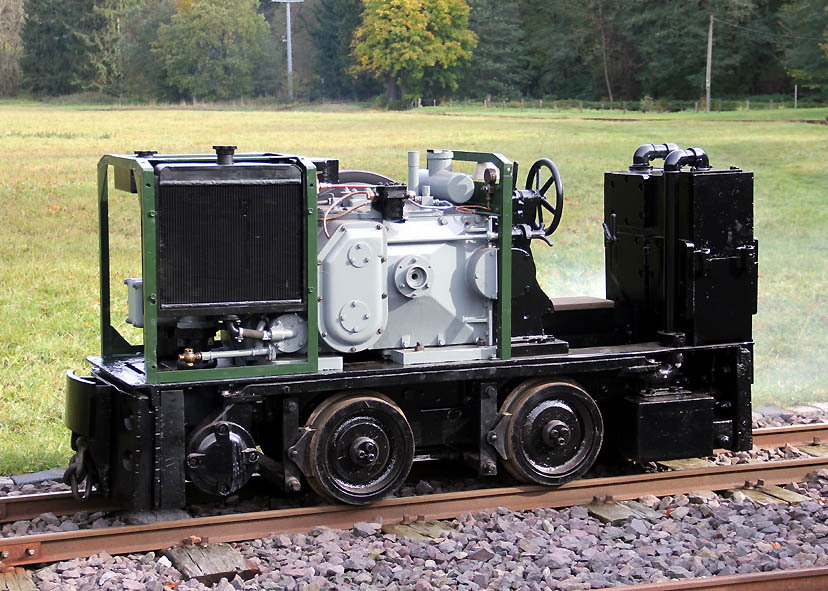
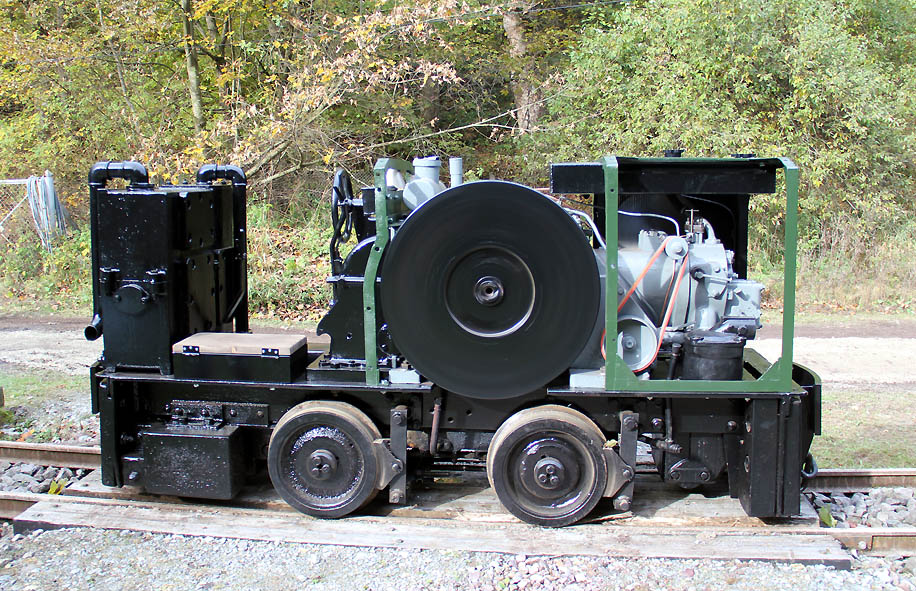
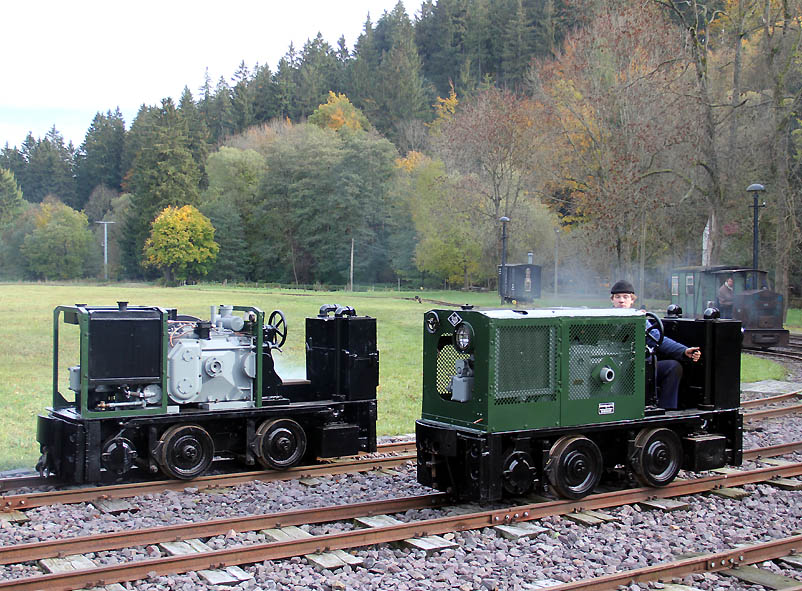
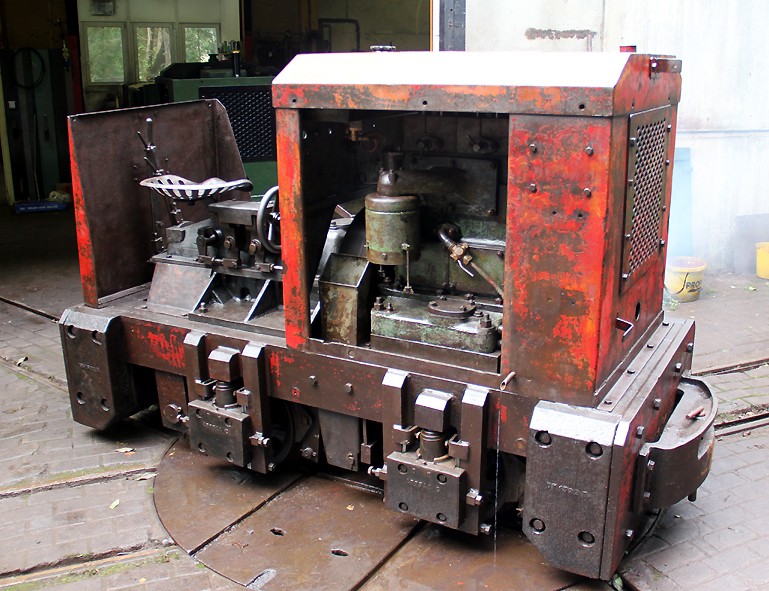
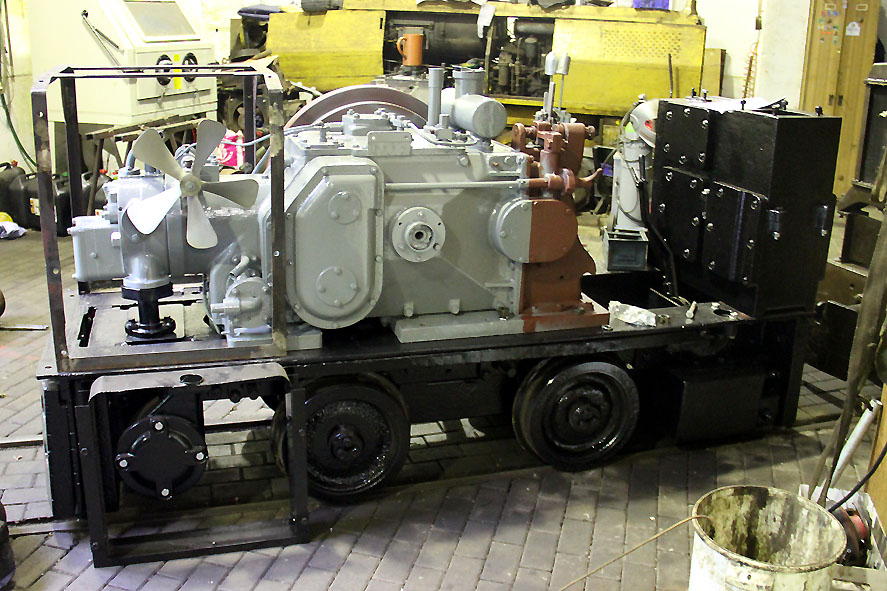
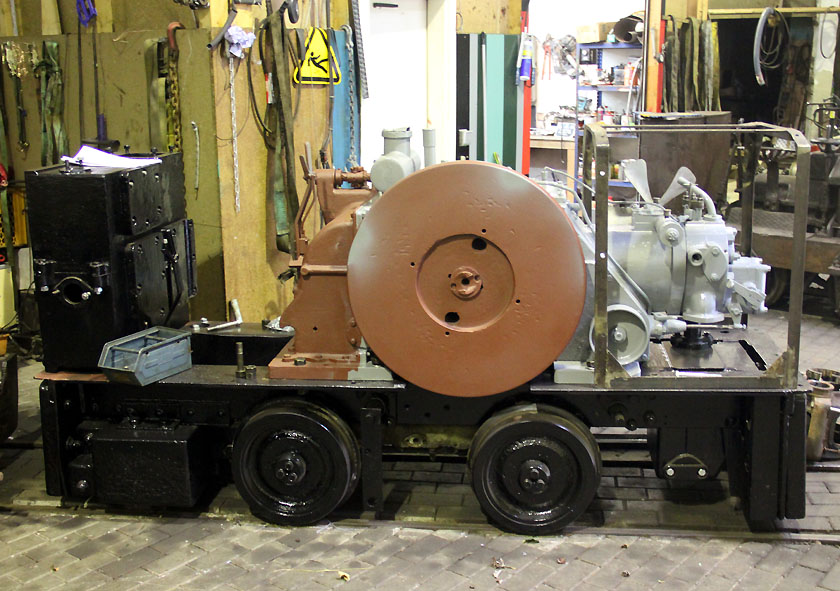
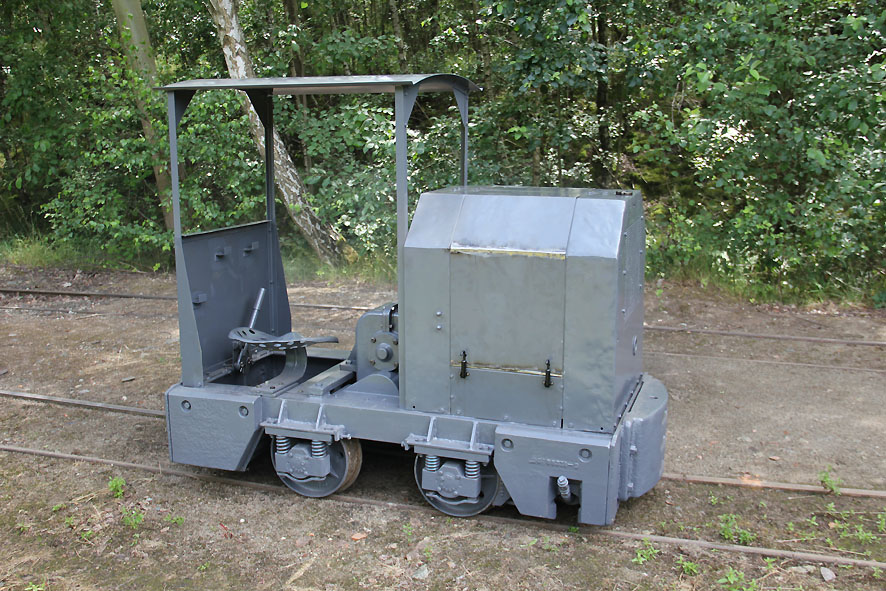
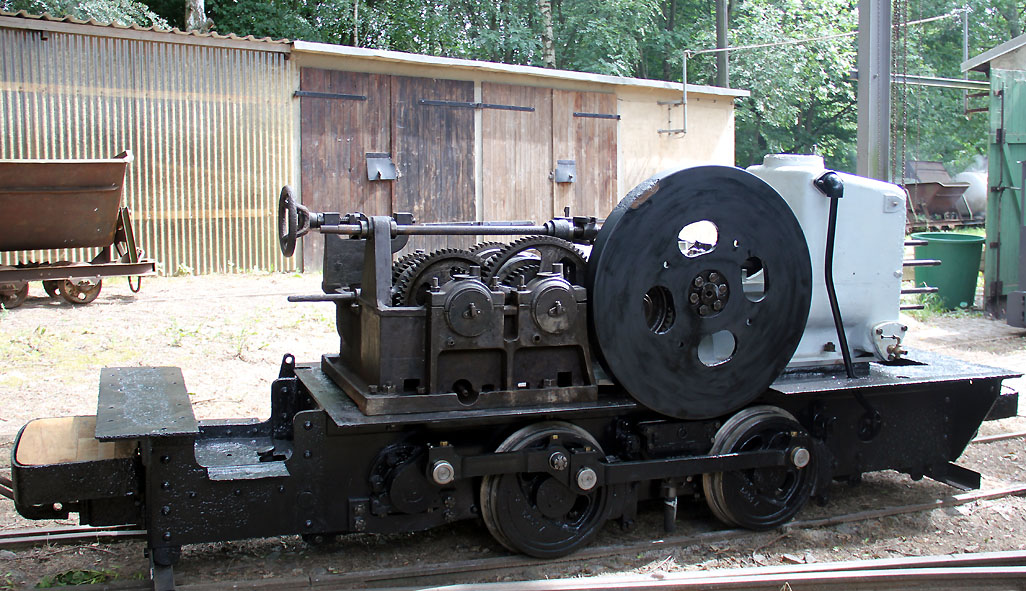
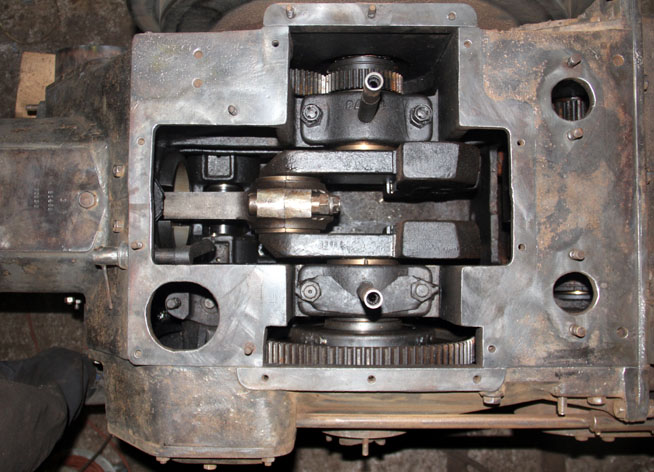
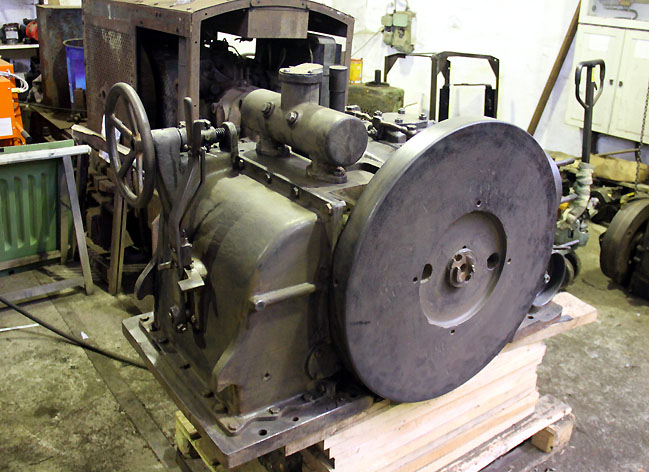
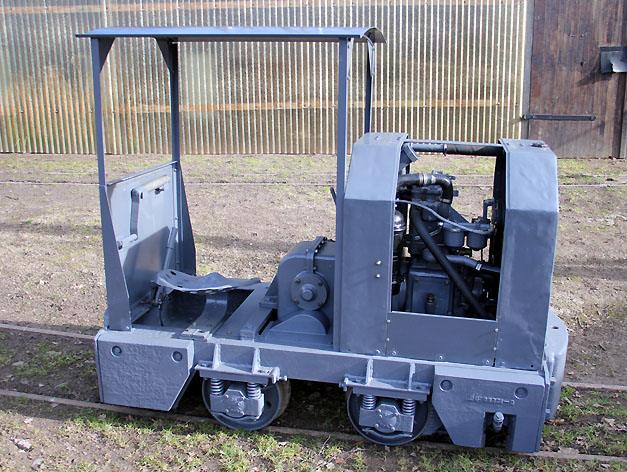
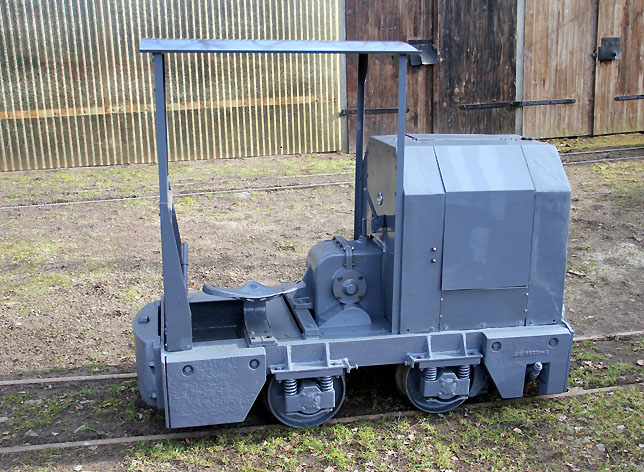
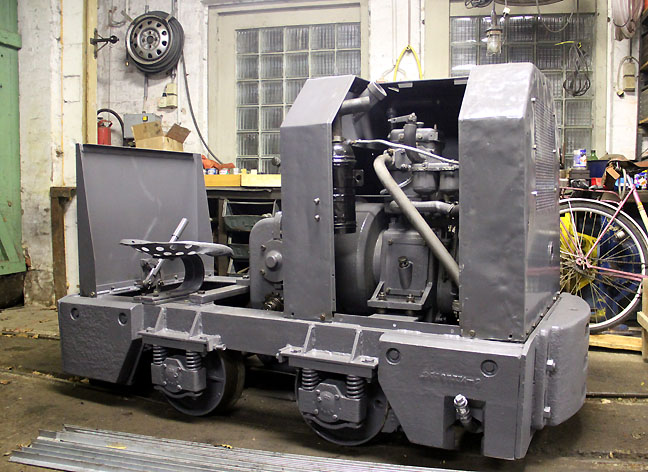
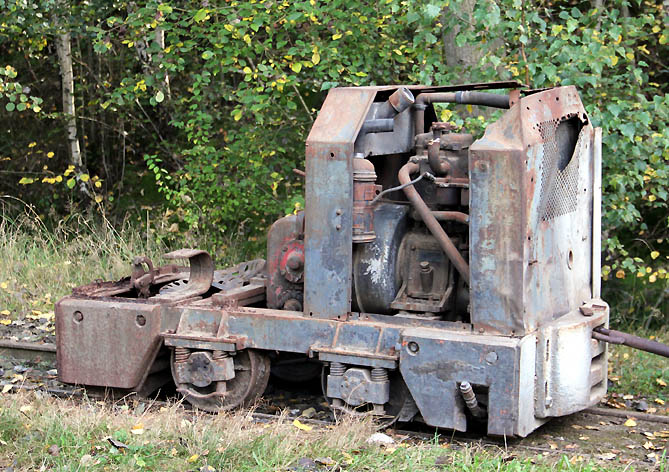
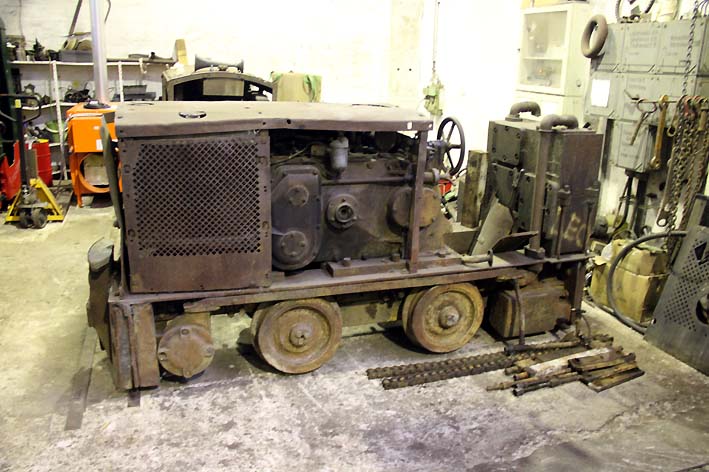
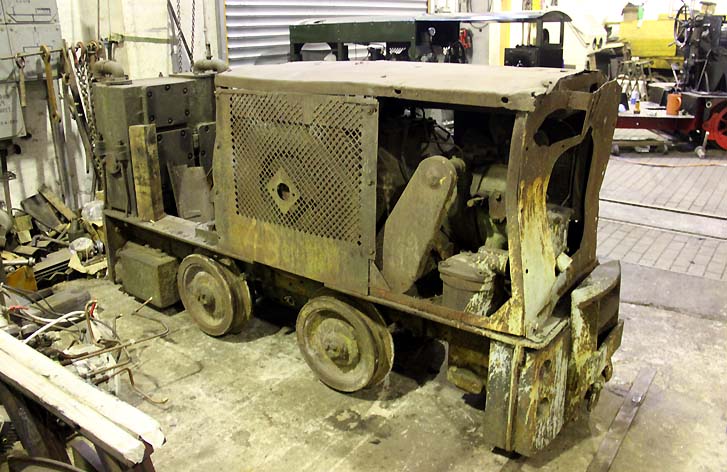
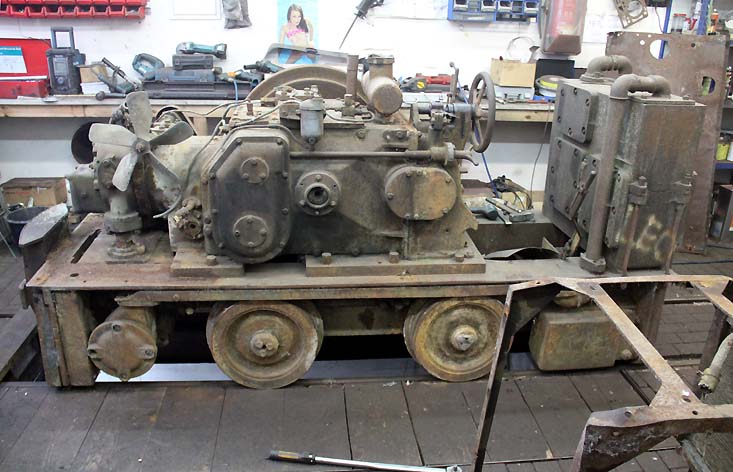
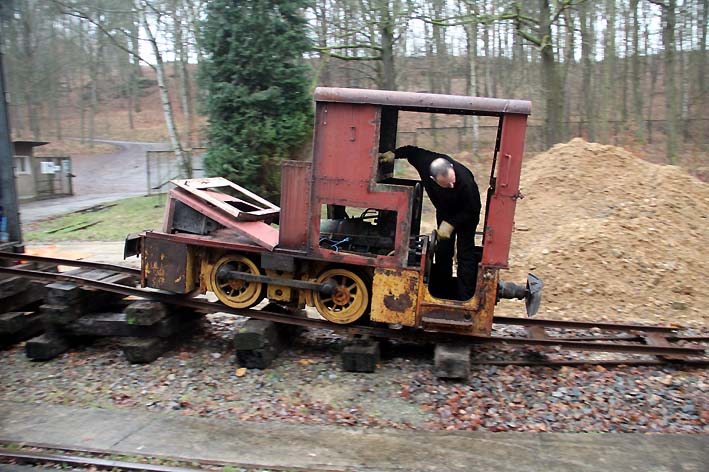
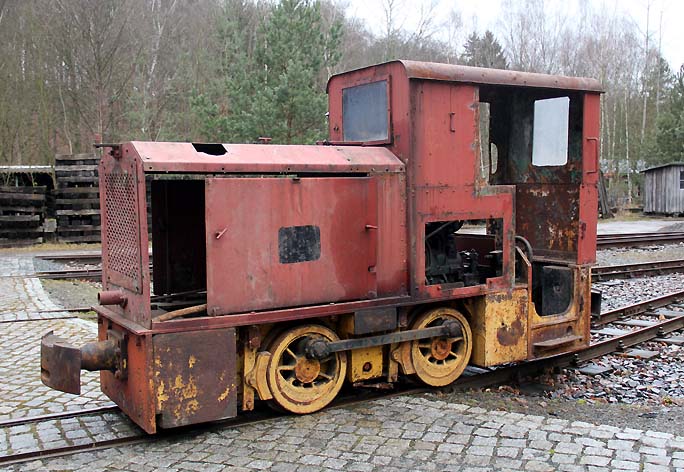
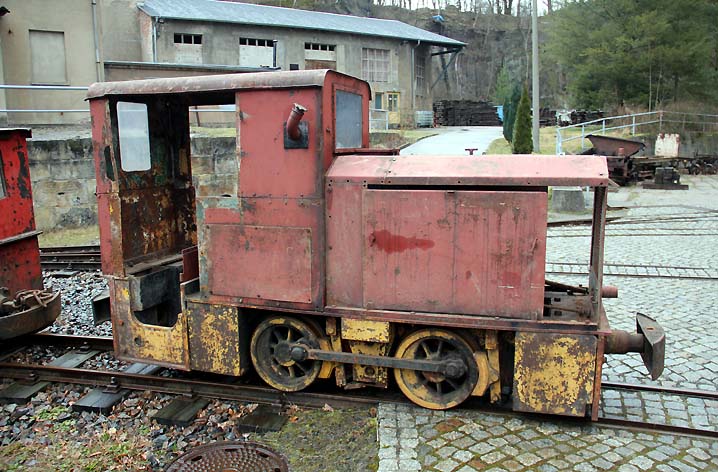
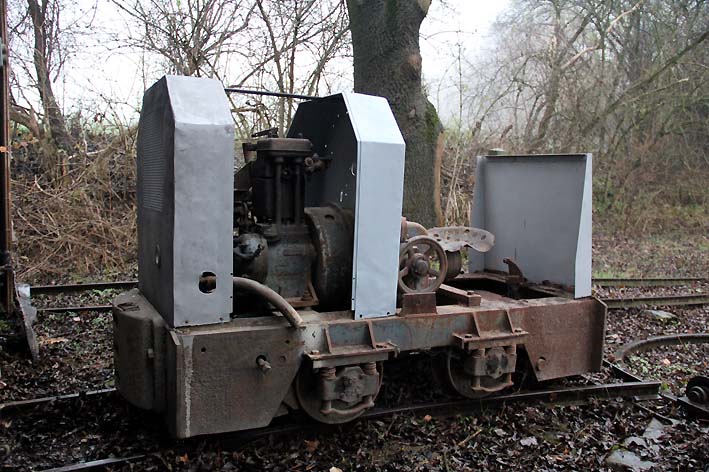
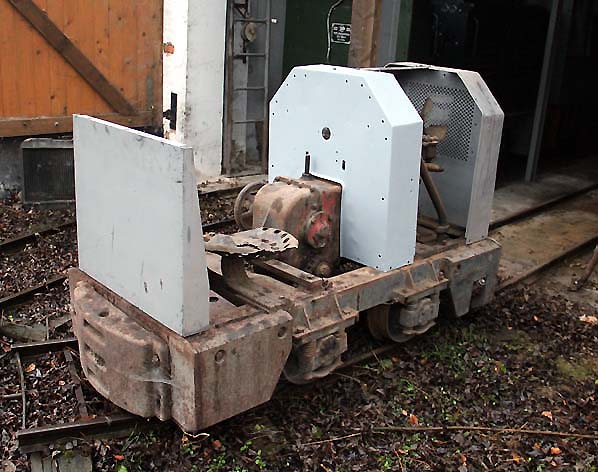
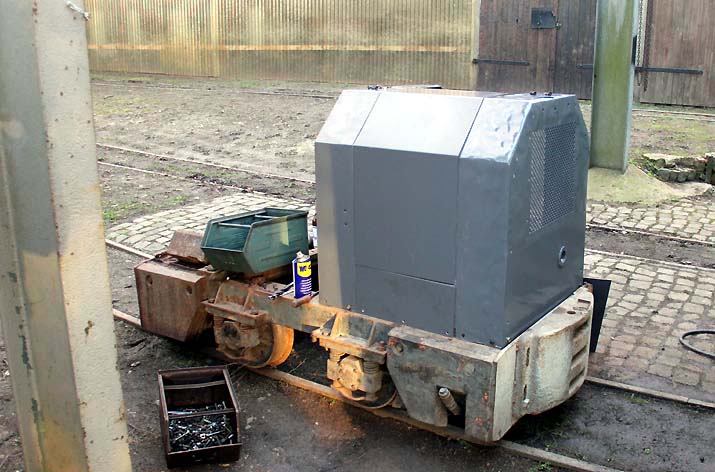
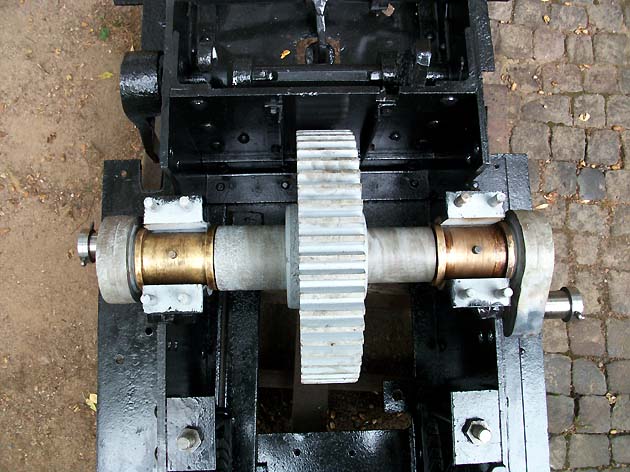
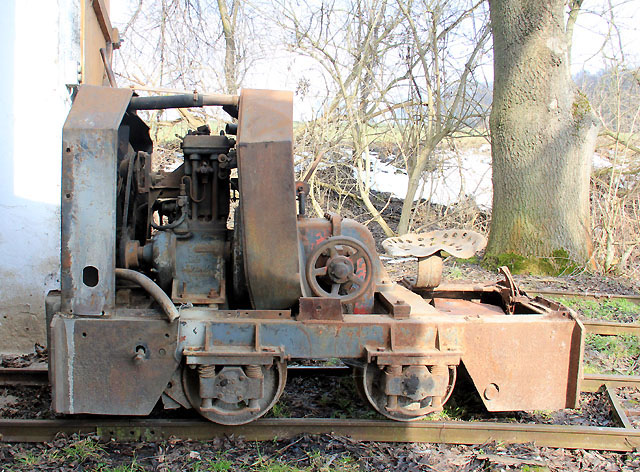
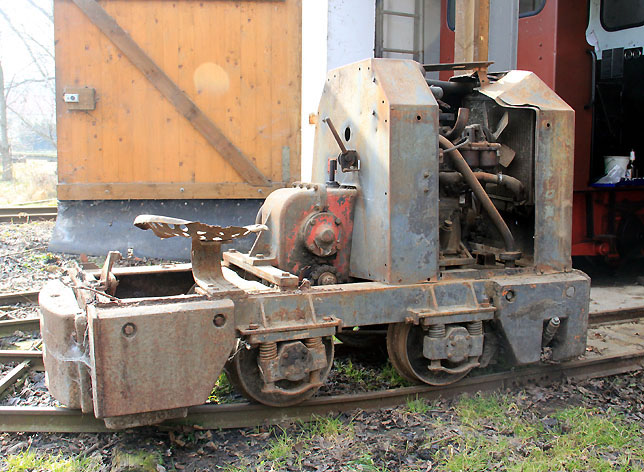
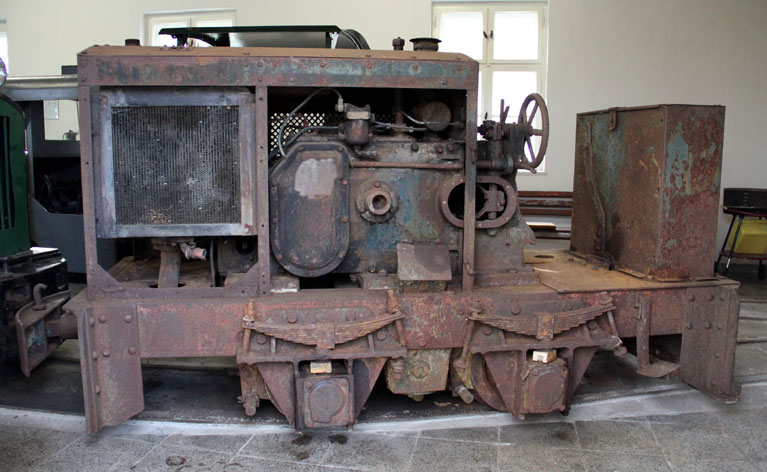
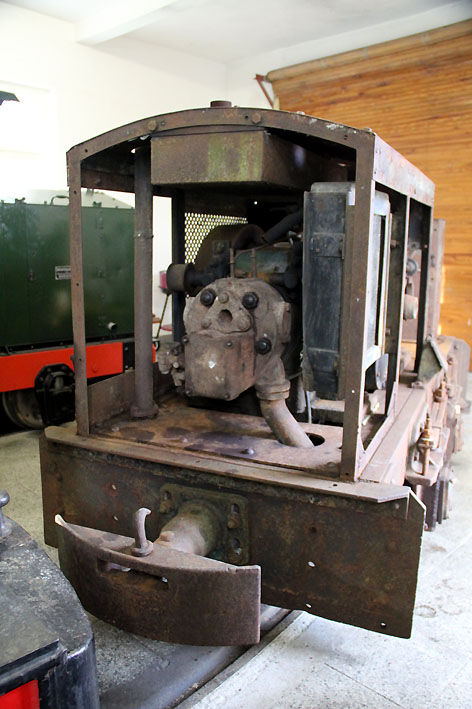
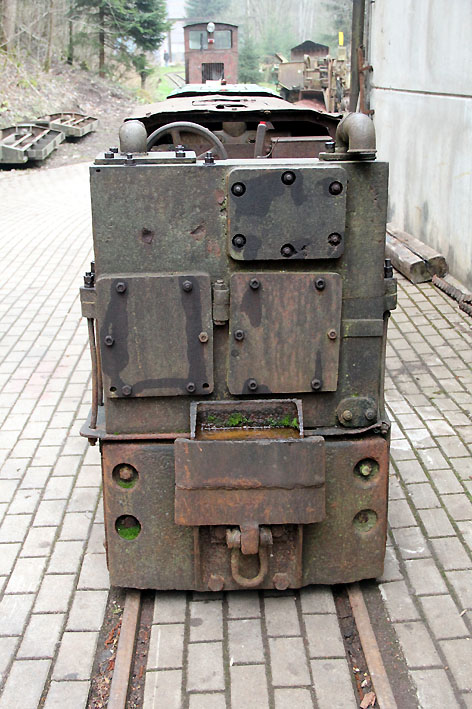
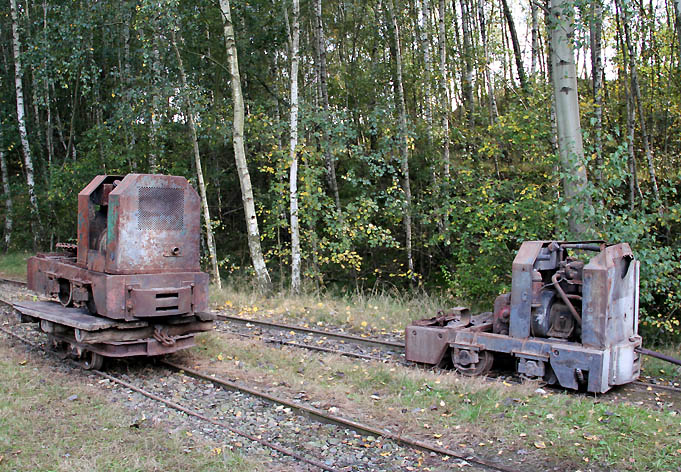
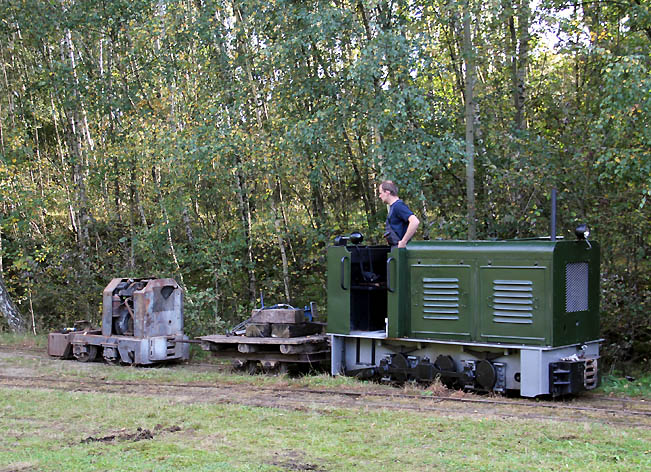
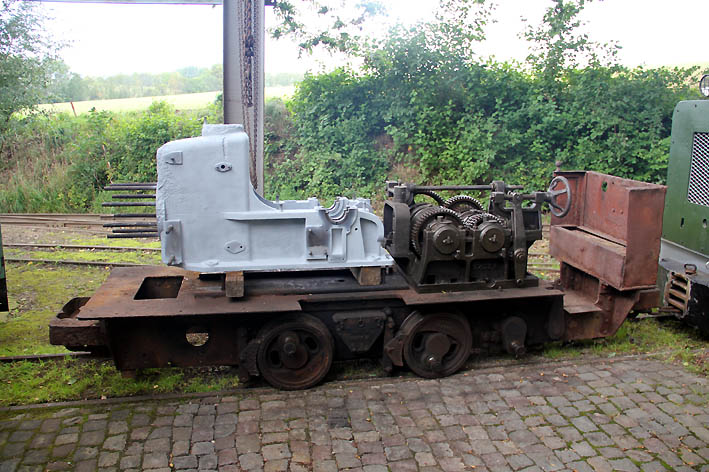
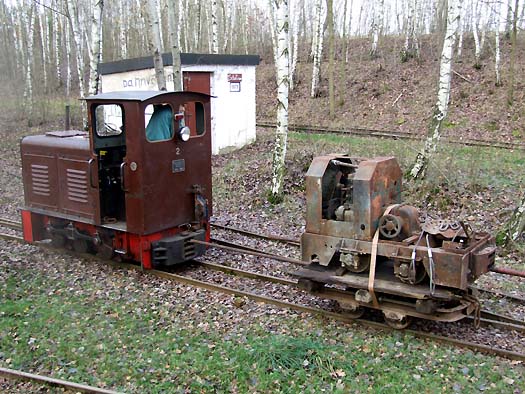
Just in time for the autumn meeting at
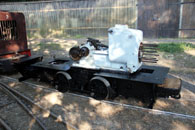
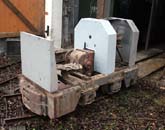
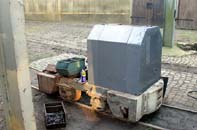
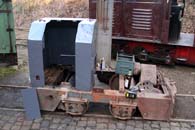
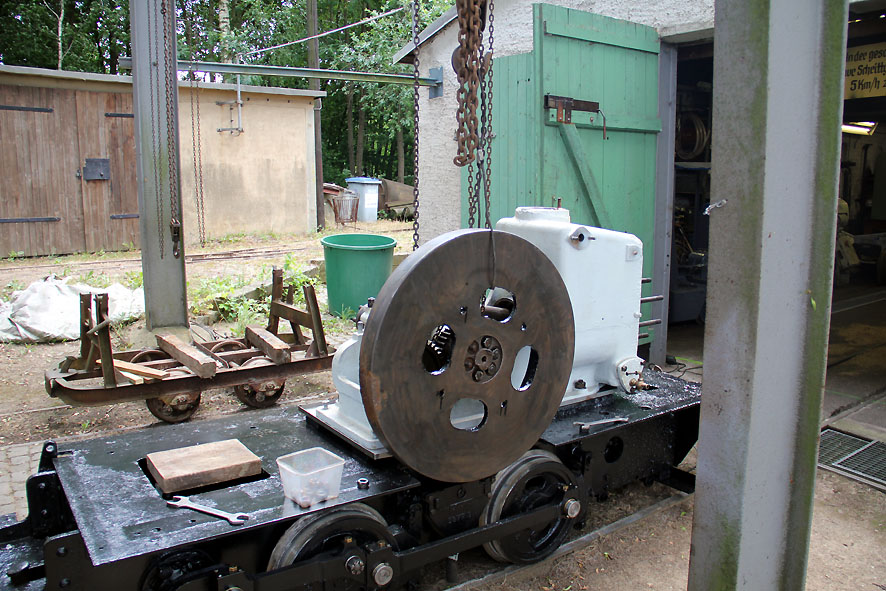
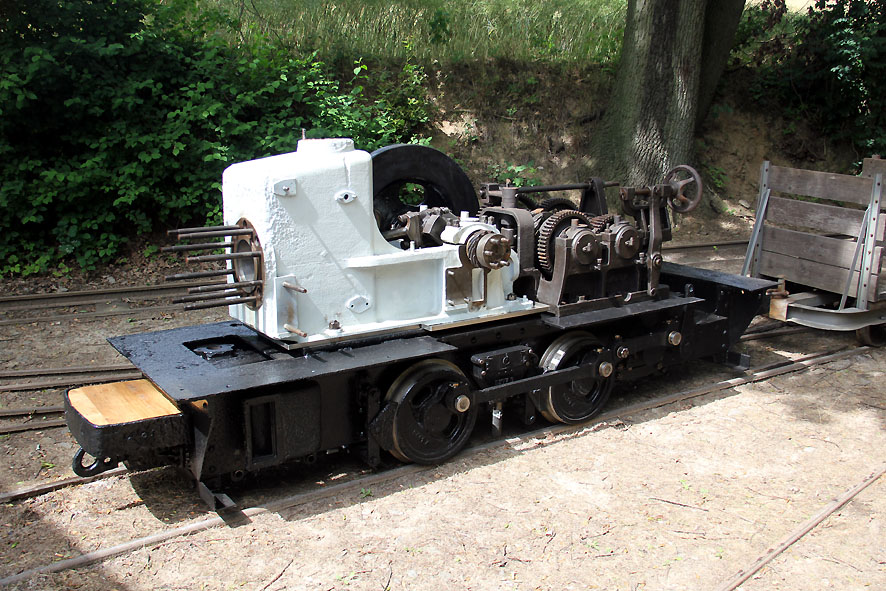
the Schortefeldbahn in Ilmenau the reconstructed mining LD2
no. 6331 was so far completed that it was able to prove their
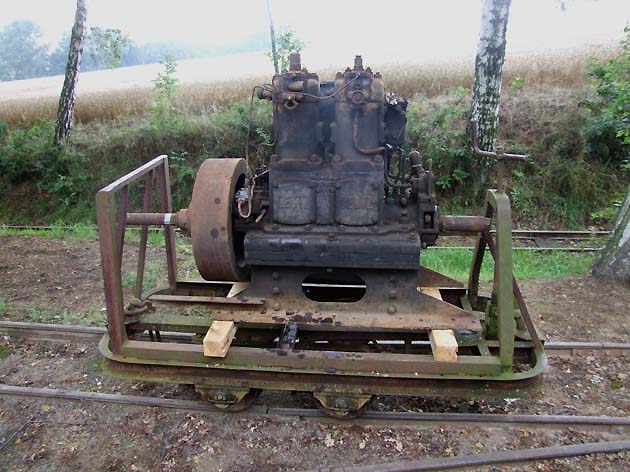
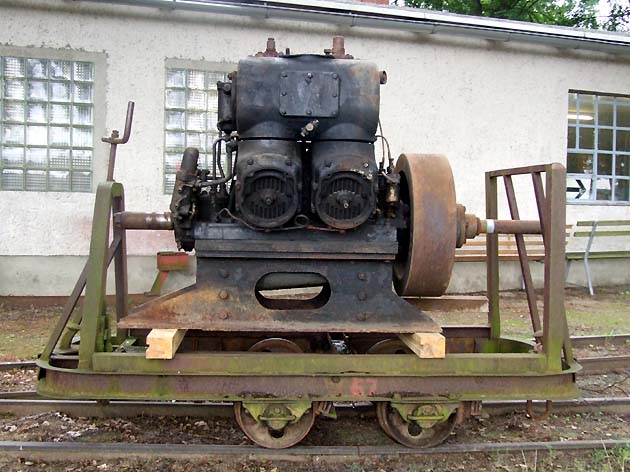
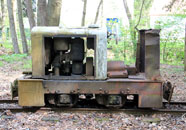
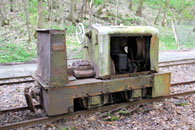
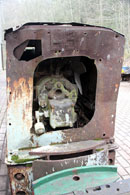
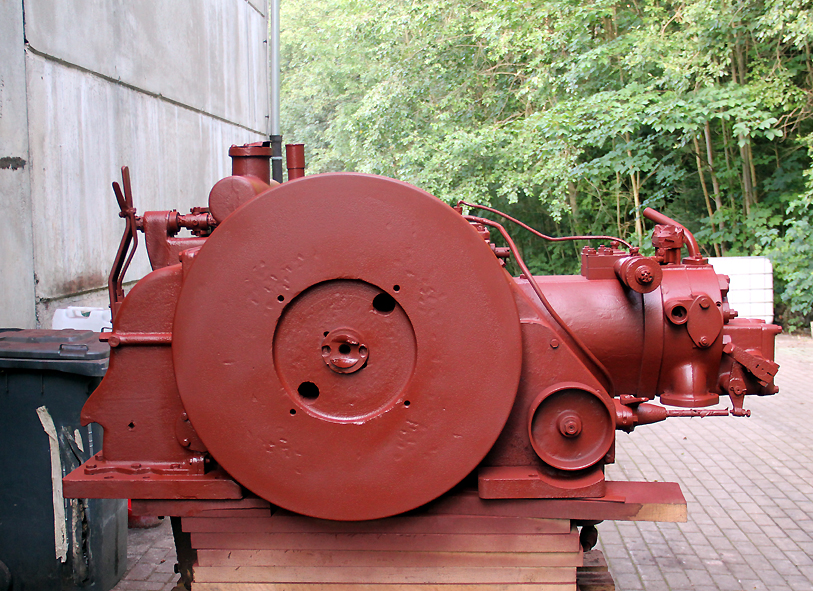
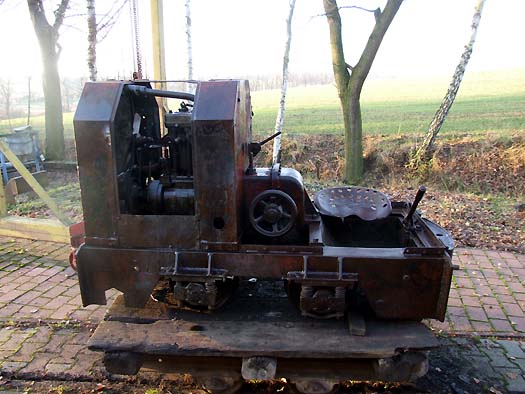
operability on the track. The missing bonnet plates were not a
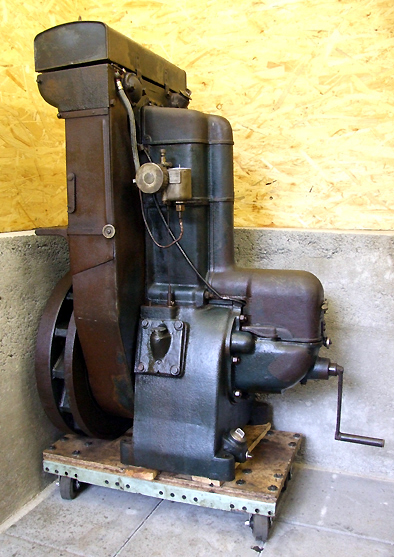
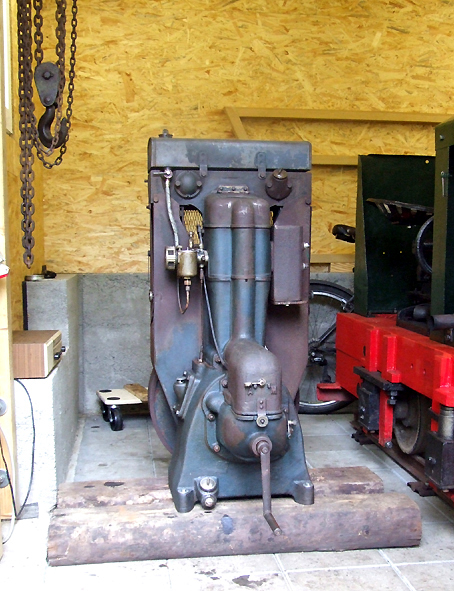
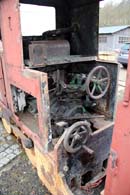
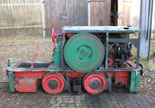
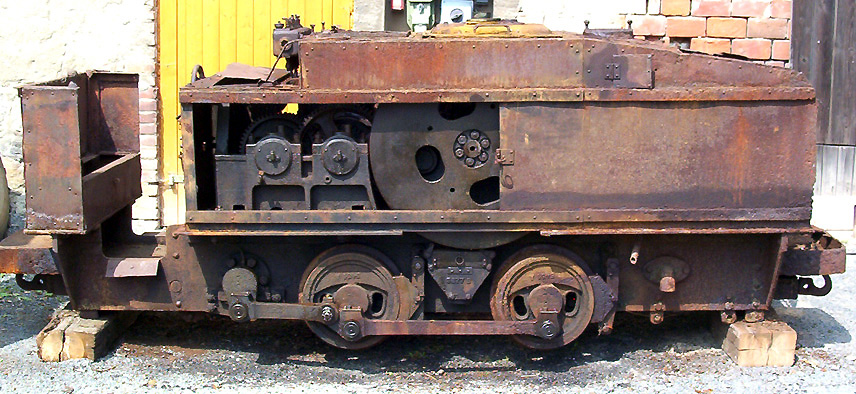
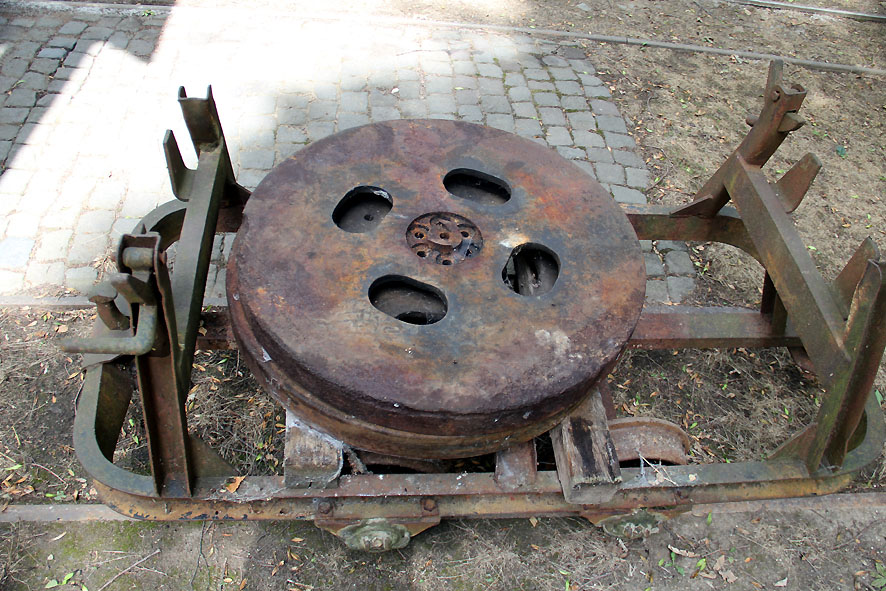
problem, rather the opposite: the inner parts with the large flywheel
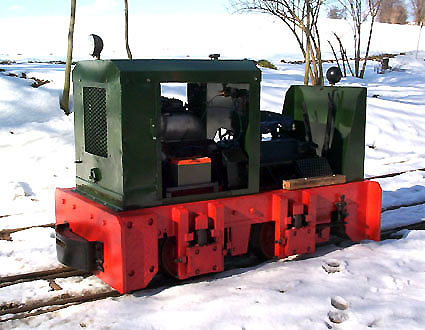
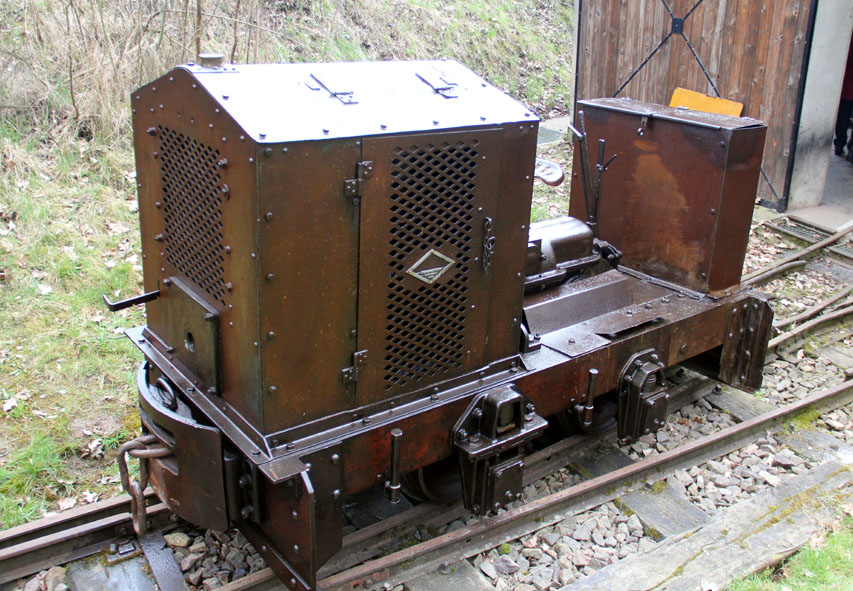
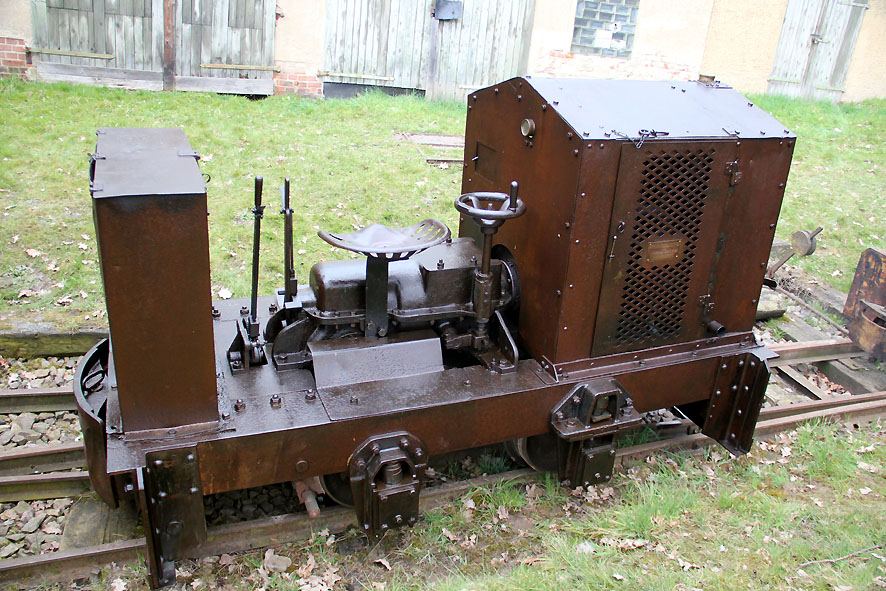
offered interesting details. For comparison, the nearly completed
locomotive of a hobby friend.
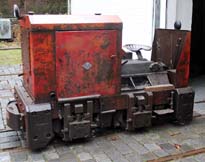
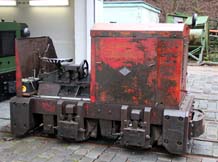
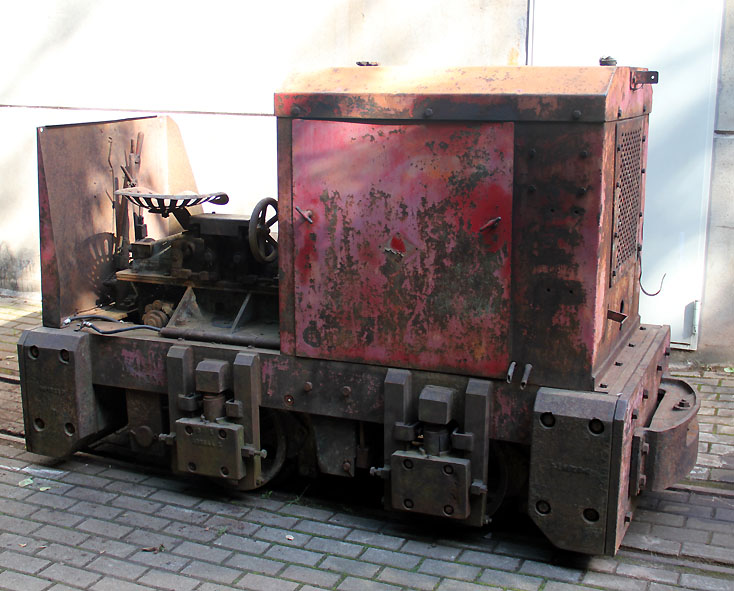
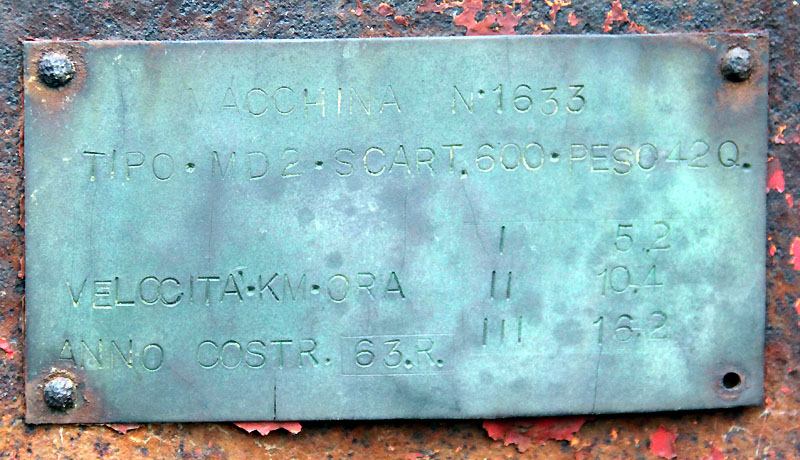
The restoration of the MD2 no. 1633 could be finished with
the commissioning of the electrical equipment. After the injection
pump has been overhauled and properly adjusted, the 22H.P. engine
showed its enormous pulling power.
September 2015
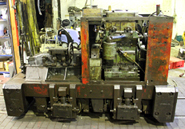
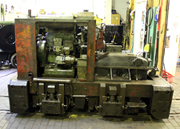
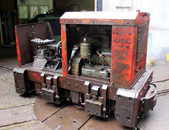
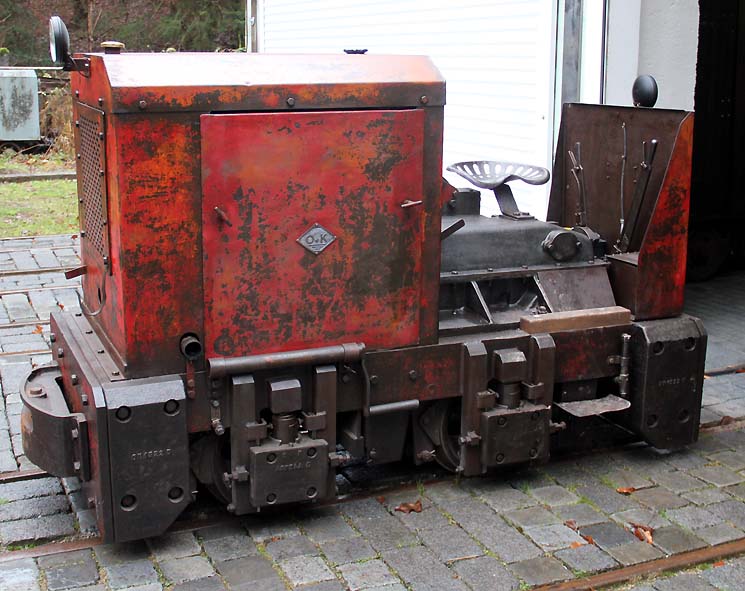
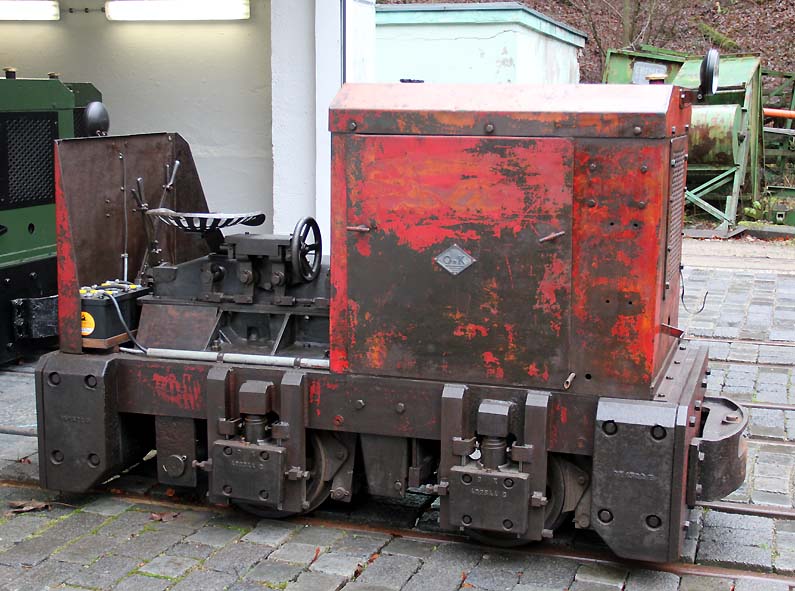
After the summer break we continued: reassembly
of MD2 no. 1633 is already well advanced, and the termination
of the work and the first track run are upcoming. The locomotive
shows a beautiful patina and does not frighten the viewer as ugly
rust heap. So they looked during the last time of their deployment
and their appearance is therefore really authentic.
The machine is a kind of time capsule, because apart from the
red paint it is entirely made of parts in the pre-war design until
the inch screws (all!). Probably 1963 the store in Sesto was still
well stocked. Only the electrical equipment incl. starter was
added as a concession to the demands of the present.
July 2015
The M00A no. 126 now has been completed
and other projects can be continued.
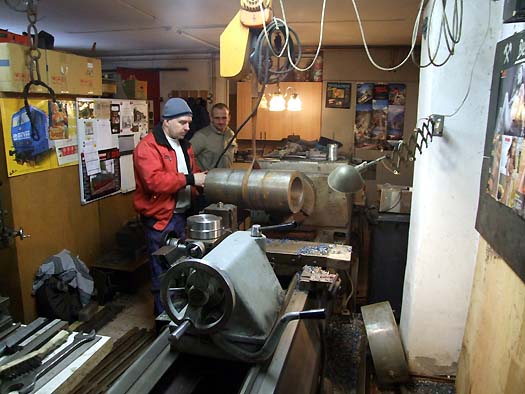
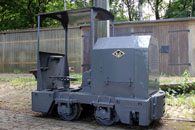
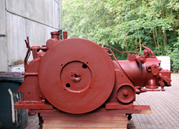
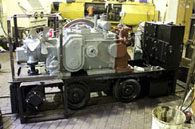
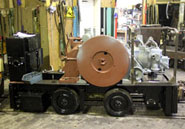
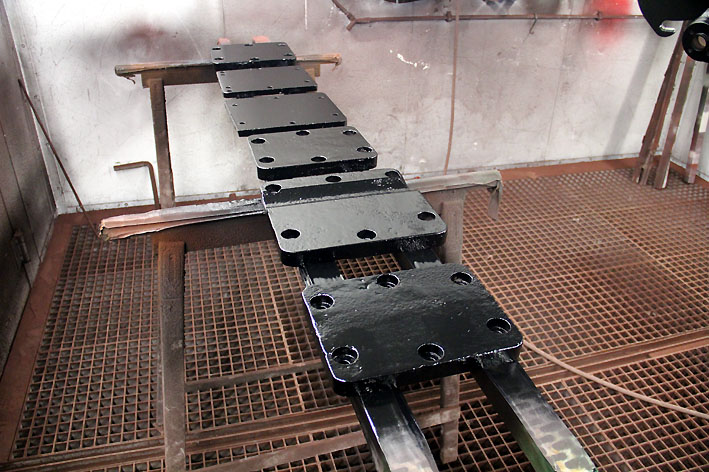
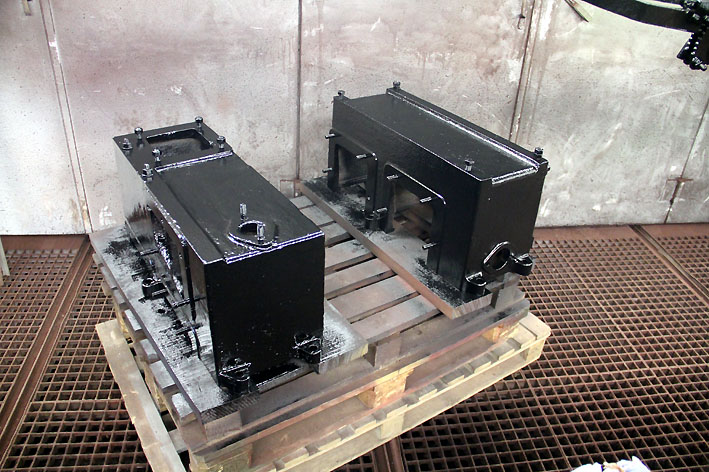
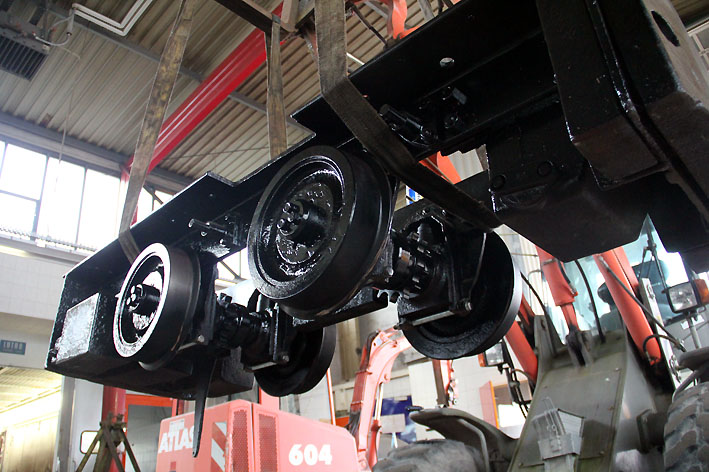
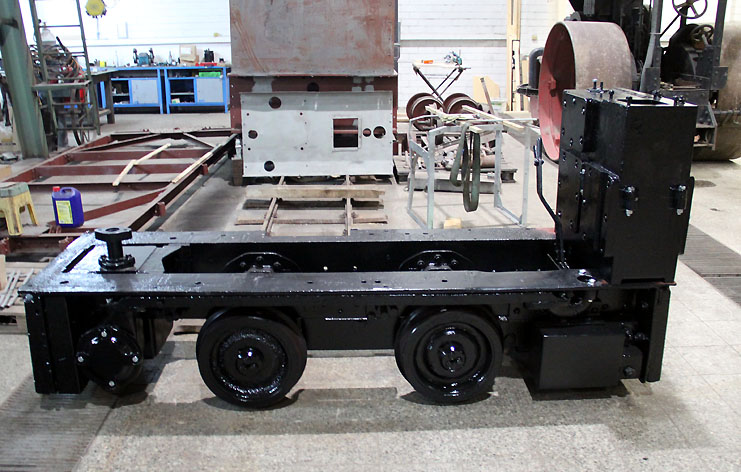
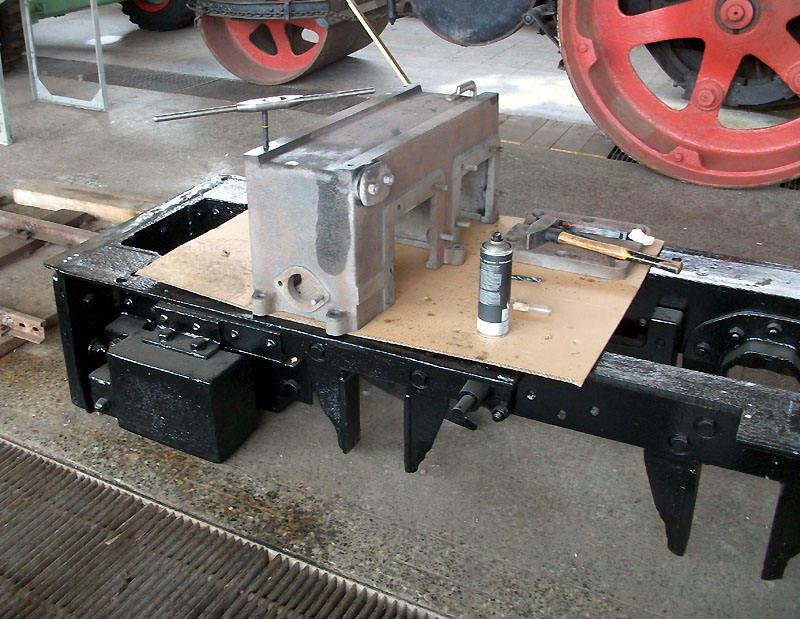
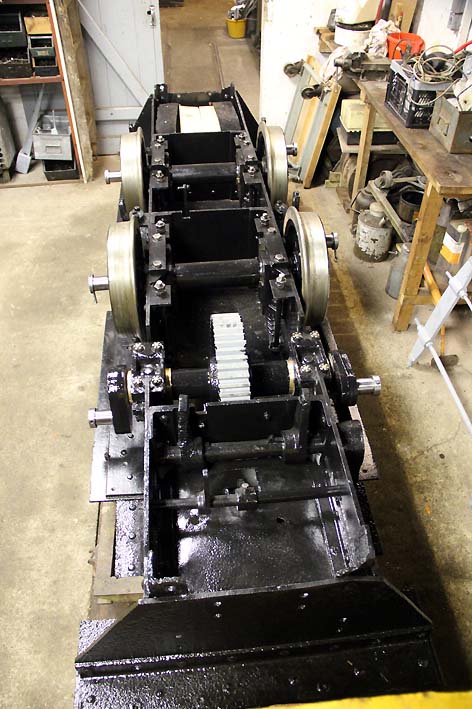
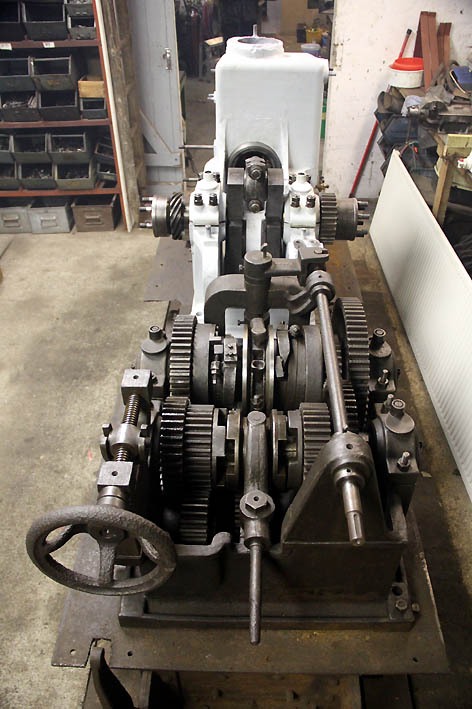
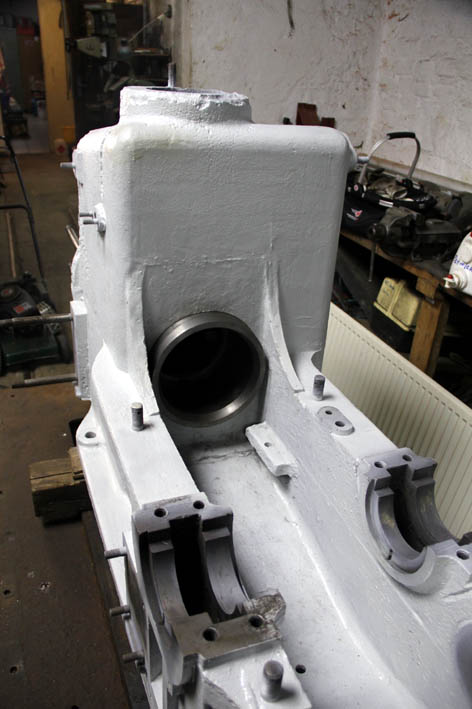
Thus, the work on the LD2 no. 6331 goes on: the cleaned motor-drive-block
has been primed, painted and re-mounted on the frame.
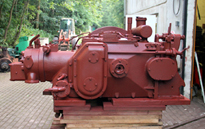
If an engine is finished, this is a good opportunity to disassemble
another one. It's amazing to see that it is possible to strip
a MD2 just in three hours. The MD2 no. 1633 will be merely
cleaned and repaired mechanically. A treatment with OWATROL will
replace a repainting because all metal parts of the paneling are
still completely remaining and many original colored surfaces
exist.
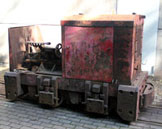
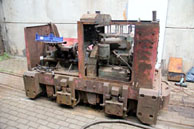
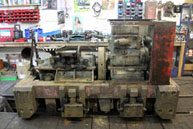
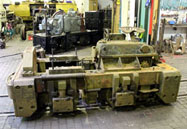
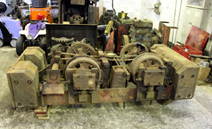
The remaining parts of the M00A no.
126 bonnet were dented, but should not be replaced by new
ones - because of remaining the original substance. Despite good
locksmith's work, they were barely angular. So that the prepared
side flaps did not want to fit. Therefore they had to be adapted
laboriously to the hood openings. In addition, matching hood holders
were mounted. After the finish of the painting the "OyK"
rhombs can be placed. A slightly longer test drive was successful.
Withal only one speed forward or backward, the little loco is
running fairly fast and usable for swift switching.
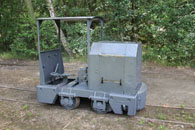
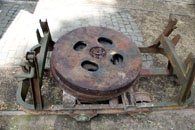
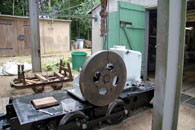
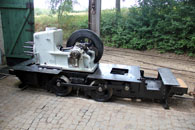
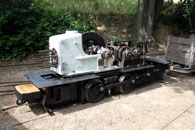
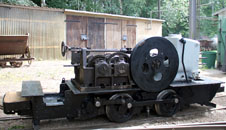
The
completion of the L180 no. 1361 goes on, although there
is still a lot of work to do. The flywheels have a considerable
size and substantial rust damages. The parts inside the gearbox
have been made moveable and derusted years ago, but the drive
has to be finally revised.
June2015
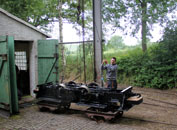
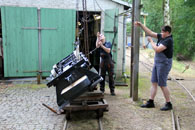
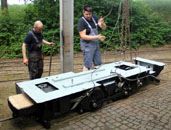
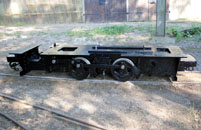
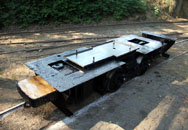
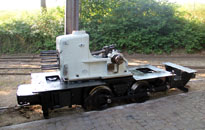
The completion of the L180 no. 1361
wears on, although a lot of work is to do. The flywheels are very
large and partial eroded by rust. The gear box was derusted and
made moveable years ago, but has to be finally revised. After
returning to its place on the frame, it will be possible to get
an impression of the equipment hidden by the bonnet.
April 2015
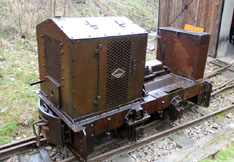
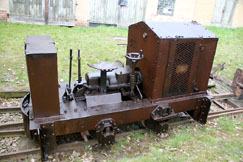
The RL1a no. 6281 is in
a condition caused by a long time remaining outdoor. It shows
only at the frame small traces of the original paint and is otherwise
completely rusty. Especially on the motor housing, there are some
rustic conversions from operating times and the overall impression
of the locomotive looks quite authentic. So it made sense to remove
the machine complete with Owatrol and preserve their current condition
for now. As expected, the few remains of paint are now clearly
visible on the frame and the overall impression has improved.
February 2015
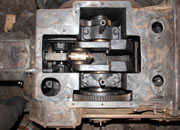
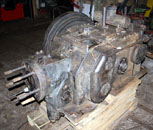
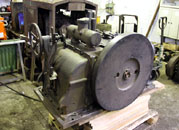
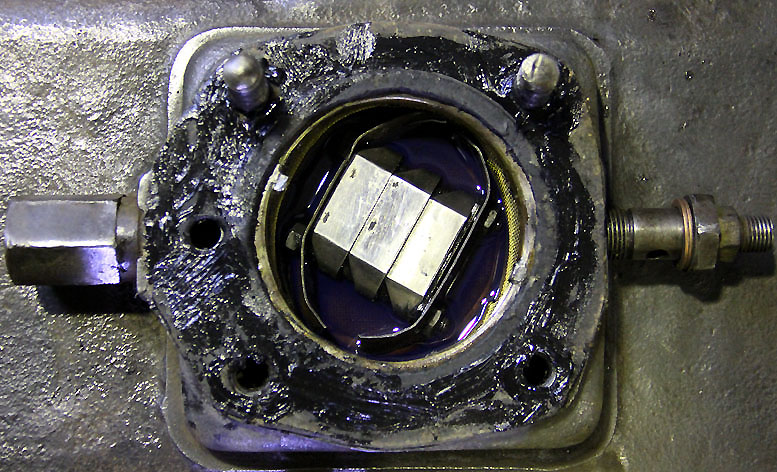
The works on the mining LD2 no.
5863 go ahead. The motor-gear block had to be de-rusted
and prepared for painting. This was done manually with (rotating)
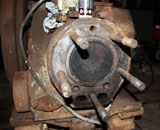
wire brush and air nailer gun. The motor is in a relatively good
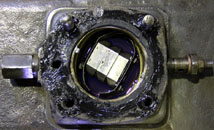
condition, both in the cylinder and in the crankcase. Very interesting
is the magnet in the oil filter to collect metal shavings in the
oil.
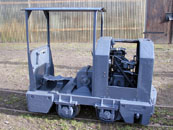
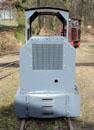
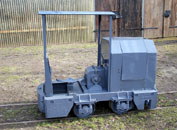
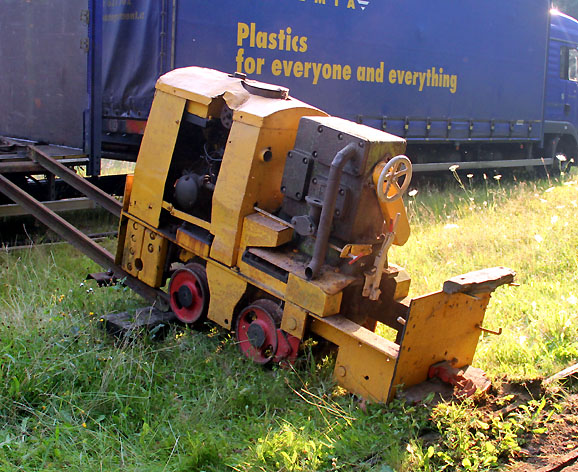
In addition, the completion of the M00A no.
126 is pushed. A roof according to the prospectus photos
should underline the toy-like character of the locomotive! Declared
it might have originally had none, because it has an exhaust gas
scrubber for mine or tunnel duty. But the holes in the hood for
the roof pillars were available and the idea is too tempting ...
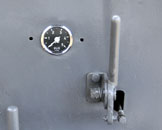
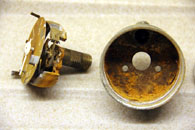
In the web, oil pressure gauge (55mm diameter) was found, fitting
with the year of construction 1974 also in age. The rust-colored
dust on the glass let expect a sad inner, which was also confirmed
after opening. Nevertheless, all the parts were still functional
and after appropriate treatment, it is almost as good as new again.
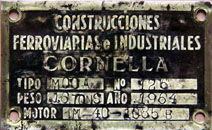
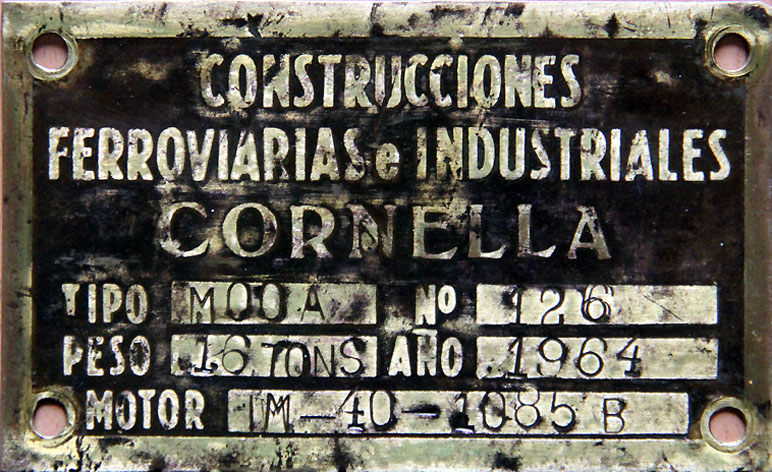
Here also added the manufacturers plate with no sign of O&K.
But there are still the "OyK"-rhombs on the hood that
will be mounted when the sides are adjusted.
January 2015
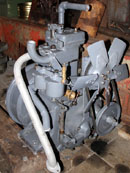
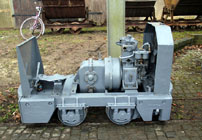
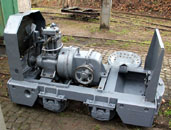
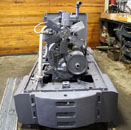
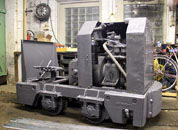
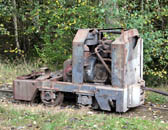
The M00A no. 126 is now
near completion after the engine is also finished. Again, there
were a lot of wear and tear to eliminate. Now he gets nearly close
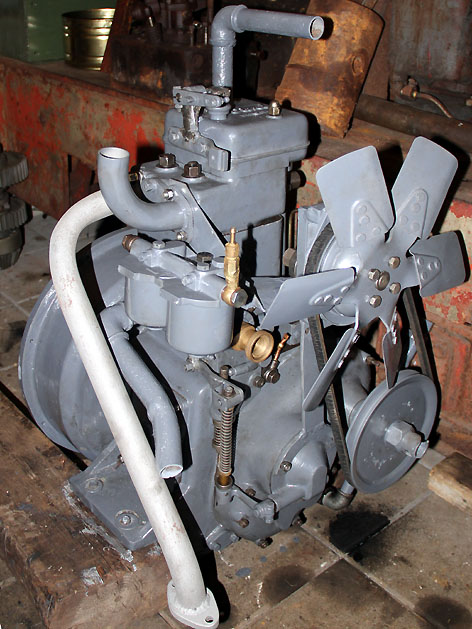
to the factory state. Earlier changes such as an exchanged fan
incl. bearings and a car cooler were left deliberately, but too
amateurish tinkering is corrected. Injection pump and nozzle were
of course checked and repaired by a specialist. The back wall
of the locomotive and the broken brake lever have been replaced.
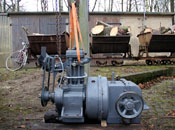
For comparison, once the initial situation.
December 2014
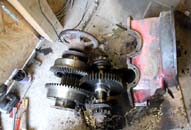
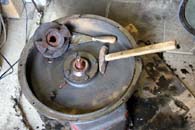
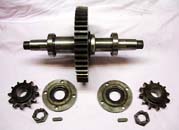
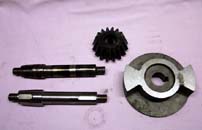
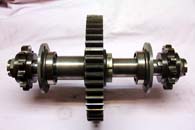
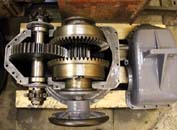
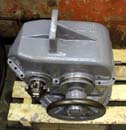
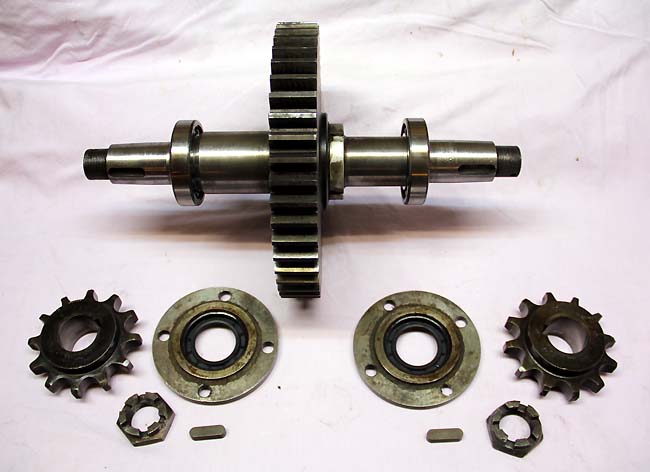
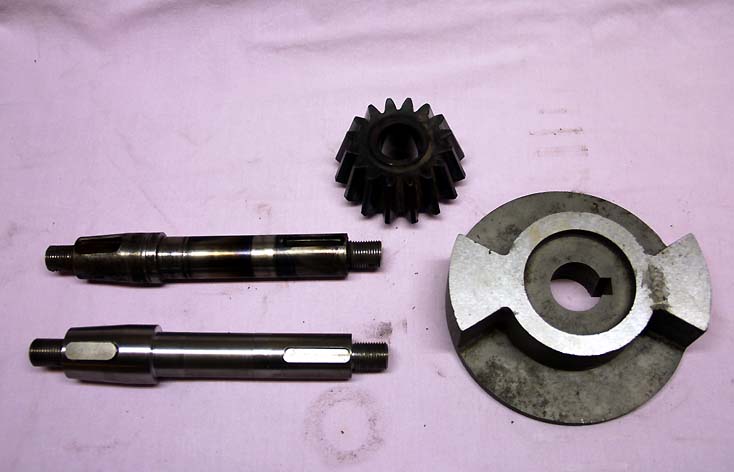
At first glance, the gear box of the M00A
no. 126 was intact and should not be worked up actually.
However, the oil seals at the output shaft were obviously untight
and oil exuded. So a dismounting was inevitable. It was found
that the motor-side driver was totally worn and not fixed on the
drive shaft and its conical seat had to be repaired. This meant
a new production of - fortunately short - shaft and the seat in
the driver disk by a friendly mechanic company. In addition, it
was necessary to replace all bearings in the gearbox, as they
were all worn too.
November 2014
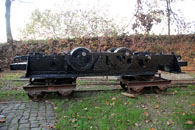
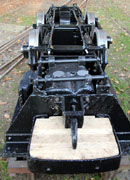
Parallel to the works at her younger sister
even those on the L180 no. 1361 go on. The LD2
no. 5863 is to be considered in terms of weight and performance
as a successor to the L180, which is emphasized by the lying engine,
which was very popular at the early mining locos. The benzol loco
had a protective casing around the drive sprocket of the jackshaft
originally. Unfortunately only the mounting brackets remained,
so that the form had to be redesigned, as well as in the spare
parts list was no representation of it. Without this case there
is a risk of damaging the gears by picked up stones or metal parts
from the track .
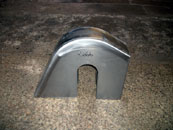
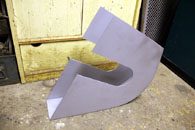
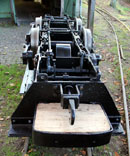
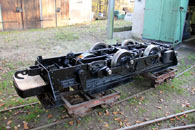
The wooden (oak) buffer inserts
were long time ready for mount and now fitted, the tow hooks too.
The fitting springs are in progress. The circumferential, strong
metal strips of the buffers are made of of spring steel and struggled
successfully all tries of bagging with the 3 ton-jack.
October 2014
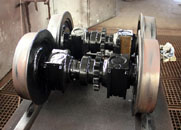
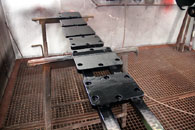
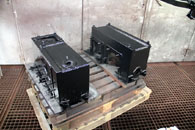
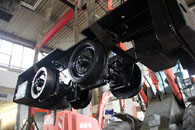
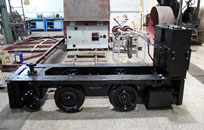
Thanks to the active help of a hobby friend
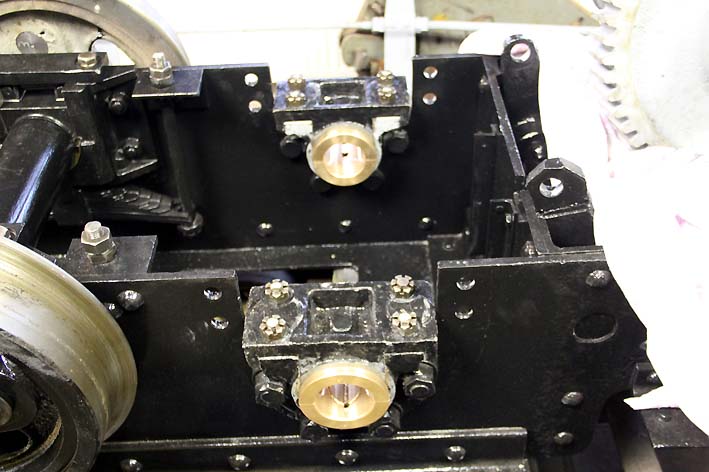
the frame and the axes of the LD2 no. 6331 are painted
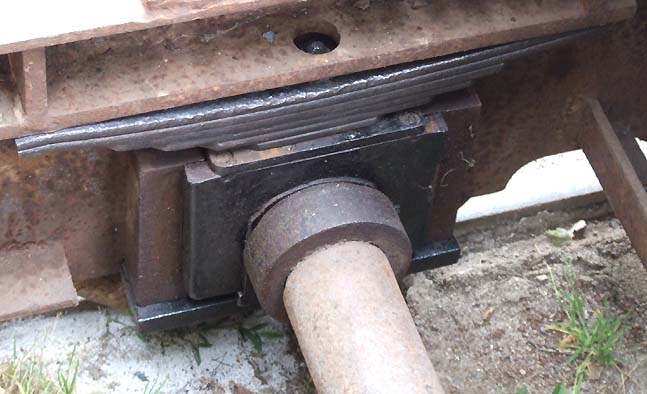
and now ready for assembling. Because of the new springs there
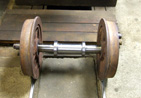
is now enough space between the whieels an the frame for the exaust
pipe. The next step now can be the refurbishing of the engine-gearbox-block.
August 2014
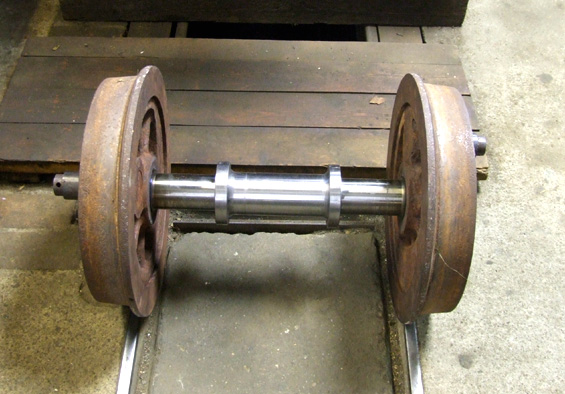
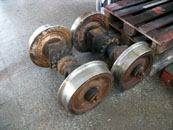
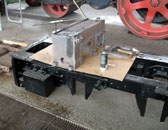
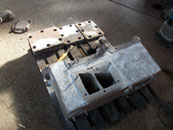
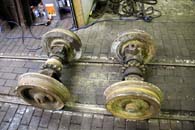
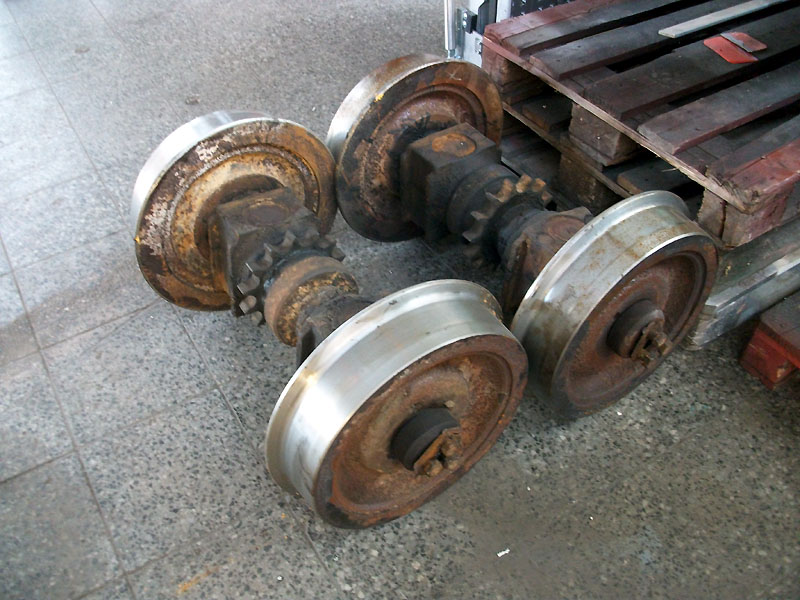
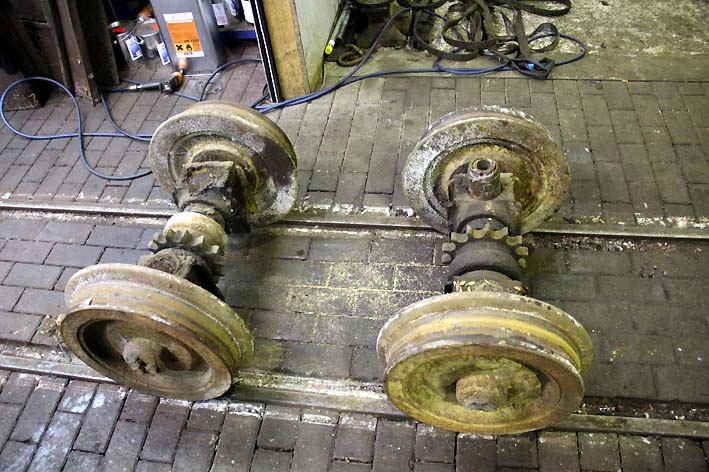
The wheel rims of the LD2 no.
6331 have been build-up welded and turned, so the profiles
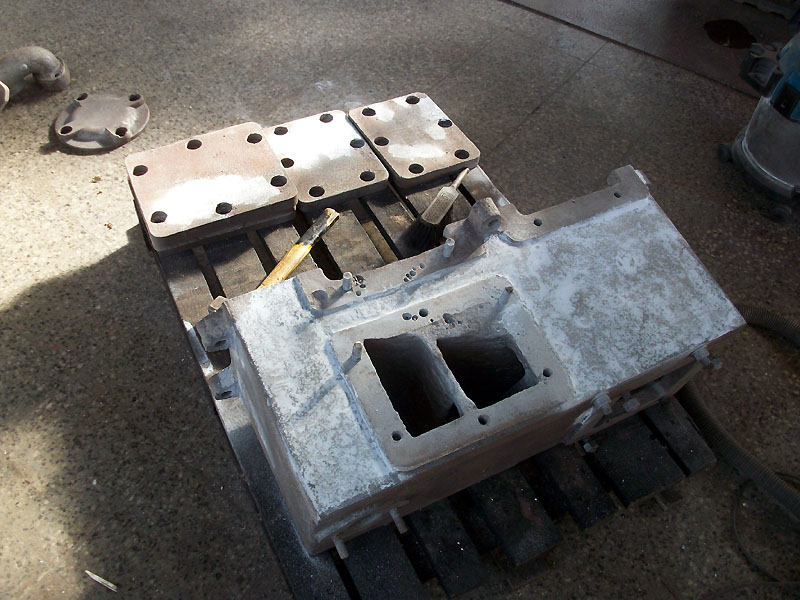
enable a correct working of the locomotive on the track. The exhaust
gas scrubber must be re-fixed to overcome previous botch. The
sand-blasted parts show many blowholes that need to be filled
before painting.
July 2014
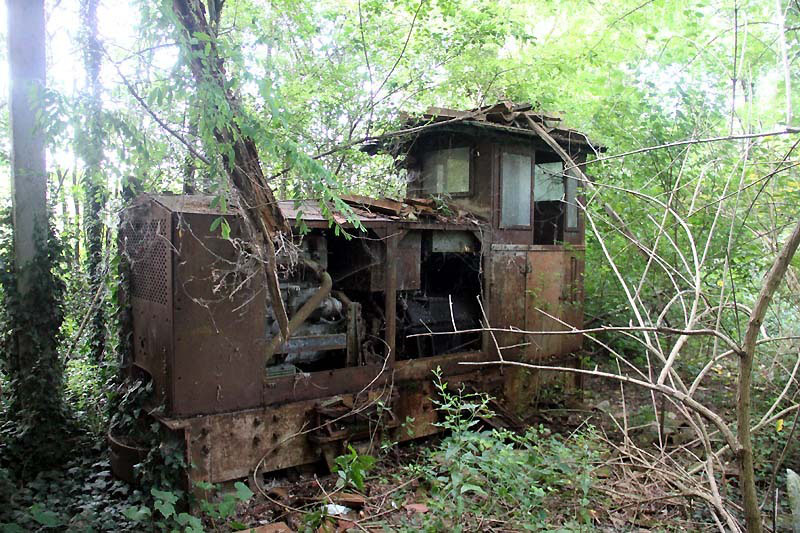
Since 2001 is an article on the website
of Mauro
Bottegal about the surviving locomotives of the gravel railway
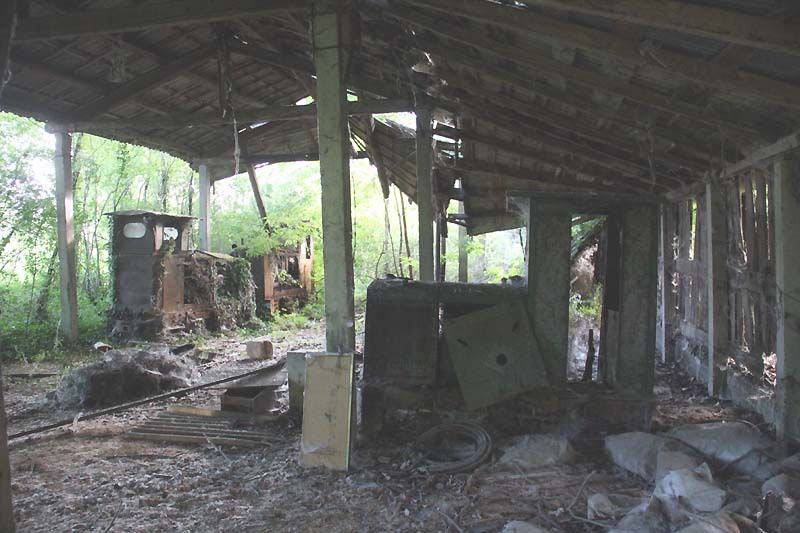
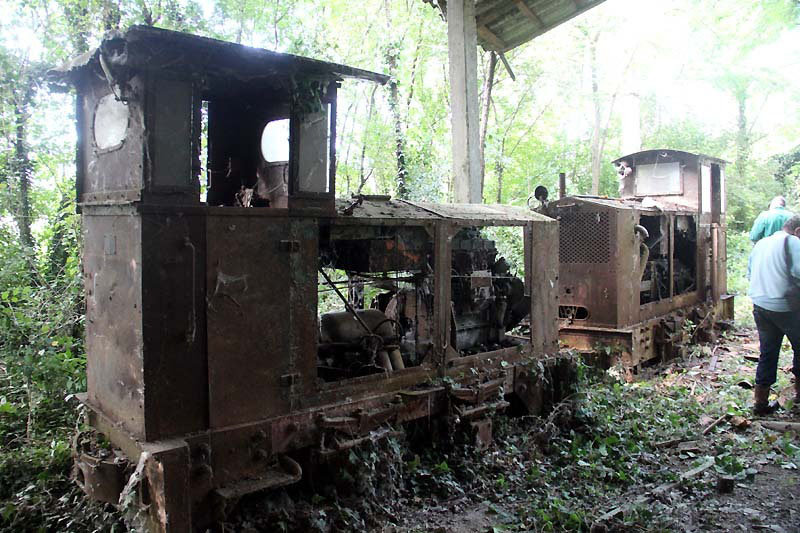
in Carturo (PD). A site visit at the time showed four under a
large shed roof parked machines, the RL2 no. 3391,
the RL4 no. 20028 and LD2 no. 10387 of
O&K as well as a locomotive of the American manufacturer Whitcomb.
Like Mauro wrote the state was quite good thanks to the roof,
despite obvious long shut-down. The owners, two very old brothers,
couldn’t get contacted. But at every journey in the region
during the next following years a visit to the machines was made,
however there was no changes except for a decline of the buildings.
Three years ago, a chance offered the first personal contact with
the current owner, who said that nothing is to sell except an
old digger. The key hint came by a years old post in an Italian
web forum, referred to the purchase of a Decauville loco. The
added photo in the post showed the RL2, in Carturo yet.
So it was urgent necessary to check how it looks there! Fortunately,
not the RL2, but the Whitcomb had been sold.
But that meant that the owner probably now considered to sell
the locomotives. By another lucky circumstance, it was possible
to find out an English speaking young man in a group of residents,
who was able to get the phone number of the owner. With the friendly
help by phone of a native speaker it could be made sure that the
"Montanias" came up for sale. The rest was easy to manage
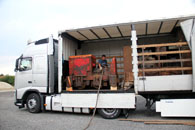
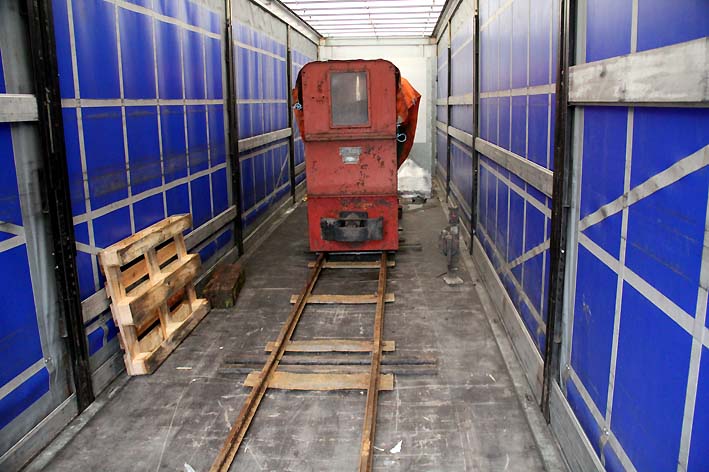
unless the problem to order an empty truck, immediately before
the start of the summer holidays in Italy.
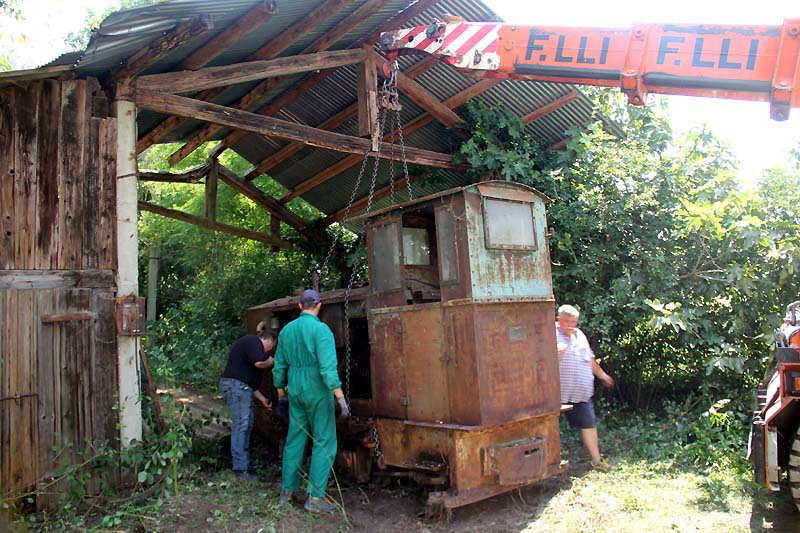
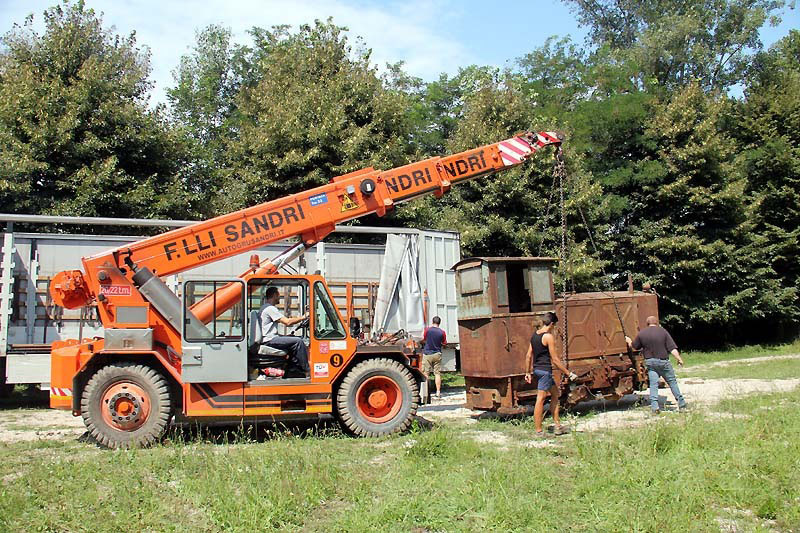
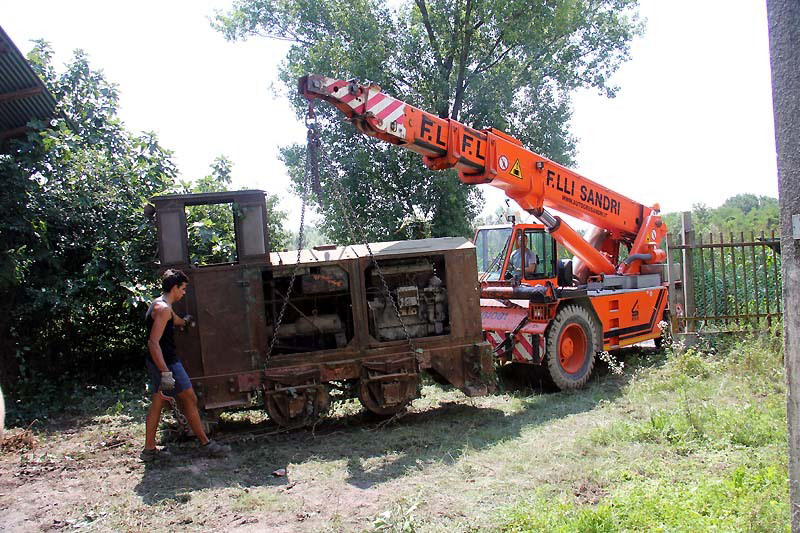
The loading was done with the help a local crane company , probably
one of the smartest from across the region, with a small, agile
and strong (22t) "magic crane".
However, it got stuck at first on a wet meadow (it had recently
rained properly), just like the truck, which should pull it out.
But there was still the big tractor that was supposed to haul
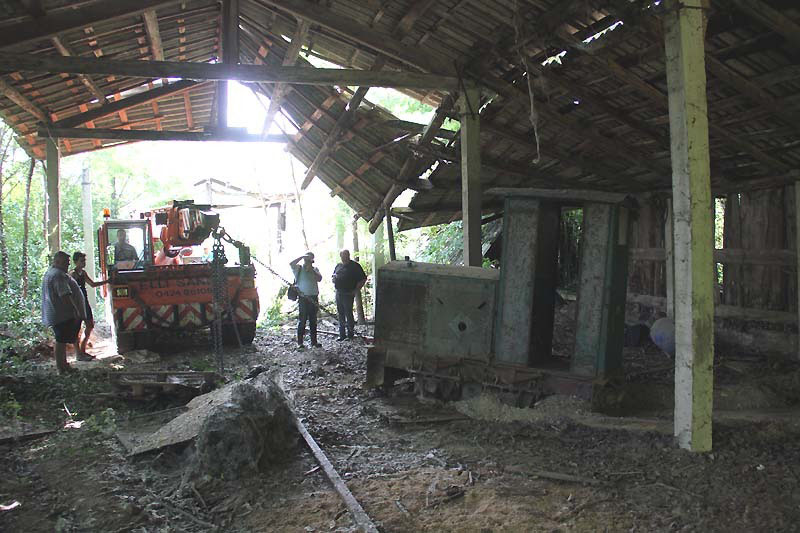
the locomotives from the dilapidated shed but didn’t have
the slightest chance.
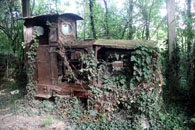
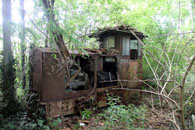
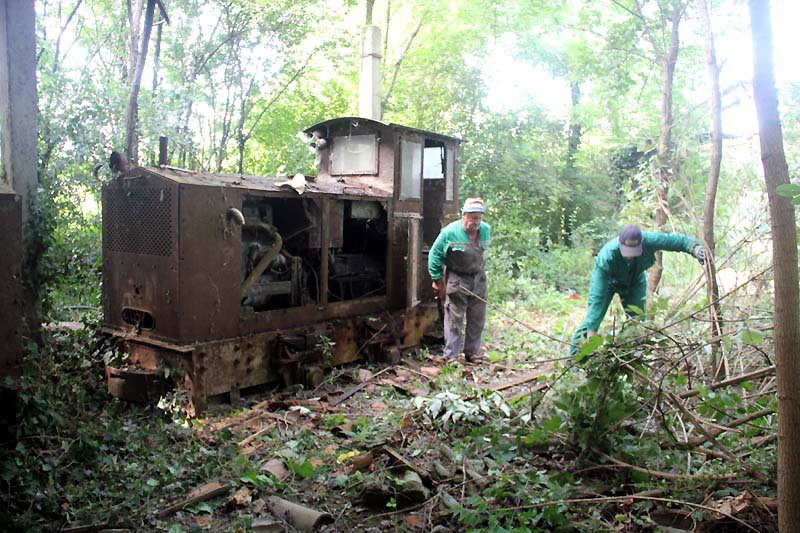
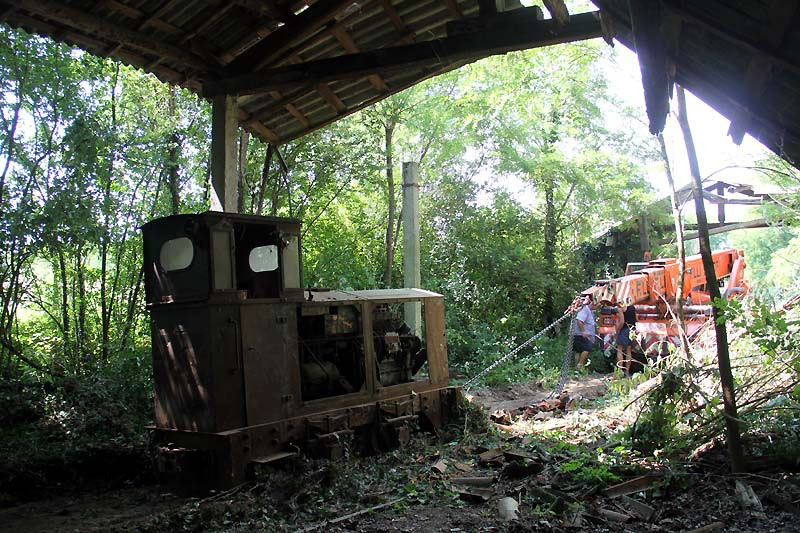
So the locomotives looked before starting
of the works. They seemed to wait for the awake kissing. Sorry,
no princes were present. However, three side panels have been
lost in recent years, adjacent to the beautiful, large cooler
of the RL2. The front panel of the RL2 and a side
plate of the RL4 were missing already in 2001.
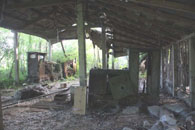
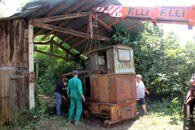
With difficulty the growth of the
recent decades has to be removed.
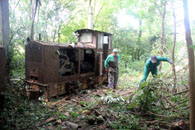
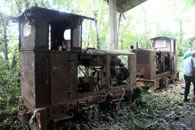
Now, the crane can lift and drag,
getting bit by bit with the telescope. With the help of the wheels
he wasn't able to make it.
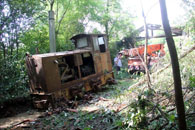
And at the end of the second, crooked
shed he can lift the locomotive. The 8t the RL4 didn't
seem to be a burden for the crane. The shed threatened to collapse
all the time, but could not be pushed aside for the action. Then
the bulidung lease would have been lost for...
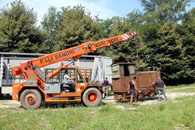
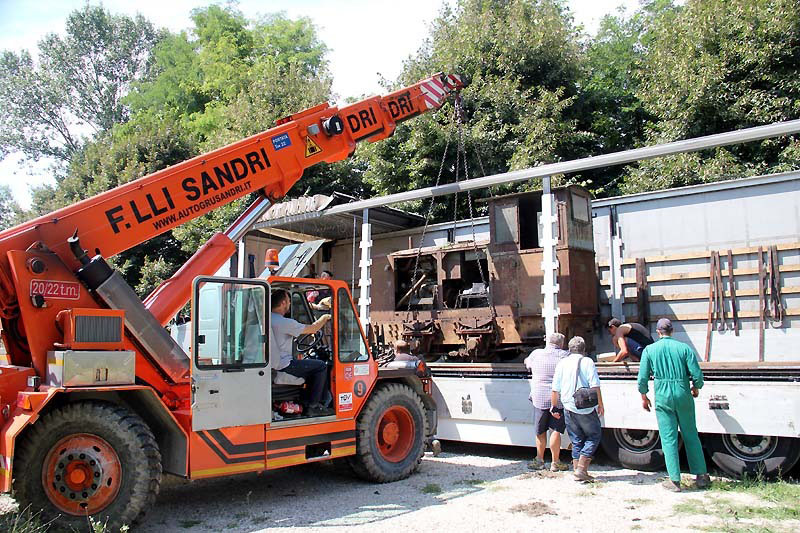
A kind of procession was the way to
the truck. Finally, someone had to keep the locomotive on the
"track". For the loading the crana stands on the same
place and the truck moved backwards.For the observer a confusing
relative movement.
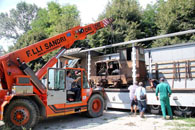
Now
the RL2 could by lifted the same kind whereat it lent risky
and left a deep furrow in the soft sand. But in the end, she was
hooked.
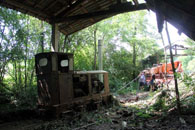
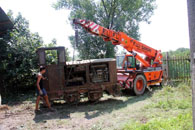
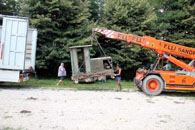
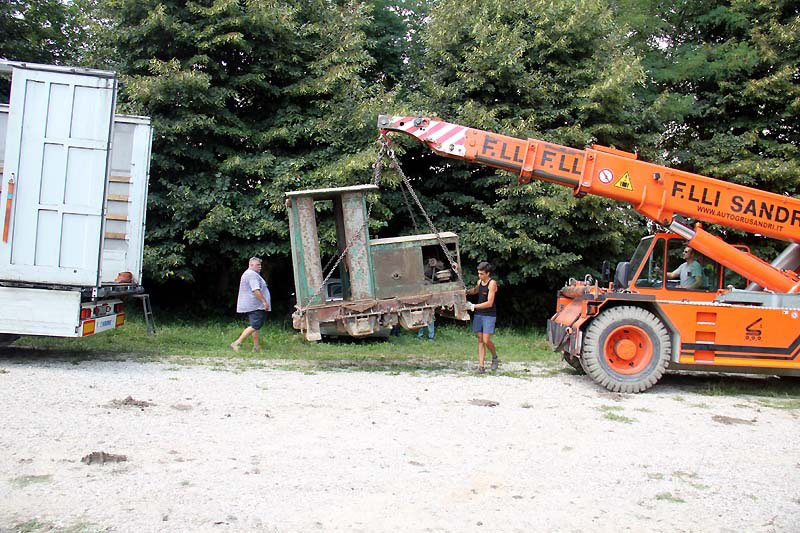
The
LD2 had to be brought "outside the box" to reach
the "main line", no problem for the crane with the light
locomotive. Compared to its big sisters it is almost a toy. By
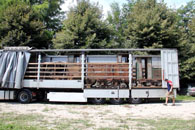
the way, the head of the crane team was, due to his technique,
of respectable figure. And finally, a pure "Montania"
loaded truck appeared. He was later completed with a MD2,
for which the necessary space was left.
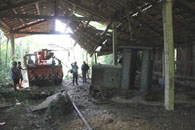
The locomotives reemaind under the
shed since the year 1968. While the RL2 and LD2
complete the own collection, the RL4 goes to a fellow collector
in Thuringia.
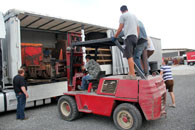
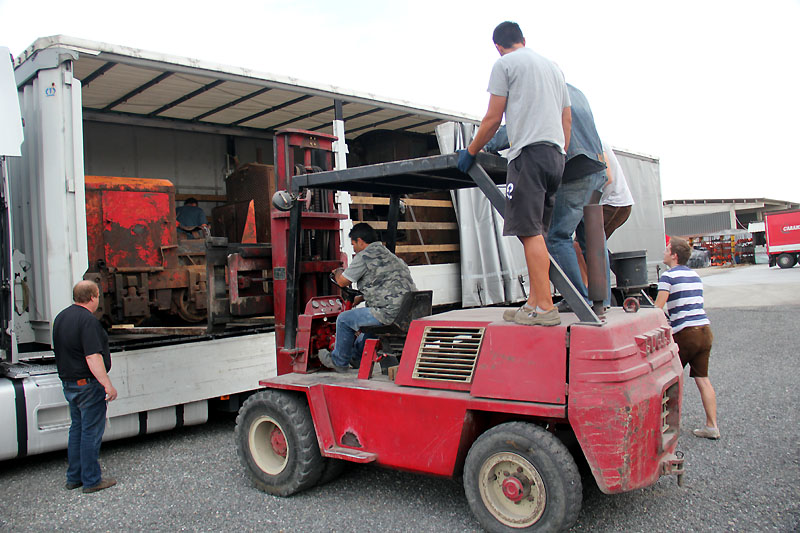
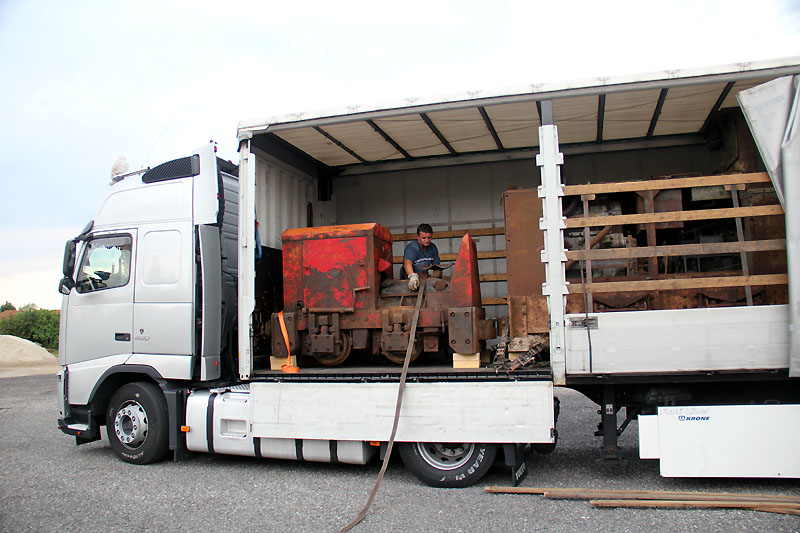
At once with the
Carturo locos another Montania locomotive was acquired in Italy,
which once was in duty for a construction company. This is - so
far known - the last built machine of the type MD2 from
1963, still equipped with the original engine (two-cylinder in
line). It is factory fitted with an electrical system and starter
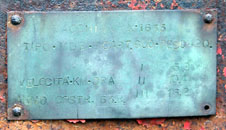
and mounted in the workshop Sesto San Giovanni, near Milan. Obviously
it had from the beginning a red finish, as used by O&K later
for the construction machines. The loading with a forklift was'nt
without problems, so some volunteers had to support with their
own weight. With this fourth locomotive the truck was fully utilized
with 23 tons.
April 2014
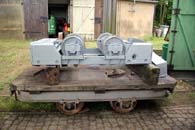
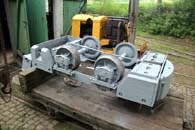
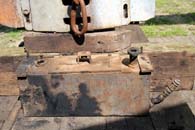
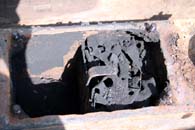
The works on the frame of the M00A
no. 126 go ahead, so that they will be back on their "feet"
soon, after finally painting the bottom. Previously, the completely
broken springs are changed by new ones and the missing weights
on the left side are replaced. One of the two weights under the
footplate was re-mounted and all buffer screws were exchanged.
During the last operation of the locomotive the mechanics obviously
believed that casting buffers could be welded, a mistake. The
remaining weldseams have to be removed by grinding. The exhaust
wash box was apparently used without water, but filled for better
sound attenuation with old, crumpled cylinder head gaskets.
February 2014
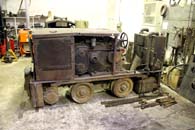
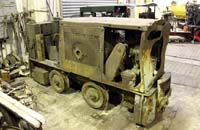
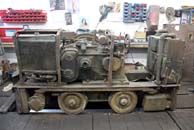
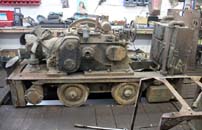
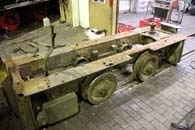
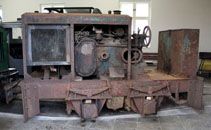
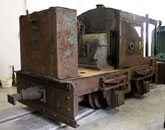
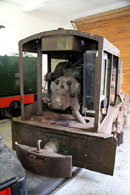
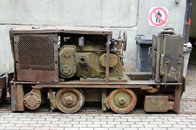
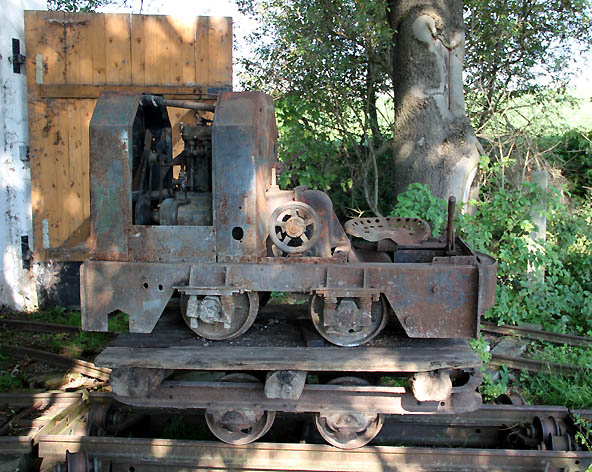
The LD2 no. 6331 in mining design
will be restored together with a similar loco, owned by a friend.
So it will be easier to copy missing parts of one of the locos
after the existing parts of the other. The result will be two
nearly identic locos with only few differences. The decomposition
showed a good substance of the machine despite of some superficial
damage and considerable pitting. So the liner and the bearing
of the motor and the axle bearings are perfectly. , However, only
remnants of the suspension springs exists and the radiator needs
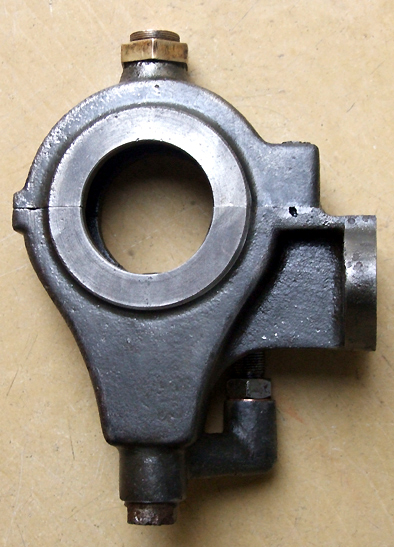
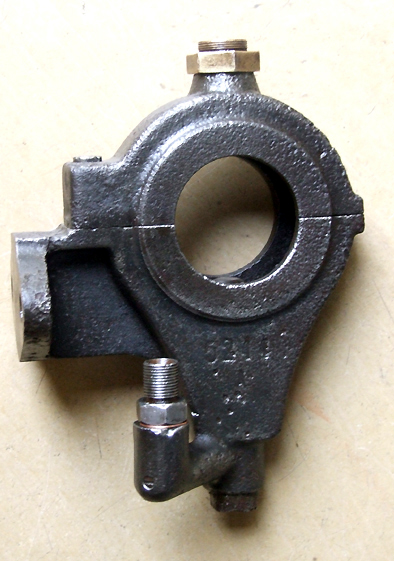
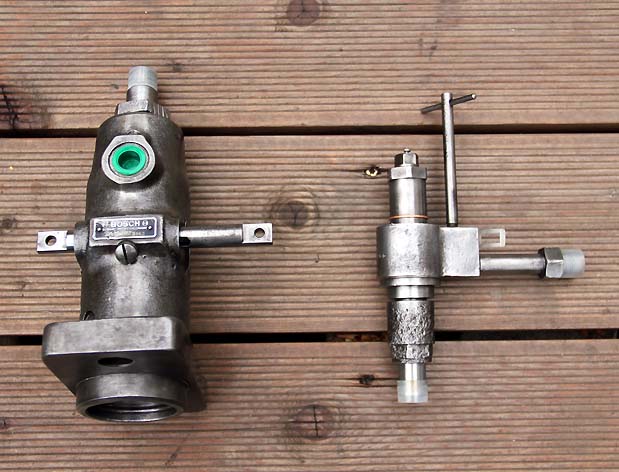
a new gauze. The element of the injection pump has to be replaced
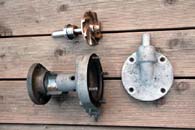
but the nozzle insert could be refurbished. The cooling water
pump was broken and all internal parts except the paddle had to
be rebuilt. The axles have to be overlay welded and turned. The
metal parts of the hood must be new built widely. However, the
rareness of the loco justifies the effort.
January 2014
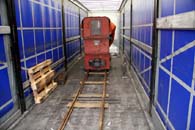
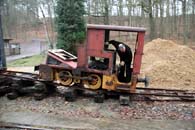
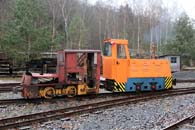
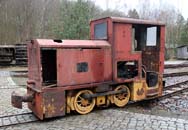
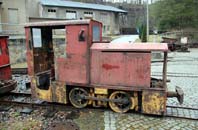
During the Christmas holidays the hint
of a light railway friend offered the opportunity to buy MD3
no. 11709 from the Swedish Decauville railway museum at Frövi.
The locomotive has no engine, but several years ago this was sold
as a spare part to the Feldbahnmuseum Herrenleite, because it's
cylinder heads were lost in Sweden. Luckily in Pirna the engine
was not needed because the local MD3 could be restored without
it's help. But the required cylinder heads are already existing
and now it is possible to complete the loco. When attempting to
mount a chanded engine, the hood was removed in Frövi and
not completed. However, all housing parts incl. cooler are remaining.
The substance of the locomotive is good at first glance, more
details will be seen during disassembly.
December 2013
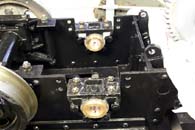
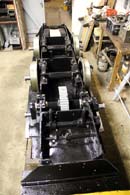
The work on the L180 no. 1361 continues
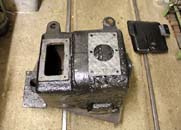
unabated. In connection with the mounting of the axles and the
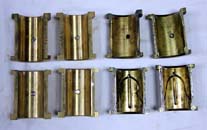
jackshaft all bearings have been replaced, which involves considerable
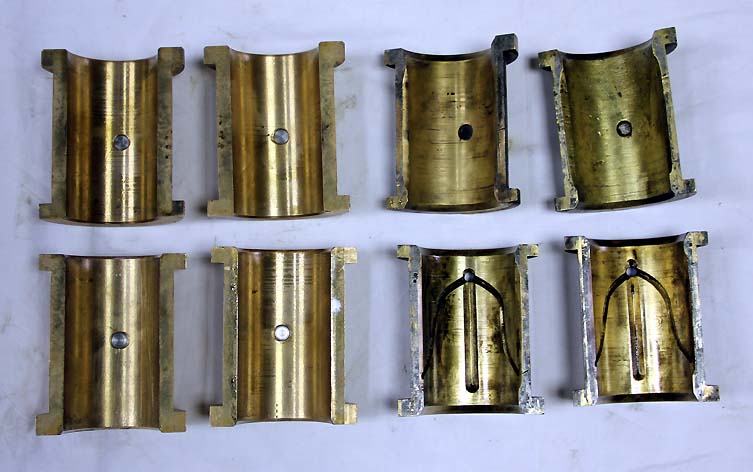
complexity. Of course, the oil grooves were milled again into
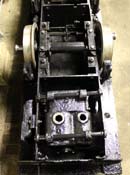
the cups. Also the exhaust box has returned to its place in the
locomotive frame. Next, the rods follow.
November 2013
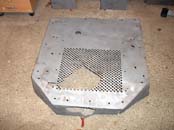
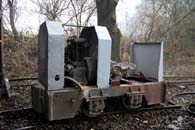
Now the small M00A no. 126 has
repaired hood parts and a newly built rear panel. The repair of
the hood by a locksmith certainly needed more work than a new
construction, because it was so battered and partly cutted. But
so the original substance could be almost completely preserved.
And a few small bumps are usual at a Decauville loco. Now even
the frame and chassis must be repaired. Engine and transmission
are already in process in parallel.
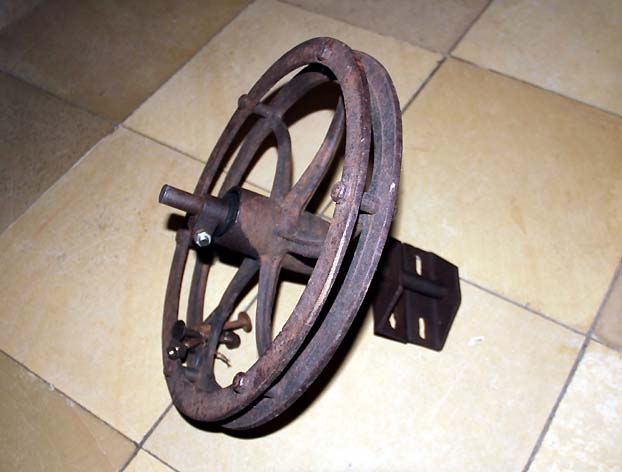
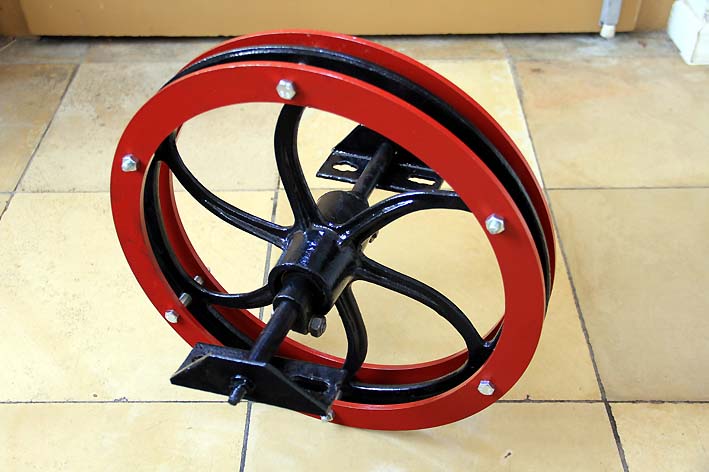
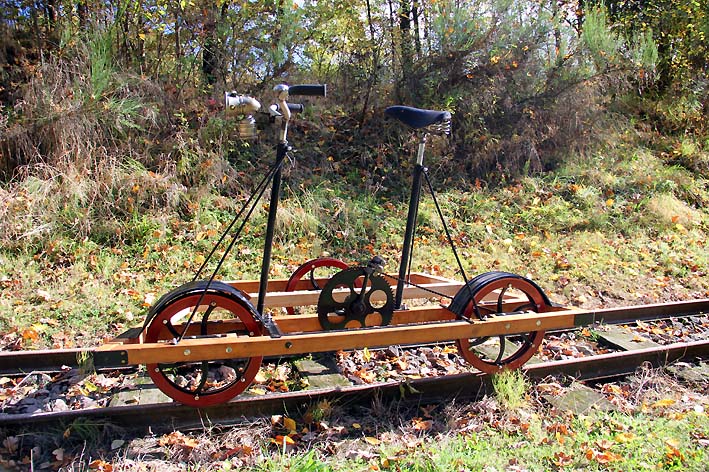
October 2013
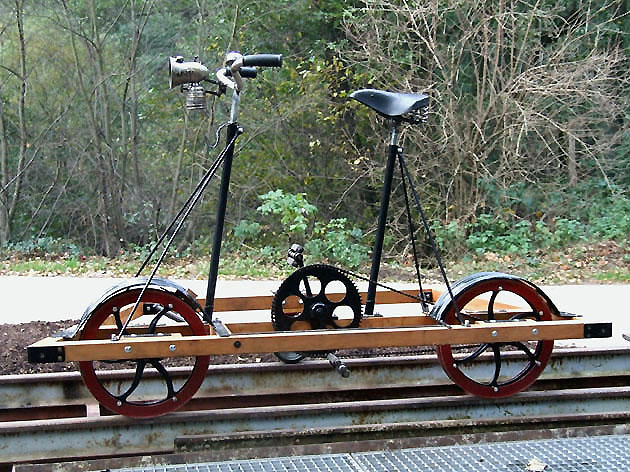
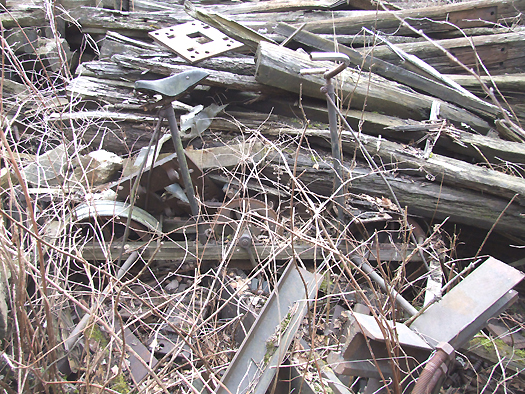
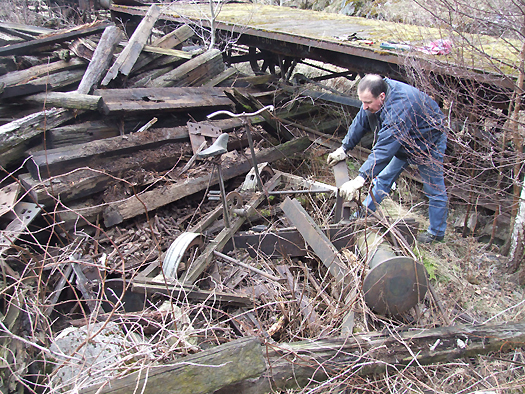
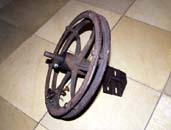
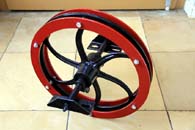
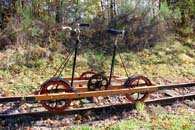
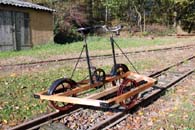
The Norwegian handcar unfortunately
had the lack, that its third wheel was missing, because it wasn't
to find in the scrap heap at Notodden station. With to the help
of Thor Bjerke of the Norwegian Railway Museum in Hamar a matching
wheel found its way to Germany. It has been restored, completed
with two new steel rings - coloured "Norway brown" -
and mounted on the handcar. The vehicle is likely the only one
known on 600mm gauge. The slopes in Glossen provide quite a sporting
challenge for the " rider".
September 2013
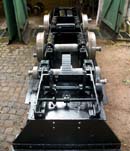
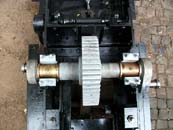
The reconstruction of the Montania
L180 is going on slowly but steadily. In March, both axes
were electro-surfaced and reprofiled by the MaLoWa in Benndorf
. The bad condition of the first axle - caused by eroding mine
water - made it necessary. As part of this work also all bearing
surfaces have been repaired, the crankshaft journals too. Because
of the new bearing measurements , all bearing shells had to be
re-manufactured, the jackshaft included. Additional the metal
panels, subsequently welded in to the buffers, have been removed
and hardwood chunks were fitted. This buffer construction was
used only until the twenties.
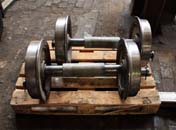
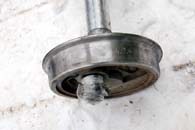
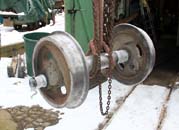
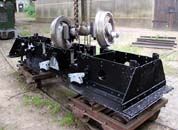
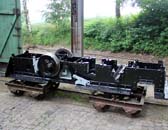
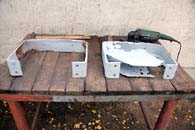
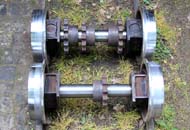
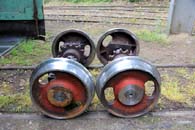
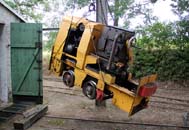
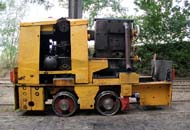
The axes of the mining RL1c had to be reconstructed
because the transformed to double flenged wheels during its last
use in a clay pit. See also the photo of a year ago. During the
the dismounting it was evident that the bush bearing had been
converted to roller bearings added with new housings. But both
of them were useable bacause of the intensive waste and had to
be replaced. Now it was time to lift the locomotive from its flat
car and to set it on its own " feet ", of course with
new springs.
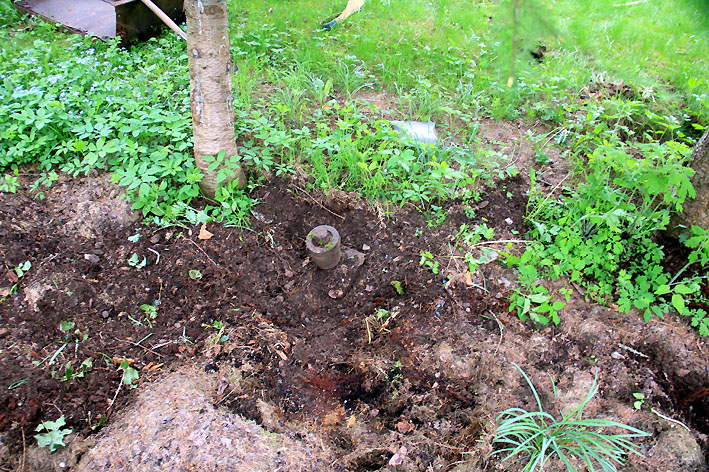
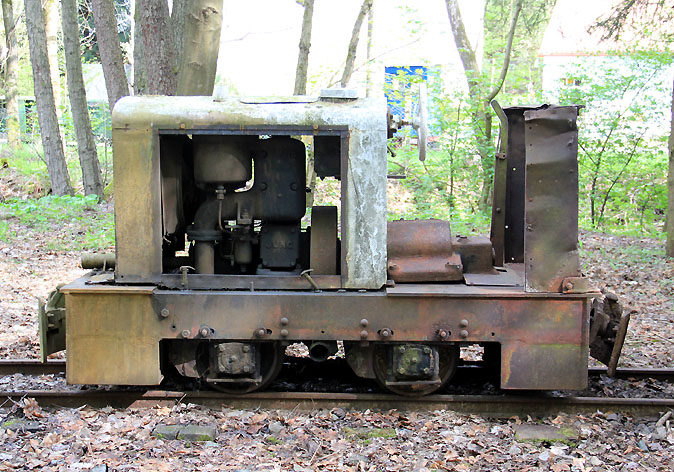
May 2013
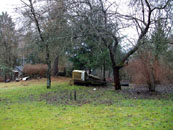
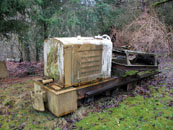
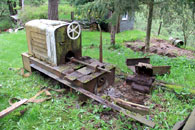
Sometimes unbelievable things happen.
For example, that in the year 2013 a Jung loco still stands in
a private garden since almost 50 years. Once, in it's second life,
it was used as a drive of a circular saw. But not long until an
engine failure finished this service. The rest of the time until
today it remains in a kind of twilight sleep without gear. It
wasn't necessary for the saw use. But a replacement gearbox from
a decades ago scrapped loco is waiting for duty in the store.
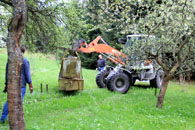
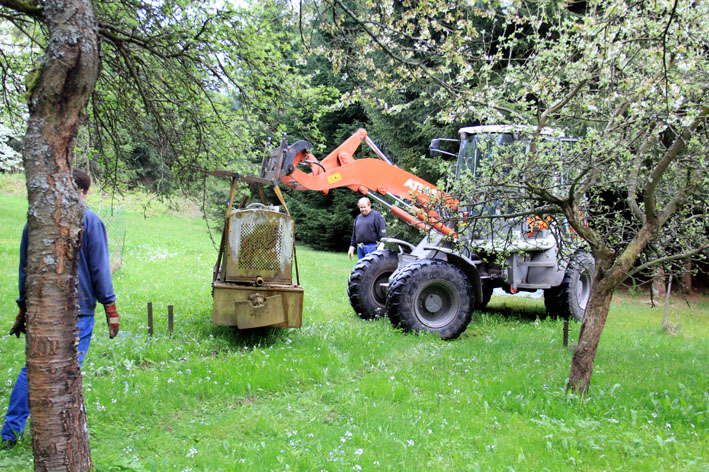
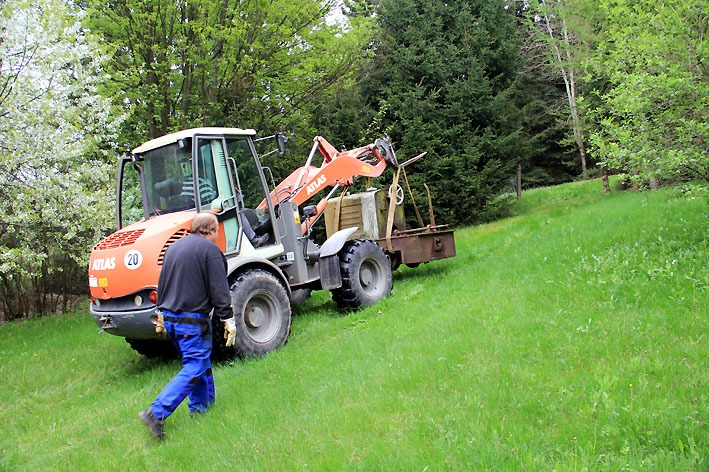
The recovery of the EL105 No. 8002 was not easy to do because
it had been brought down to its place with the help of a long
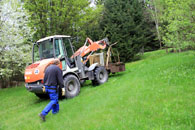
steel cable from a mountainside. Now it was to bring back up this
slope without a rope but with a wheel loader. Despite other expectations
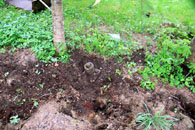
there was no problem. The dismounted spring buffer of the back
of the loco was found buried in the soil next to a nearby tree
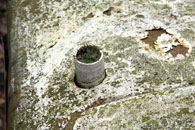
and in the open tank filler neck funnel-shaped mushrooms had taken
root, reminiscent of a "Yes" album cover. Inspite of
the extended length of outdoor time the locomotive is in a surprisingly
good overall condition.
February 2013
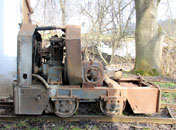
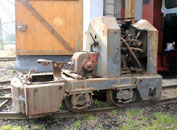
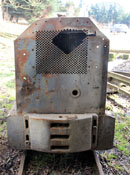
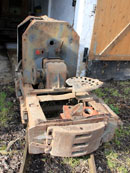
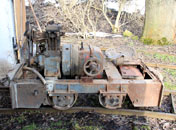
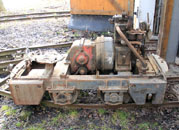
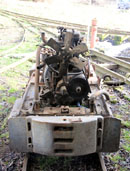
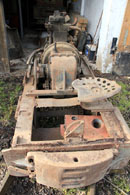
After remaining the M00A in the
locomotive shed for some time, it would make sense to repair the
metal sheets as a first step on the way to further reconstruction.
So an inventory and the dismantling of the remaining remnants
of the bonnet happened. The motor-gear block looks a little bit
like the construction of O&K type M, the exterior like the
MD series with their weight hangings on the frame. The origin
of the construction of the Montania locos is apparently. The M00A
rightly has its unique name, it is obviously the little sister
of the MD1 or MV0. May be there was no market in Germany for such
a lightweight loco. For smaller companies in Spain it was apparently
sufficient, that also shows the number of surviving machines.
January 2013
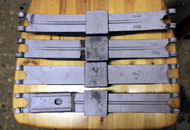
For fitting again the chassis of the L180
in spring, all other frame connected parts have to be refurbished.
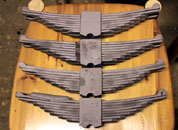
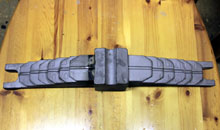
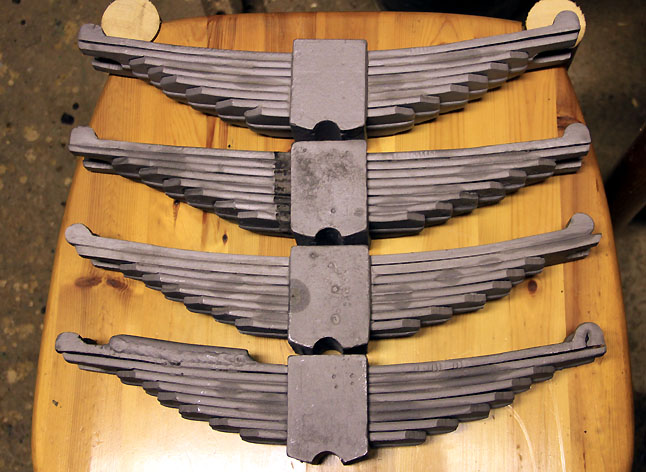
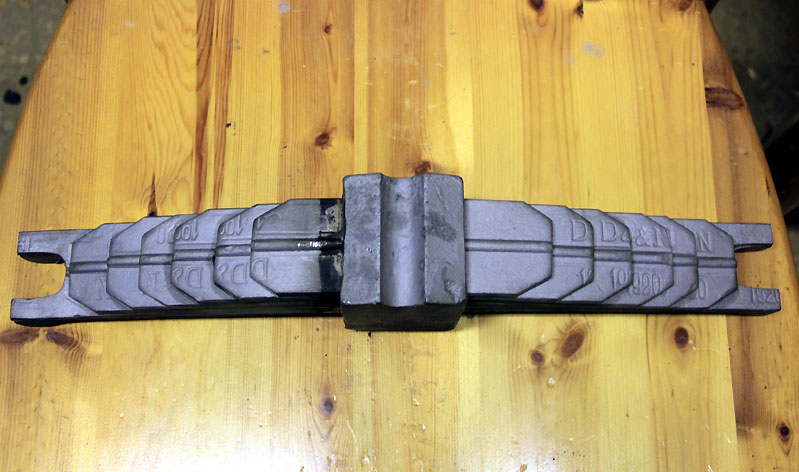
Axle boxes and springs have been sand-blasted and repainted. The
springs are in good condition, only the upper layer of one of
them needs to be replaced because it's broken and "Feldbahn
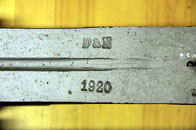
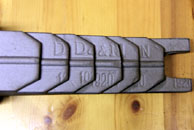
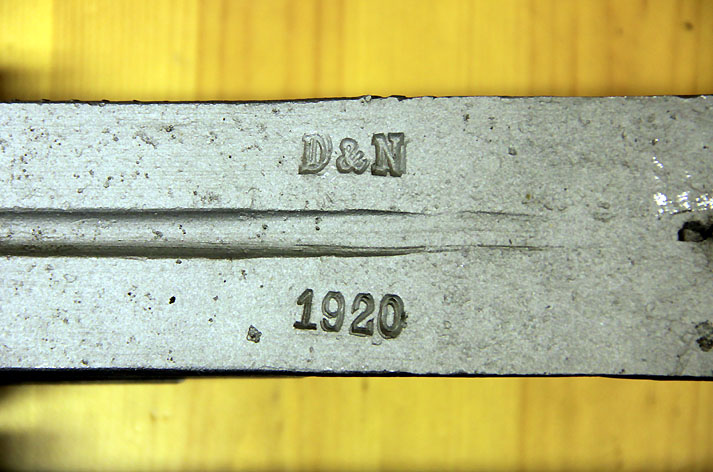
like" repaired with a rail joint. A special detection after
the sand-blasting were stamps of the manufacturer "D &
N" (a today unknown company), as well as of the year 1920.
So it can be sure considered, that the 1361 really was built and
delivered to Norway in this year and there was no delay because
of the First World War.
December 2012
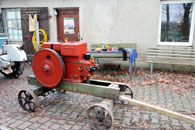
A hint of a fellow offered the opportunity
to buy a motor corresponding to the original engine of the Deutz
MLH415 at ebay. Unfortunately the seller didn't knew the
exact type, was it a MAH514 or 516. And it was too complex to
drive once across Germany to find it out. So the probability of
the right type was 50%. But how so often in such cases: it was
a 516 and therefore not usable for the locomotive. However, the
engine is in very good condition and mounted on an original chassis,
with which it could be moved as a "locomobile" e.g.
on a farm to the place of duty. It would be an outrage to disconnect
it from its frame, so it will remain as a functional showpiece,
presented first time to public in September during a meeting of
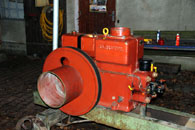
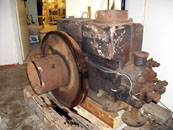
classic utility vehicles in Glossen. Just a few weeks later a
real MAH514, built in 1932, was auctioned at e-bay, with way bill
and spare parts list, a rare opportunity. He had been used for
decades as stationary drive on a building yard but obviously not
very frequently. Unfortunately the forwarding company handled
this "general cargo" very bad, because the engine was
delivered - lying almost upside down - unsecured on a pallet.
But the construction of the motor is very strong and the is the
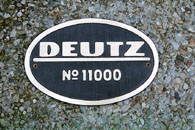
hope of no damages. In spring the assembly will take place on
the locomotive, which again bears now also her number plate.
November 2012
A little bit of luck is part of every
hobby. It will make some things easier, other possible. In September,
it was announced that in early October in the vicinity of Southampton
will be auctioned the "Durley light railway", after
the death of its owner Barry Curl at the beginning of 2012. In
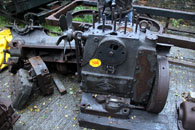
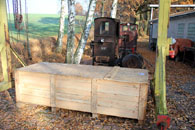
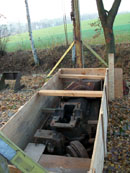
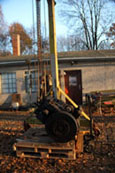
the auction catalogue, beside the operational Montania RL3
No. 20777 the engine and the gearbox of a further locomotive of
the same type, was written. This item led to the immediate decision
to take part in the auction. Apart from the fact that such an
event is very interesting, it offered the opportunity to study
the British mentality. By the way the German guests and bidders
were welcomed very friendly. After selling the 20777 for a comparatively
high price (more than for the also auctioned Feldbahn locomotive),
nobody was interested in the RL3 spare parts. So they could
be bought for a fair price. The loading and shipping to Germany
were not so easy because of the high weight and extensions of
the gear box. But the British friends around Bob Millard showed
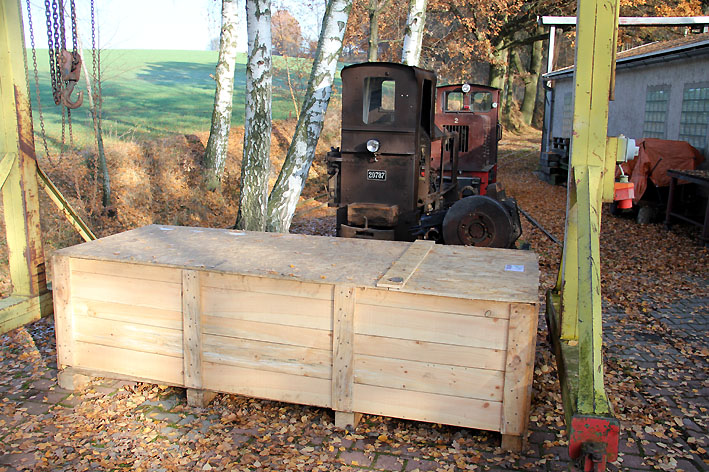
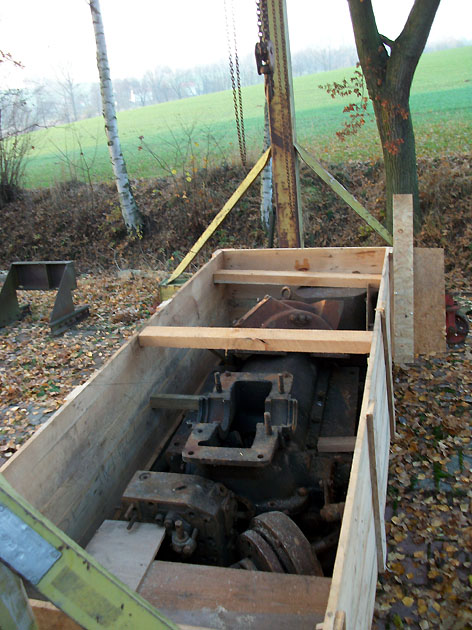
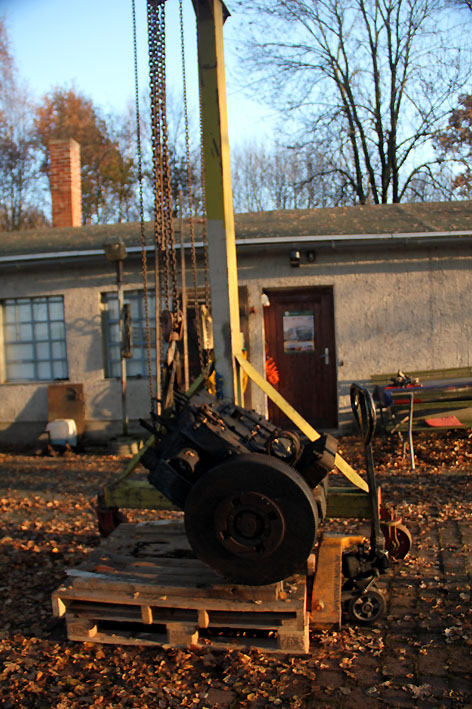
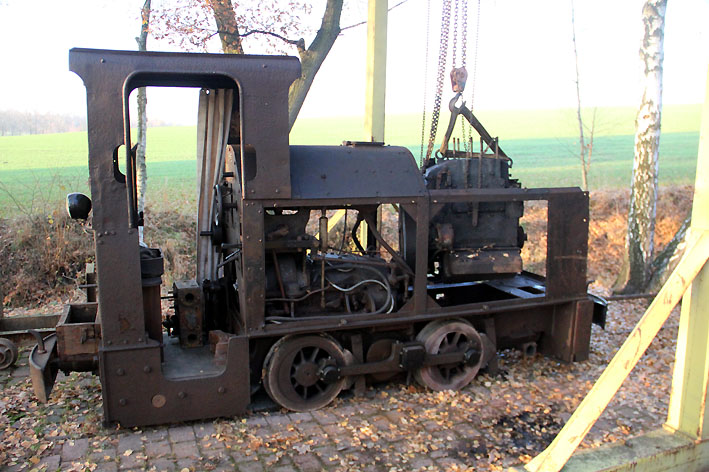
strong commitment to store everything in a big, self-made wooden
box. After more than a month, the shipment arrived safely in Glossen
and the engine was mounted immediately on the RL3 20787.
Along with the parts of the demaged, existing motor, the repair
is not simple, but doable. Also the worn switch claw in the gearbox
can be replaced with new parts.
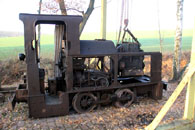
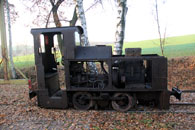
September 2012
Because of the need of repairing the wheels
of the L180 by a professional firm, it was obvious to take
the axes of the RL1c mining loco to this company too. Its
wheels are worn by reason of long term use in a clay pit. By the
way it was evident that the RL1 has the same spring system like
the MD1, volute springs at the front and rubber blocks at the
rear axle.
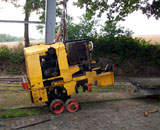
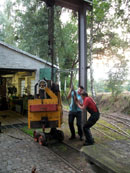
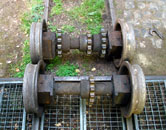
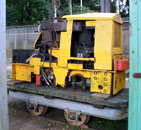
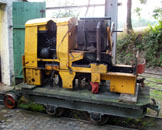
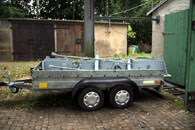
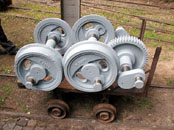
It's going on with the L180.
The frame and the axes are sandblasted and primed. It was a pretty
good load for the trailer bur he has to run only a few kilometers.
Next the wheels has to be repaired because the suffered from the
running pit water during decades.
August 2012
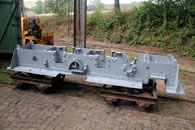
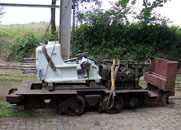
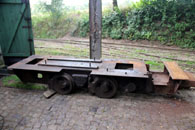
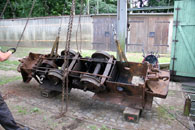
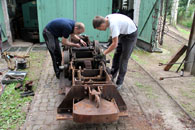
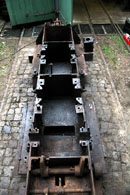
Bevor the beginning of winter the frame
of the L180 should be sand blasted and primed for further
works in the shop. For it motor, gearbox and rear wall has to
be dismounted and the frame turned over. So it was possible to
dismount axes and jack shaft.
July 2012
Another pleasant new entrant is a small
Montania mining loco of the RL1c type.
It comes from the coal mining area of Northern France near the
British Channel and owes its survive obviously the fact that it
was given off to a brick yard before the mine closed. The loco
is complete aside from the missing roof and the side plates of
the bonnet. The feed hoppers of the sand boxes are not original
and have to been changed. Also the wheels are worn and need to
build up. The motor has compression and runs slowly.
Remarkable at the RL1c is the short wheelbase of 60cm, the inside
frame and the concrete design, all caused by the mining use.
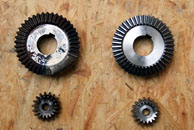
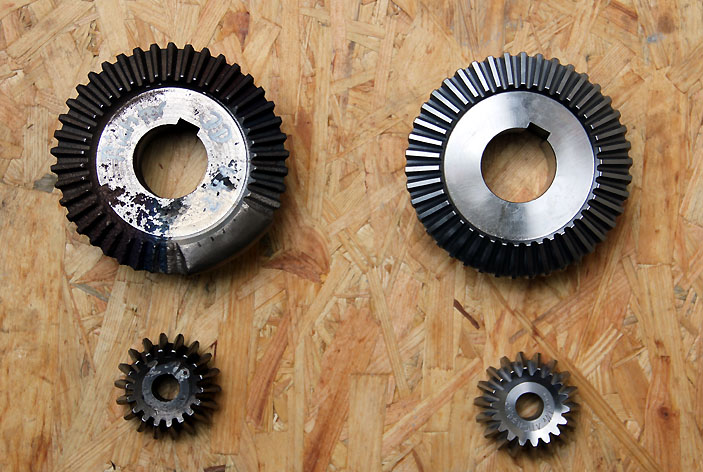
The repair of the crown cogwheel of the L180 regulators
drive was rather difficult because modern machines produce wheels,
which not suit to old time wheels. Thus two new cogwheels had
to be manufactured, an expensive but at the end good looking part
project.
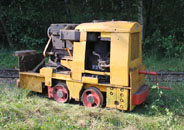
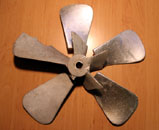
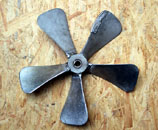
At the LD2 5175 the radiator fan is not an original part,
thus he has to be substituted. An existing, but damaged fan could
be completed with the help of a foundry.
April 2012
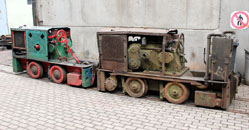
By fluke two "new" locomotives
of Montania Nordhausen could be acquired for the collection, both
of the LD2 type, however a standard and a mining machine.
The standard loco with the early year of construction 1933 remained
for many years part-dismantled and open air at the previous owner,
but however it has nevertheless a quite good substance. Missing
parts can be removed from a spare part source, bought additional.
Also the pit machine didn't stay under a roof,
however it doesn't suffer from weather because of its strong and
heavy construction. The already existing mining LD2 has been delivered
to a friendly collector, where both locomotives will be restored
together. This will make it easier to complete widely the locos.
 _
_ _
_ _
_ _
_ _
_ _
_
January 2012
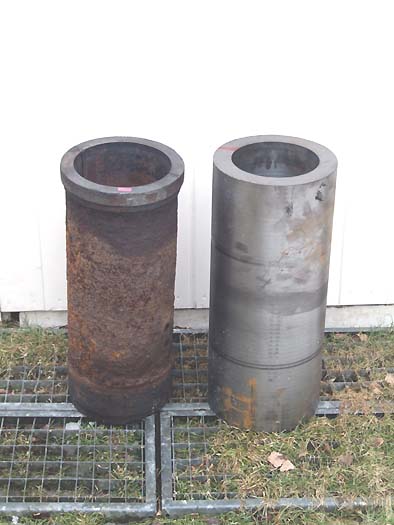
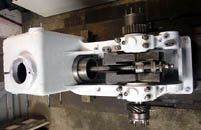
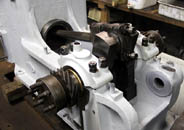
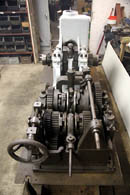
After the successful assembly of the liner
of the L180 Nr.1361 also the crankshaft found back to its
original place. The bearings obviously had been very generously
adapted in the last period of operation of the locomotive, simply
by not completely fixed screws. For safety there were lock nuts
and split pins… That means, that now some more expenditure
is necessary for the exact adjustment. After finishing of the
engine also the gearbox will still offer enough work to do.
 _
_ _
_
November 2011
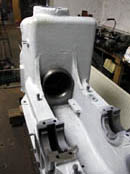
After preparing so far the crankshaft
housing of the Montania L180, now it could be tried to
mount the new liner. Although it is manufactured accurate with
the same dimensions like the old liner, initially it was not possible.
Not until intensive clearing of the rear hub in the housing the
liner could be fitted, with its mass of over 50kg a skill play.
Obviously - despite sandblast - still corrosion-caused buckles
of the cast iron were present.
 _
_
October 2011
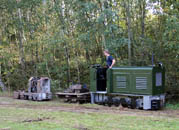
The M00 loco, bought in November
2010 in Spain, should have had a gauge of 600mm, but it hadn't.
Thus the plan was to re-gauge it from 500 to 600mm. But now the
possibility occurs to exchange this engine with a 600mm one owned
by the Feldbahnmuseum
500 e.V. in Nürnberg. The bonnet of the exchanged loco
is rather demaged but the motor is not fixed which will make the
restoration easier. The loco is of the M00A type and has
a mining equipment with a special, large air filter and an exhaust
cleaner. It is in addition to the L180 and the LD2 the third mining
loco in the collection.
 _
_ _
_ _
_ _
_ _
_
September 2011
The work at the L180 proceeds slowly,
but incessant. The crankshaft housing is sand-radiated and primed.
So the re-assembly of the motor will is prepared .
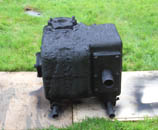
The large, cast-iron mining exhaust silencer is also sand-radiated
and treated with basic colour, in order to be able to work on
it further. It is partially very strongly eroded, so that holes
must be closed and covers renewed.
 _
_ _
_ _
_ _
_ _
_ _
_ _
_
July 2011
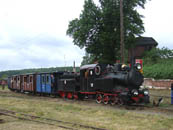
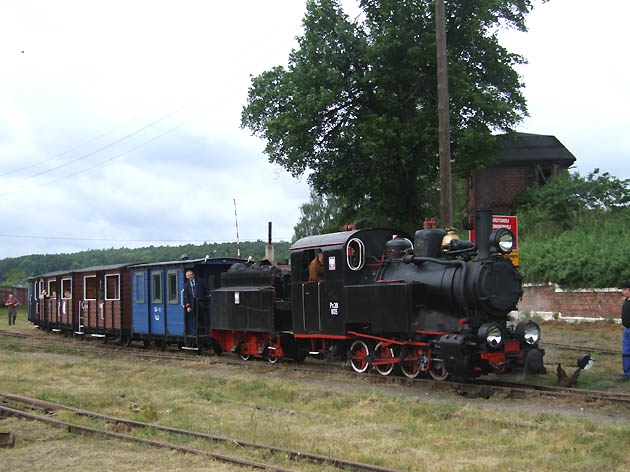
In June the 3-speed-RL1c and the
RL3 went on a - at least for Decauville locomotives - far
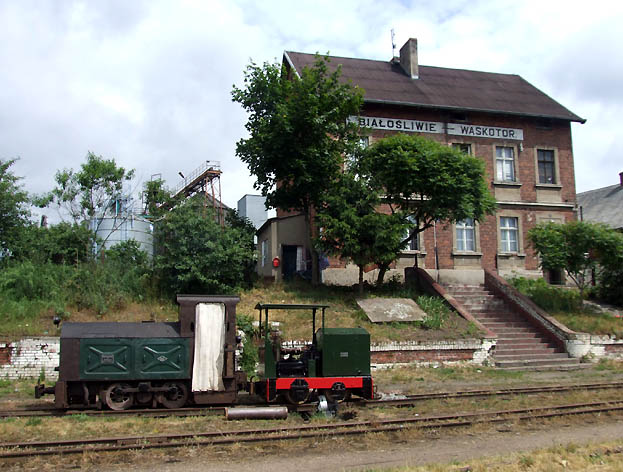
journey to the former "Wirsitzer Kreisbahn" (Wirsitz
county railway) into Poland. There took place a meeting ("Kipplorentreffen")
of Polish and German industrial narrow gauge railway enthusiasts
on a 12km long part of this closed but as a technical monument
protected 2ft-railway.
During several voluntary works before the track had been made
useable again, after at the beginning of the 90's the regular
operation ended.
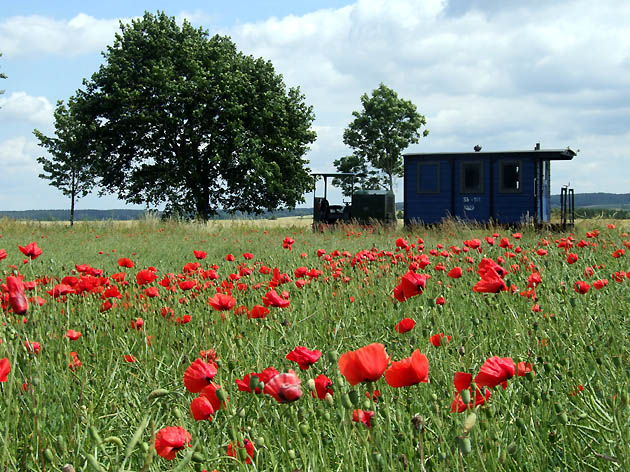
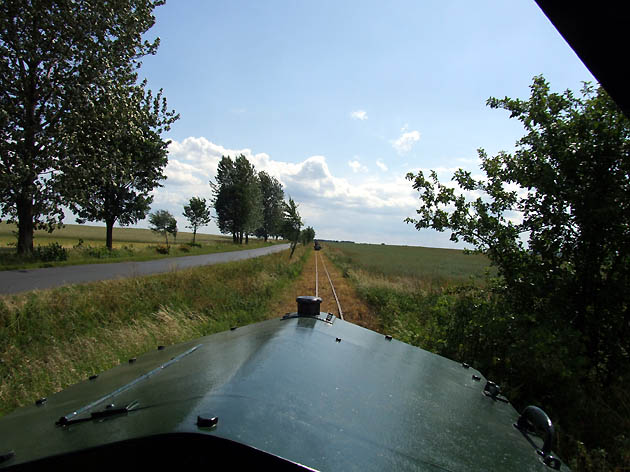
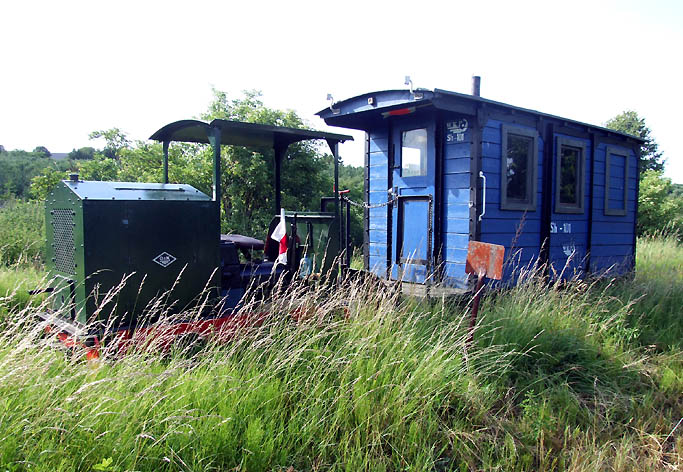
The small RL1c was amazingly up to standard and in the entire
week it ran over 70km, approx. 25 of it with the blue caboose
car. The loco worked uneffected in the 3rd speed, on inclines
only the engine sound got a little bit more intensive.
The RL3 unfortunately was hidden by the fate heavily, because
she suffered on the test run after approximately 2km a damage
of the engine, which announced itself before by nothing. This
was amazing, because the locomotive had already successfully run
several times.
After the meeting in Poland both machines arrived again well in
Glossen and the engine of the RL3 has been dismounted and brought
to a workshop.
Of course there were not only diesel locomotives at the "Kipplorentreffen"…
 _
_ _
_ _
_ _
_ _
_
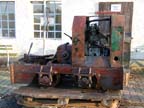
November 2010
From the - at least partial - dissolution
of the collection of a Spanish industrial narrow gauge enthusiast
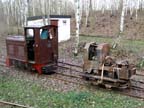
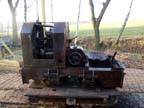
a small locomotive of the type M00 could be acquired. It was manufactured
1957 in a subsidiary of the O&K-company in Cornellà
in Spain. Originally these locomotives carried the typical rhombus
as manufacturer sign, however with the letters " OyK".
Some of it still exist in Spanish museums. The design of the machine
shows unmistakable " Montania"-characteristics, which
concerns the framework, the hood and (momentarily still missing)
the rear plate. With its weight of 1,2t it could be the small
sister of the (anyway already small) MD1. It was - added by lateral
ingots, also available with 1,6t. A comparison with the Ns2f shows
the size of the M00. Remarkably is the gear box with only one
speed forward and reverse, switched and coupled by a handwheel.
It is similar to the after the war in the O&K works Bochum
developed " Schienentraktor". The locomotive has a "Sole"-diesel
engine, which however suffered from the long open air storage
time. At least it hasn't been destroyed by frost because of the
mild, Spanish climate.
 _
_ _
_
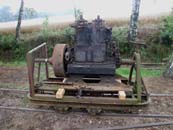
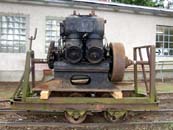
August 2010
By the hint of a friend an alternative
motor for the Deutz OMZ117 could be provided. It doesn't look
like it has left the workshop of Deutz last week but it is in
much better condition than the existing motor on the loco.
 _
_
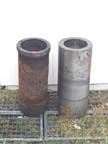
February 2010
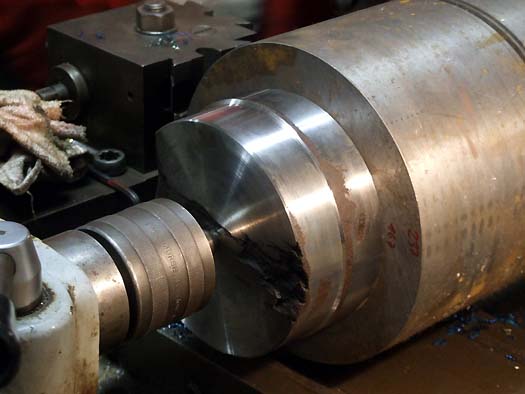
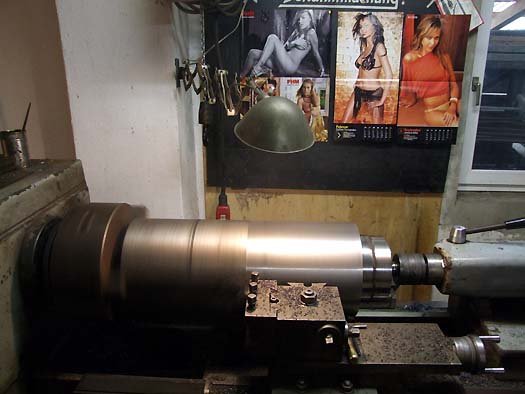
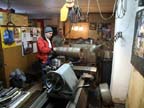
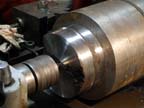
After a brake of more than a year the
work at the liner of the benzene locomotive continues, among other
things the price of 640 Euros only for the blank of nodular cast
iron justifies the slow progress. After the outside treatment
is finished on the turning lathe of the Feldbahn Glossen, the
drilling of the internal dimension takes place at a machine building
company. Afterwards the final surface can be reached by honing.
It is always easier to build a new liner than to construct a new
piston.
 _
_ _
_ _
_
January 2010
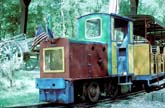
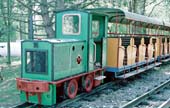
With the help of a long term friend -
Simon Lomax from Moseley Railway Trust - I had the possibility
to get photos of the LD2 at its time in the leisure park "
Bagatelle" in France. He took the pictures in the years 1989
and 1996. In the 80s the park management obviously preferred a
"Western look" and into the 90s the locomotive looked
already in such a way, as it was taken over.
 _
_
November 2009
Everybody knows that's not so good to
start an old motor that hasn't been running for long time. It
is better to dismantle it completely, check all parts, change
or repair some and assemble the motor. But this procedure needs
time and the curiosity is stronger than patience and carefulness.
Therefore only a few maintenance work had to be enough before
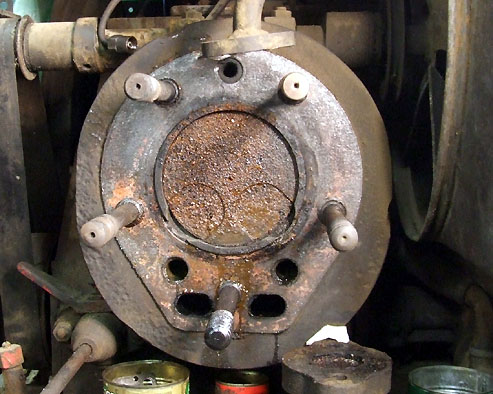
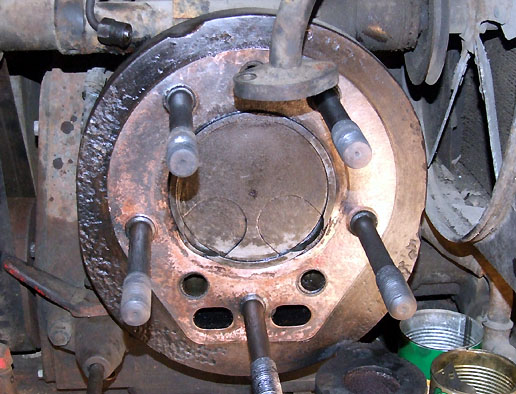
the LD2 run again after years by its own power. After the
fixed exhaust valve gave up its resistance by some quite strong
hammer blows, the valves get grinded, they have flat (no conical)
seats. Further still the rust at piston head and cylinder head
was eliminated and the decompression arrangement was made passable.
After filling up warmed cooling water the loco was ready for run.
It was an illusion to start the motor only by crank, so the loco
was dragged by another one and someone turned the crank too. The
engine exhausts marvelous, dark grey-brown clouds and has an impressing
sound. If the adjusted number of revolutions is reached, it runs
quite cleanly. Nevertheless there's still enough work remaning
for later time.
 _
_
October 2009
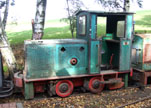
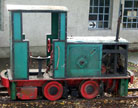
By the hint of a friend a locomotive joined
the collection, which fullfilled a long time desire: a LD2
from O&K Montania. And it is not an "ordinary" loco
of this type, it's in mining design, from which only three existing
locomotives are known. The LD2 served in the past in a tourism
park and that to see clearly in the subsequent additions like
the cab, the framework widening and the auxiliary buffers. However
all can be removed without problems. In order to have again a
correct mining loco, only a new exhaust gas scrubber box is to
built and to connect with the exhaust gas pipe. The right colour
for framework and wheels will be black and for the bonnet "O&K-green".
The total condition of the machine is good, even though it remained
some years outdoors.
 _
_ _
_ _
_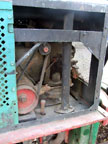
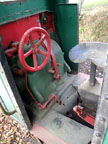
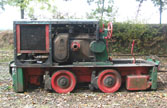
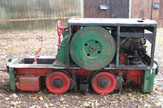
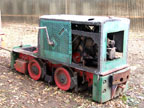
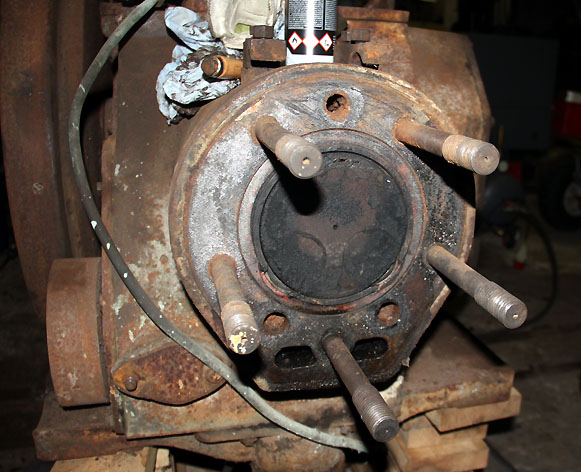
After dismounting the parts mentioned before, the
locomotive already lookes quite similar to its original appearance.
The very compact design is remarkable, in order to achieve the
small clearance demanded for the pit use. Even though the engine
driver had the luxury of a pedal for speed control, nevertheless
he was little to envy: its seat was the tool box and the its cab
was very small. A first check showed that the flywheel is turnable
but there is water in the exaust pipe, not a good sign. Now it
needs to dismount the cylinder had for getting more information.
 _
_ _
_
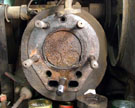
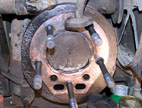
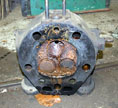
Fortunately the piston was in the
upper, so the water could not cause larger damage. Piston head
and cylinder head were tidy rusty, but they could be furbished
up with justifiable effort. The inside of the sleeve is in a condition,
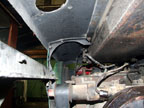
which lets a test run appear possible. More problems might make
the main bearing of the crankshaft. The cylinder head gasket looks
still very good. On closer inspection of the area under the hood
the former place of the compressed air bottle for the start facility
was to found. At longer term there's the goal add the parts of
this facility.
 _
_ _
_ _
_
April 2009
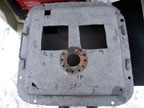
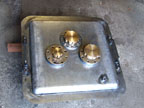
With the help of friendly metalworkers
the tank of the benzene loco could be rebuilt under use
of the existing fittings. The bodyshell work is finished.
The present tank wasn't furtheron useable. That was clearly to
see after sandblasting. It was mounted in the upper side of the
bonnet and totally corroded by mine waters. Now the special screws
for the mounting of the fittings are to buy. The brass nipples
are very massive and adapted to the rough operatings in a pit.
 _
_
January 2009
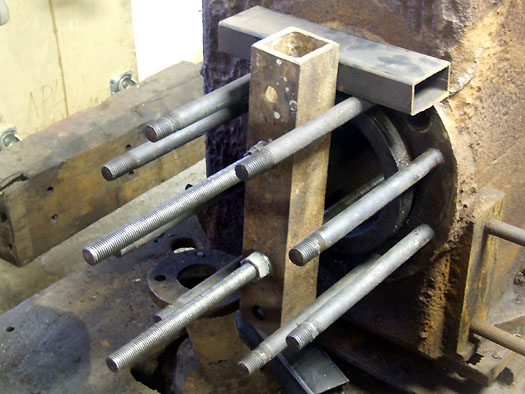
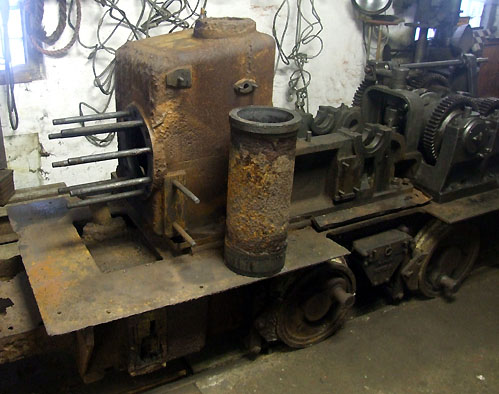
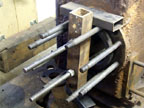
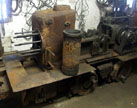
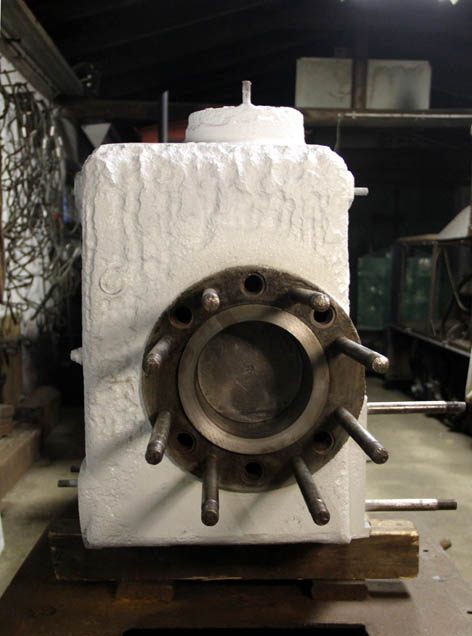
The next step is done: the cylinder liner
of the L180 is pulled out! Because of the large contact
area and the long lasting immobilisation time the liner was stuck
together with the cylinder cover. Even four cuts for relaese didn't
achieve success. A sledge hammer and two elevating screws were
required to bring the liner out.
 _
_ _
_
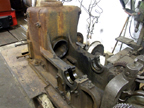
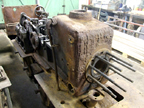
December 2008
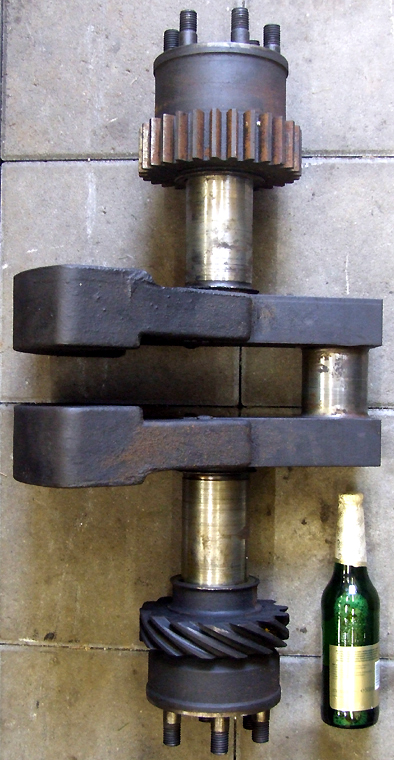
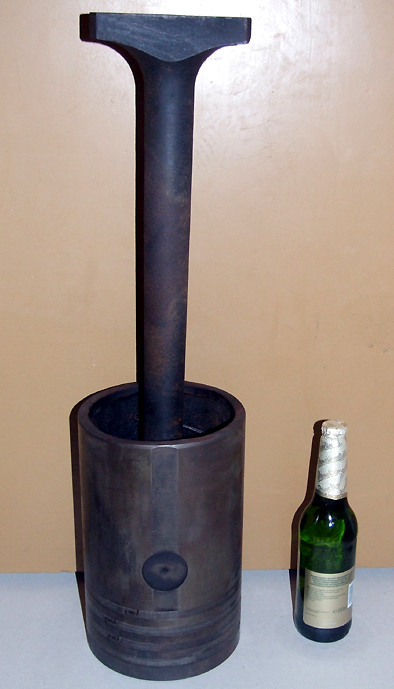
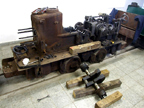
Now and then the work on the benzene locomotive
type L180 has to be continued, if I don't want to capitulate
in view of the entire scope. Thus "currently" (what
can mean quite a longer period) the repair of the engine stands
on the agenda. After several weeks ago the flywheels were dismounted
and stored surely, now it was possible to remove the automatic
controller and the crankshaft. The crank weighs approx. 90kg and
it is a challenge to remove it alone without assistance. But it's
possible to lift one end… Also the piston (33,4kg weight
inclusive connecting rod) let drive out itself - but only with
the help of a 10kg sledge hammer and some wooden chunks. Aside
from the piston head he (nearly) looks like a new one. The next
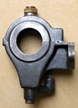
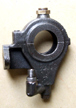
to do is to pull out the cylinder sleeve, but it moved already
a little bit. A strange part at the automatic controller shaft
shaped up as a small oil pump, which was completely seized up.
Some affection led to the fact that it functioned completely again
and in future it can supply the piston with the necessary lubricating
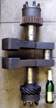
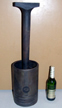
oil. By the way the beer bottle in the pictures serves only for
size comparison and it's the item, which is fastest at hand in
the workshop : -)
 _
_ _
_ _
_ _
_ _
_ _
_
October 2008
At the beginning of the month at the "Historische
Feldbahn Dresden" near Pirna a show of locomotives produced
by O&K Montania took place. The cause for that presentation
was the 100th anniversary of the building of the first internal
combustion locomotive by this manufacturer in Nordhausen. It was
the rare opportunity to see 8 different "Montania" types
in action. The meeting was supported by guest locomotives. So
the RL1a No. 6281, the RL1c No. 10529 and the RL3 No. 20787
had the possibity to cruise on the rails in the "Herrenleite".
The RL3 was clearly the public favourite, but it made big problems.
The seals at the injection nozzles resisted the injection pressure
only for a few minutes. The solution was to drill (during the
reconstruction forgotten) holes for the leaking fuel.
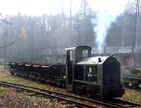
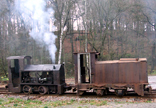 _
_ _
_
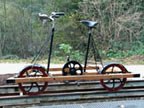
In time to the 18th International Decauville
Railroad Meeting in Ramsen
the reconstruction of the Norwegian bicycle handcar has
been finished, firstly with 600mm gauge. However a problem of
the track in Ramsen were the differently heavy rails resp. broad
railheads. The bicycle suits for a head width of 40mm, which corresponds
with S18-rails usual at Decauville railroads. Only one-third of
the railway line in Ramsen has fitting rails for the handcar and
it was a problem to bring it over the rest of the distance. One
of the results was a broken part of the handlebar. But the locomotive
builder Bernd Bormann of Ramsen could repair it over night!
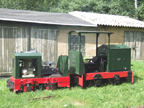
August 2008
The restoration of the RL1c No.
10529 is nearly finished. The engine starts without any problems
and runs perfectly. The size difference between RL1c and MD1 is
considerable.
July 2008
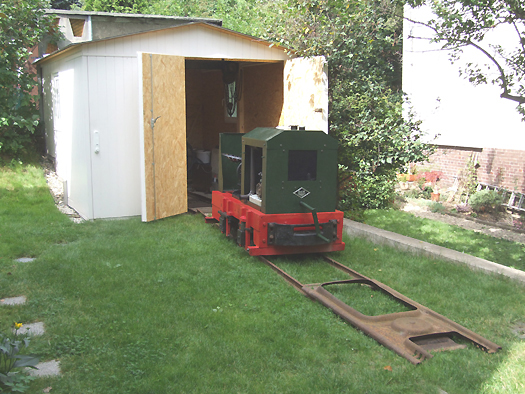
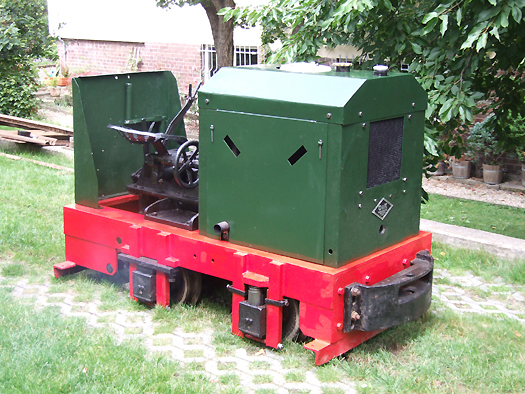
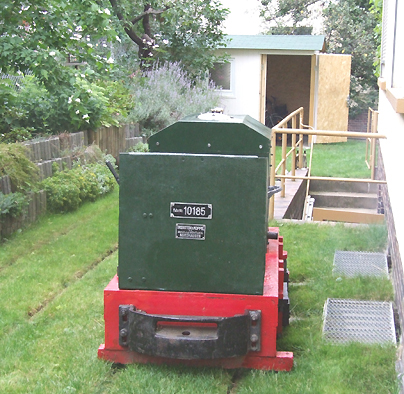
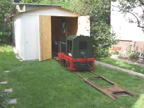
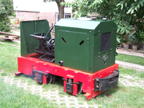
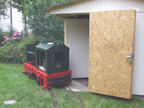
The reconstruction of the MD1 approaches
to their end after over 13 years. In order to check the correct
function of the loco, it has been taken place a " roll out"
and a test run on almost the entire 50m track in the garden. Also
the existing switch has been passed for several times! The result
was fairly satisfying, the engine runs very evenly, transmissions
and brake work faultless. An acoustic impression is possible by
clicking here. In the third picture
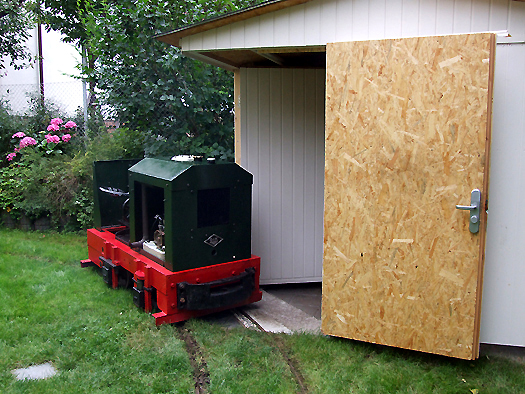
it is good to recognize, that a part of the side wall of the barn
can be folded away to make it possible to drive past. Now the
next step is the transport of the loco to Glossen, where it will
run for longer distances. At the end for camparison a picture
of the loco in "delivery condition".
 _
_ _
_ _
_ _
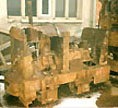
_
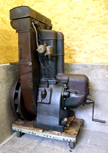
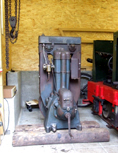
The search for many years for an adequate change engine
for the type M was finally crowned with success: a 8H.P.-petrol
motor of the Conord type F3 will supply the necessary traction
power to the locomotive in the future. It is not so haevy constructed
like the original implemented O&K-aggregate, but the 50cm
fly wheel will provide an equivalent energy storage combined with
a half H.P. more. The engine starts problem-free and runs with
the fuel, which was still in the tank. It could be 30 years old
according to statement of the salesman.
 _
_
June 2008
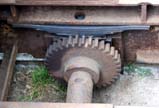
Because the OME117 was a spare
part source in the company it was coming from, some parts have
been dismounted, the gearbox included. Fortunately a fitting gearbox
was found in a workshop container nearby the loco. It could be
picked up. After years of separated storage now there was the
opportunity to mount it. At first the original and the rebuilt
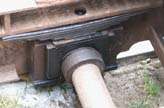
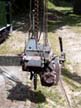
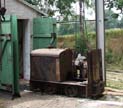
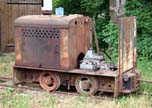
spring of the rear axle were applied. The comprehensive reconstruction
of the OME117 has to wait because of more urgent projects.
 _
_ _
_ _
_ _
_
Mai 2008
If somebody goes on a journey ... he can
tell about something but he can bring along something too. During
my trip to Norway I found an old railway bicycle, a so called
"Draisine", in a scrap heap of a nearly abandoned railway
station. The third wheel was missing but the Draisine was good
enough for reconstruction. That's why I devided the metal from
the wooden parts and took the steel components to Germany. The
security officers in the Oslo port agreed to bring the stuff abroad.
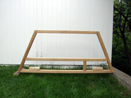
A friendly carpenter built a new wooden frame of larch and I bought
the Norwegian national colour red-brown for the wheels. I will
rebuilt the Draisine for 600mm but with the option of standard
gauge to run closed railway lines...
 _
_ _
_
April 2008
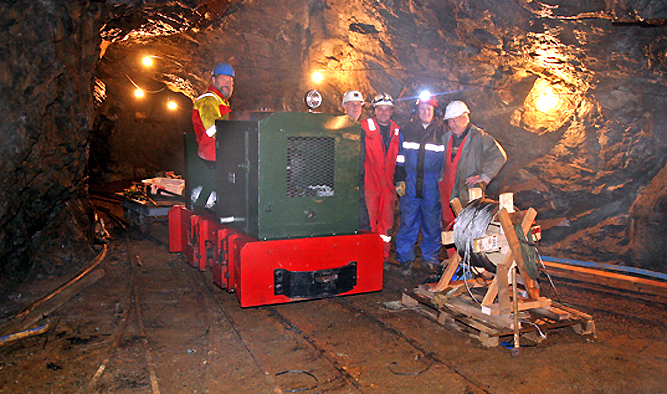
There are news from the MD2, changed
with the benzene loco in 2005: in their new home Norway the very
ambitious friends of the museum association in Stord
not only rebuilt the Mine railway track system during the last
years.They also made the old machinery house of the mine suitable
for their use and installed a complete old, small water power
station for museum purpose. The next step is to prepare the mine
for future visitors. Therefor they have to open the abandoned
tunnels to public. During a visit at the beginning of April we
could see and appreciate the successful activities of the norwegian
friends. During the last days it was possible to run the old tracks
in the mine by the MD2 first time since about 50 years.
November 2007
Sometimes It could be better not to work
at the locomotives but to provide better conditions for work.
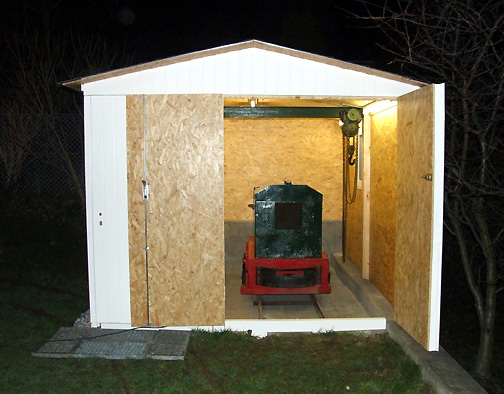
There are 50m track near the own house in the open air, thus it
was only possible to work on the machines in good weather and
in the warmer season. Therefore already for a long time the idea
of a small locomotive shed existed. During the last months this
shop has been built widely by myself. A direct track connection
to the shed doesn't exist. It will be provided by flying track
and a "frog" (portable turntable). An oddity is the
fact, that the existing track lies under a corner of the shed,
that's removeable if required.
August 2007
Now the RL3 drove the first, longer
distance from own strength and without forcing, however there
were some "smaller" problems thereby: after some time
the copper seals at the injection nozzles did not withstand the
pressure and the Diesel atomised the environment. This could be
eliminated by a reduction of the injection pressure on 100atm,
in addition the engine runs substantially more cleanly. The other
problem is already more unpleasant: it's not possible to brake
the loco by the motor, thereby an increasing knocking noise is
to hear in the gearbox. There's waiting something work for the
winter time! But during the event "day of the monument"
at the beginning of September the locomotive run in Glossen!

July 2007
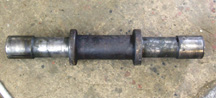
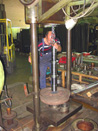
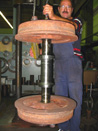
In the reconstruction process of the RL3
loco the difficult chapter of the axle repair obviously could
be finished now. After a measurement resulted that the angle between
the two front wheels was 94° it was clear that the locomotive
thereby could not drive properly. Unfortunately it was not possible
and it would have the danger of breaking the wheels to dismount
them by a hydraulic press from the axle. So it was to be needed
to bore the axle from both sites and to slit it too. Than a new
axle had to be manufactured. To provide future difficulties and
not to make the same error like O&K fitting keys were necessary
as anti-twist locking devices. The work was expertly made by the
Elbtalwerk
Heidenau. A first test run from own strength showed the correct
function of the loco, now some fine work is still to do. The engine
runs very calmly and evenly, but it produced an exhaust cloud
as a steam locomotive. Hopefully it will be reduced after some
operation hours.
 _
_ _
_ _
_ _
_
The
open RL1a did not have any oil pressure at the engine during the
last start. In addition it lost cooling water, without any puddle
under the locomotive. That let assume a leakage inside the engine.
When opening the oil drain valve at first approximately two litres
of cooling water ran out only once, which confirmed this suspicion.
During a closer investigation it was to see that the cooling water
found a way to the crank case from the zone of the push rods.
To reach the leaky it was necessary to slice the external part
of the cylinder barrel.
This procedure showed a large frost damage, which had been repaired
many years ago with epoxy resin. This stuff had now aged and become
brittle and could not seal the fractures any longer. It will not
be simple now to close the tear by welding.
 _
_ _
_
May 2007
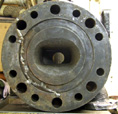 Unfortunately the axle of the RL3 did not
return yet again to their place in the locomotive. It was impossible
to dismount the wheels from the axle by a hydraulic press. So
it is necessary to bore the axle and to manufacture it new after
this. This work is finished in the meantime, when shrinking arose
however new difficulties, which are not yet solved.
Unfortunately the axle of the RL3 did not
return yet again to their place in the locomotive. It was impossible
to dismount the wheels from the axle by a hydraulic press. So
it is necessary to bore the axle and to manufacture it new after
this. This work is finished in the meantime, when shrinking arose
however new difficulties, which are not yet solved.
But the repair of the cylinder head of the L180 is in progress,
it was welded by a specialized firm. After a valve refused itself
to be dismounted, it was bored, so that at least the valve seat
could be saved. Further several threaded bores at the head must
be regenerated, a toilsome but inevitable task.
December 2006
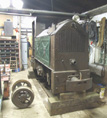 In
the never ending story of the reconstruction of the RL3 No.
20787 a new and hopefully the last chapter is opened: the
locomotive stands without its front axle on sleeper piles in the
workshop. In order to eliminate the pressure between the rods
and the wheels, in last autumn the axle boxes were adjusted by
plates. After this it was only possible to mount the rod on one
side, the crankpins of the wheels and the jackshaft on the other
side were not in one line. The fact was that the wheels of the
front axle were not in an exact 90° position. Today we can
only assume the reason of this deviation, may be the loco had
a small accident by a stone, rolling under the rod of the running
machine. May be this circumstance saved the loco until today:
all of her usable sisters have been sold and later scrapped in
the seventies. Only the 20787 remained in the abandoned brick
yard. Now it's necessary to dismount one wheel and to remount
it in the right position. It will not be an easy task but it will
be solvable.
In
the never ending story of the reconstruction of the RL3 No.
20787 a new and hopefully the last chapter is opened: the
locomotive stands without its front axle on sleeper piles in the
workshop. In order to eliminate the pressure between the rods
and the wheels, in last autumn the axle boxes were adjusted by
plates. After this it was only possible to mount the rod on one
side, the crankpins of the wheels and the jackshaft on the other
side were not in one line. The fact was that the wheels of the
front axle were not in an exact 90° position. Today we can
only assume the reason of this deviation, may be the loco had
a small accident by a stone, rolling under the rod of the running
machine. May be this circumstance saved the loco until today:
all of her usable sisters have been sold and later scrapped in
the seventies. Only the 20787 remained in the abandoned brick
yard. Now it's necessary to dismount one wheel and to remount
it in the right position. It will not be an easy task but it will
be solvable.
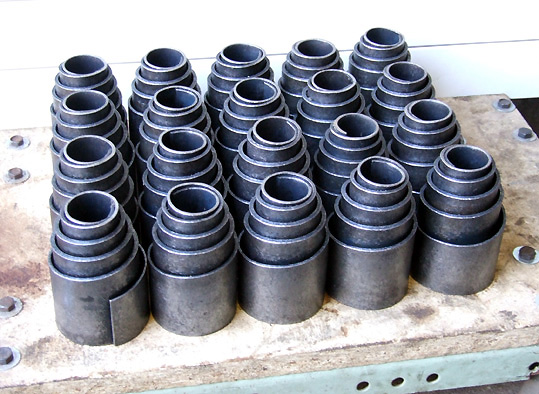 Unfortunately
the coiled springs by O&K tend to brake frequently with increasing
age. So far I used spiral springs as substitute, which were built
for heavy mining cars. Because the springs of the locomotives
are free visible, there was the goal to rebuilt new "old"
springs already for a long time. In order to receive a favourable
price, four orderers joined. So could be manufactured an accordingly
large number of springs (30). The Bischoff
company in Stassfurt delivered an excellent work!
Unfortunately
the coiled springs by O&K tend to brake frequently with increasing
age. So far I used spiral springs as substitute, which were built
for heavy mining cars. Because the springs of the locomotives
are free visible, there was the goal to rebuilt new "old"
springs already for a long time. In order to receive a favourable
price, four orderers joined. So could be manufactured an accordingly
large number of springs (30). The Bischoff
company in Stassfurt delivered an excellent work!
November 2006
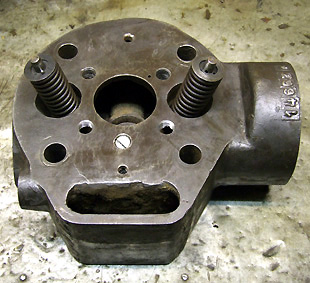
The motor that's present mounted on the
MD1 was originally as an exchange engine on the type M
loco. Together with their it had been on the ground of a shut
down quarry for approx. 30 years . Before this "scrapping"
somebody had dismantled still the cylinder head and the water
pump. These circumstances were very bad for the motor and thus
it wasn't planned to restore it. That did also not change when
the MD1 with an exchange engine came into the collection, because
the missing cylinder head was not replaceable. But persistent
asking around led to the fact that a cylinder head could be bought
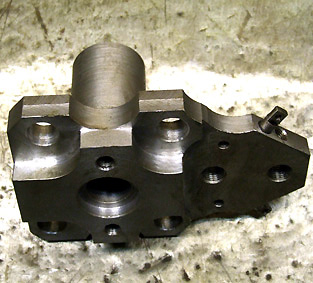
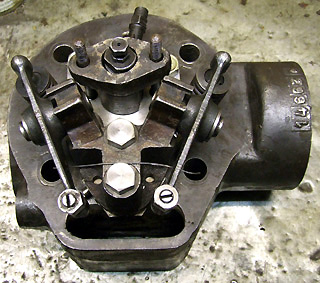
after some years. However, the existing attachments (rocker lever
block and nozzle holder) of MD2 and RL1c did not fit to the head,
which comes probably still from a type MD motor. After longer
puzzle about it, how the problem was to be solved by a specialty
firm here in Dresden. They manufactured an adapter that the accessories
makes suitable to the cylinder head.
 _
_ _
_
October 2006
Because the restoration of the benzene
locomotive is very complex and some difficulties are predictable
, it doesn't exist a schedule for this task. The work takes place
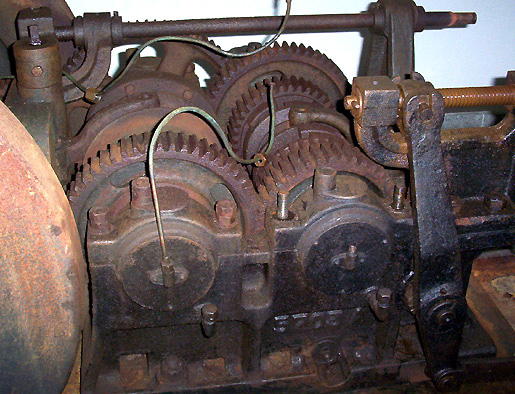
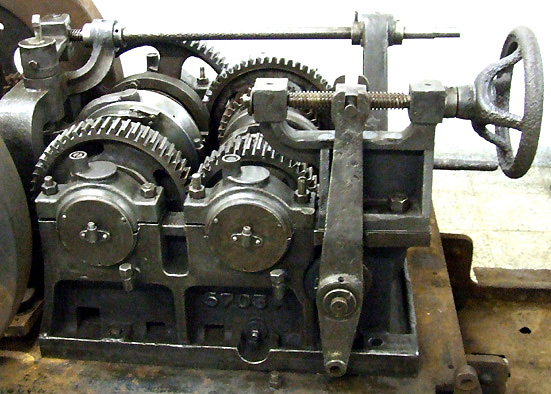
in small steps and rather besides. As the first stage this way
the gear box was divided and re-mounted. Only a disk, which broke
when forcing and the bearing bushes in two gear wheels had to
be renewed, all other parts can be used furthermore. For the refurbishing
of the locomotive framework the gear box is removable as a whole
of the locomotive later.
 _
_
May 2006
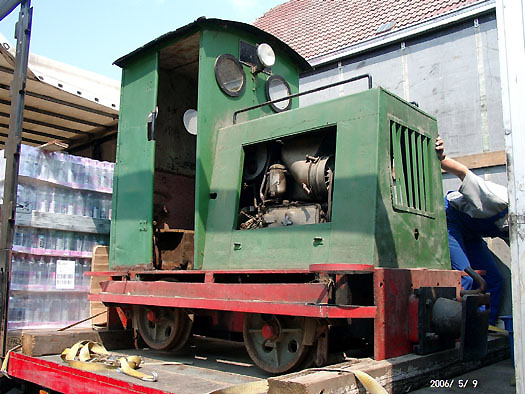
There is new acquisition in the collection:
a SCHÖMA Lo20. It looks with their porthole windows
a little as from an animated cartoon. The propulsion principle
with pendular axle and Cardan drive is remarkable. If the gauge
of the locomotive will be changed from 890mm to 600mm, it is to
be used in Glossen, because it is similar to the DIEMA locos working
there in former times.
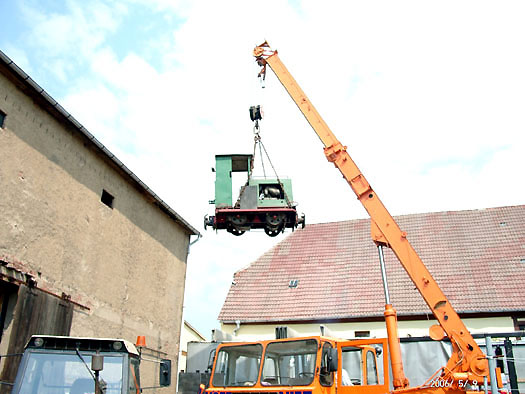 _
_
February 2006
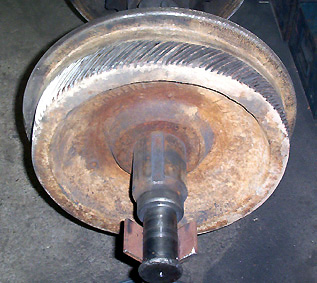
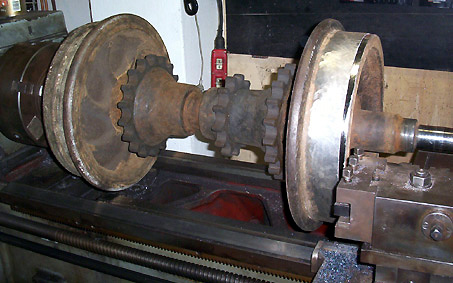
The French RL1a was functional
again after the repair of the engine, but it inclined to derail
and could not be pushed by hand not. The reason for it was that
the bearing surfaces of the wheels had strongly run in. Thus resulted
different wheel diameters, which had the consequence to force
strong the chain between both axes. When the axes were dismounted,
it turned out that the wheel circumferences were far away from
the ideal circle. Due to the extreme hardness of the bearing surfaces
(the material was cold-rolled over decades in use) it was necessary
to work with the friction disk, before the axes could on the centre
lathe. The diagonal grooves were removed again with a particularly
hard roughing disk. Partially up to 15mm material from the radius
were taken away. Fortunately the technical designers had planned
enough reserves.
 _
_
December 2005
In conjunction with the dismounted axle
of the Deutz OME117 one of the bearing-springs was lost. When
I picked up the loco I couldn't find it. After some unsuccessfull
trials to use other springs I had to order a new one, formed upon
a pattern. An old-established spring forge here in Dresden built
an excellent copy, to differ from the original only by some rust
holes at the old spring.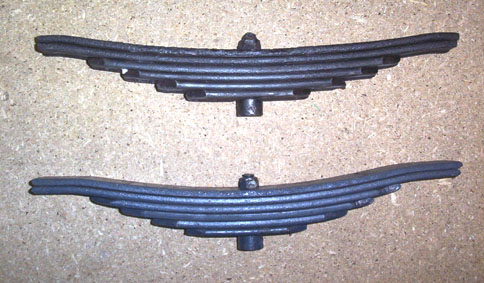
Oktober 2005
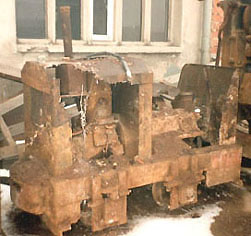
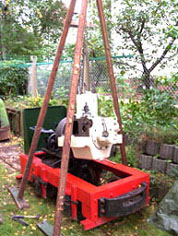
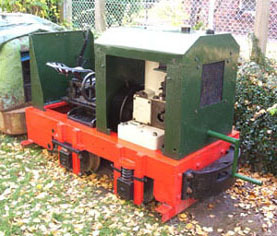
Since about 10 years the O&K MD1
is nearly complete refurbished, beside the completion of the motor.
But the essential workings on the engine are done, for example
the mounting of a new cylinder liner and new roller bearings for
the crankshaft. Because the motor needed too much space in the
workshop i decided to bring him outside on the loco and to finish
the workings open-air in spring . For the mounting of the motor
I used three pieces of decauville rails and a lifting block as
a crane. Not so easy was the transport of the body (350kg) and
the fly wheel (200kg) with a sack barrow from the shop into the
garden.
 _
_ -
-
September
2005
There are incidents you
may not believe it! Since the moment of its first action after
the reconstruction the motor of the "open" RL1a
had the feature of blowing out exhaust through all of his wholes.
It didn't look good and it was especially bad for the poor driver,
sitting close to the motor in a cloud of exhaust. That's why some
years ago I changed the piston rings - without visible success.
the second step was to replace the cylinder liner with a new built
one. But I reached no better results and there was only one possibility:
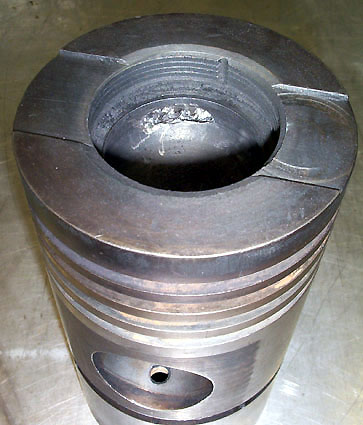
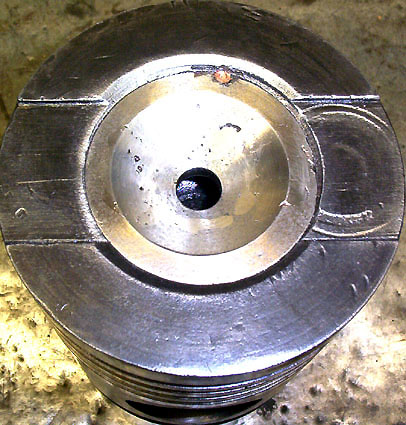
a whole in the piston. I checked it an found a big blowhole below
the cover of the Acro burning chamber. With the help of a friendly
company that is specialized for welding the piston was successfully
repaired. Now the compression of the motor is high and it runs
very satisfactory.
 _
_
August 2005
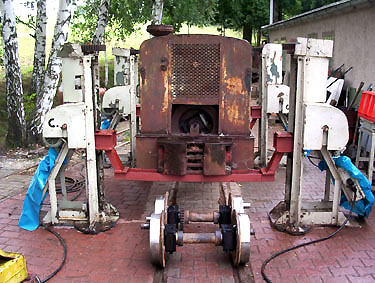
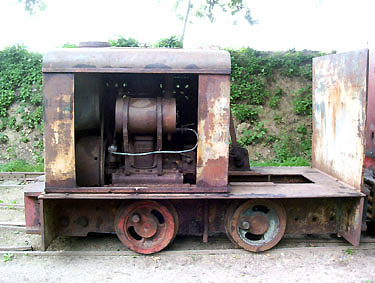
After a long time of staying
in rather poor condition on a flat truck the Deutz OME117
got her axes back now. A great help was the use of special, old,
electrical jacks constructed to lift up tramway cars. That the
axes don't originate from the same loco is to see on the different
colour. Occasionally gearbox and coupling rods will come back
to it's places.
 _
_
June 2005
 After the MD2 is completed
for some weeks the loco could show, that it's suitable for use.
Now it was possible to make the planned exchange of the MD2
with another loco from of the old O&K L180 type.
Partner in this deal is a mining museum that intends to bring
the visitors by train into the old mine. The museum needs a workable
loco for this project and doesn't have the opportunity to repair
the remaining L180. Also an old benzene driven engine isn't adapted
for an every day use. During the active time of the mine they
had a MD2 type in service. So we had the idea to change the locos.
Even though only the spark coil misses, the reconstruction of
the L180 will be a life-task. It is to check how much parts are
irreparable and can only be used as a model for new building.
But everybody needs challenges!
After the MD2 is completed
for some weeks the loco could show, that it's suitable for use.
Now it was possible to make the planned exchange of the MD2
with another loco from of the old O&K L180 type.
Partner in this deal is a mining museum that intends to bring
the visitors by train into the old mine. The museum needs a workable
loco for this project and doesn't have the opportunity to repair
the remaining L180. Also an old benzene driven engine isn't adapted
for an every day use. During the active time of the mine they
had a MD2 type in service. So we had the idea to change the locos.
Even though only the spark coil misses, the reconstruction of
the L180 will be a life-task. It is to check how much parts are
irreparable and can only be used as a model for new building.
But everybody needs challenges!
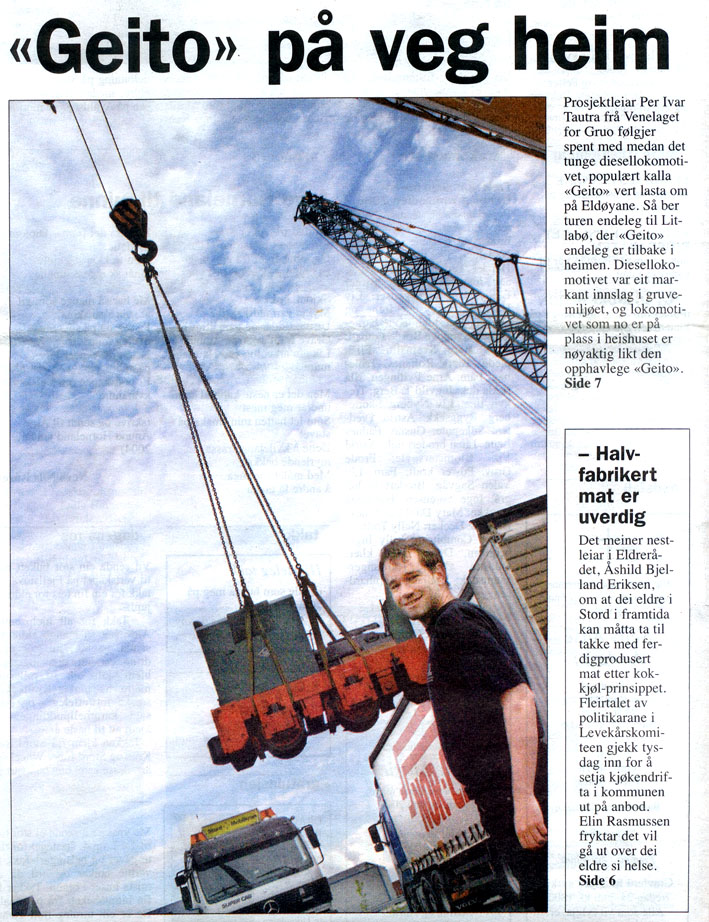
This was a part of the
report of the local press from the arrival of the MD2 in Norway:
April
2005
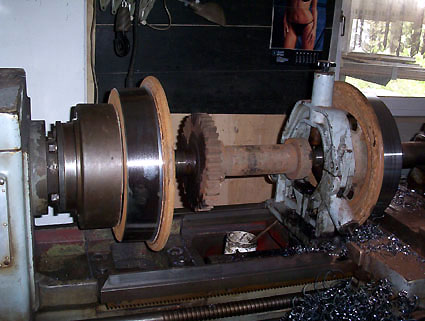 The some years ago bought Deutz
OME117 had wheels with different diameters because the
loco was a donator of spare parts for the operating engines and
had to give off one of its axes. Fortunately the changed axle
was part of the “scope of delivery” when I got the OME117.
After a longer period of preparation – we had to purchase
some special parts for our engine lathe – we could dress
to size the wheels of both axes and adapt the contact surfaces.
The thickness of the material is big enough to remove some millimeters
of steel without any problems. Now I can mount the OME on its
own axes again.
The some years ago bought Deutz
OME117 had wheels with different diameters because the
loco was a donator of spare parts for the operating engines and
had to give off one of its axes. Fortunately the changed axle
was part of the “scope of delivery” when I got the OME117.
After a longer period of preparation – we had to purchase
some special parts for our engine lathe – we could dress
to size the wheels of both axes and adapt the contact surfaces.
The thickness of the material is big enough to remove some millimeters
of steel without any problems. Now I can mount the OME on its
own axes again.
March 2005
 The roll out of the MD2
powered of itself happened! But it needed some works to do for
the running of the changed motor. It's a Deutz F2L712 type
and it got new nozzles and piston rings, the valves are grinded
and the cylinder head is overhauled. Furthermore the engine is
completely cleaned. For the coupling of the motor with the gearbox
an adapter was constructed and mounted. Now the loco looks nearly
like in it's active life time, only the paintworks had to be finished,
the doors of the bonnet had to be mounted and the electrical equipment
had to be completed. The finish will be the mounting of the copies
of the manufacturers plates.
The roll out of the MD2
powered of itself happened! But it needed some works to do for
the running of the changed motor. It's a Deutz F2L712 type
and it got new nozzles and piston rings, the valves are grinded
and the cylinder head is overhauled. Furthermore the engine is
completely cleaned. For the coupling of the motor with the gearbox
an adapter was constructed and mounted. Now the loco looks nearly
like in it's active life time, only the paintworks had to be finished,
the doors of the bonnet had to be mounted and the electrical equipment
had to be completed. The finish will be the mounting of the copies
of the manufacturers plates.
December
2004
The reconstruction of
the MD2 is in progress. Now it's to see how the loco looked
formerly. But it isn't possible to remove the holes in the surface
of the frame made by corrosion. Theybear witness of the decades
this "scrap" stood around unsheltered. Now the gearbox
and chassis are fully functionable. The next step will be to mount
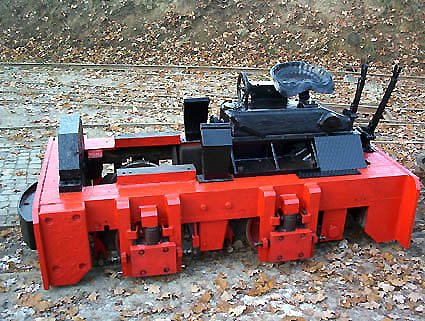
the motor and the bonnet. The pictures show the loco in Schechat
near Vienna and in it's recent condition.
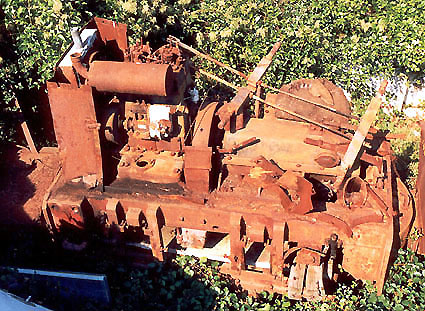 _
_
October 2004
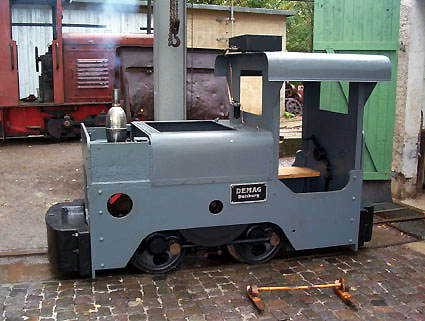 Just
in time to the 14th International Feldbahn Meeting in Glossen
the DEMAG ML15 was ready to show what she can. The motor
runs uniformly from the first starting after about 40 years of
standstill! The reconstruction of the ML15 was a real teamwork
of the "Feldbahnschauanlage Glossen" club members. Now
the motor owns a new cylinder liner, valves, piston rings, injection
pump and a waorkmanlike repaired radiator. Furthermore the fractured
steel bottom tray of the gear box was welded by a specialist and
a virgin nozzle was mounted. The exhaust box was re-manufactured
in the traditional manner. But the succes was worth the trouble:
the motor runs perfectly consistent and the loco has a very good
riding quality - because of its three point attachment. But the
driver is a poor guy: the noise made by motor and gearbox inside
the iron cab is horrible. 60 years before the loco was a high
tech product, may be the locomitive driver was proud of "his"
loco anyway.
Just
in time to the 14th International Feldbahn Meeting in Glossen
the DEMAG ML15 was ready to show what she can. The motor
runs uniformly from the first starting after about 40 years of
standstill! The reconstruction of the ML15 was a real teamwork
of the "Feldbahnschauanlage Glossen" club members. Now
the motor owns a new cylinder liner, valves, piston rings, injection
pump and a waorkmanlike repaired radiator. Furthermore the fractured
steel bottom tray of the gear box was welded by a specialist and
a virgin nozzle was mounted. The exhaust box was re-manufactured
in the traditional manner. But the succes was worth the trouble:
the motor runs perfectly consistent and the loco has a very good
riding quality - because of its three point attachment. But the
driver is a poor guy: the noise made by motor and gearbox inside
the iron cab is horrible. 60 years before the loco was a high
tech product, may be the locomitive driver was proud of "his"
loco anyway.
September
2004
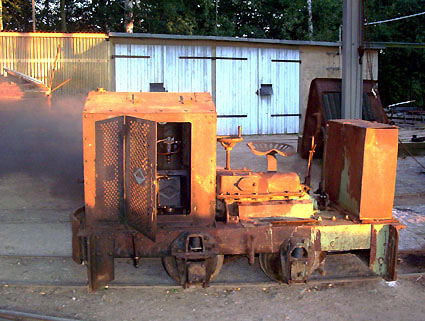 After a short but intensive reconstruction
the RL1a from France could show what it can: it runs up
the hills like a rabbit! And that after about 40 years of standstill.
But there were seriuos defects at the motor and the gearbox. the
gearbox was without any oil at all and rather rusty but with patience
and some power it could made free to move. The motor had damages
by frozen water as well in the cylinder haed as in the jacket.
Both of them could be repaired by liquid rubber and pressing screws.
It would be possible to weld the parts, but I will wait and observe
the motor. After the first rides no cooling water cames out of
the engine ... At the photo the loco is to see in last light of
the sunset and with a cloud of smoke from the exhaust pipe.
After a short but intensive reconstruction
the RL1a from France could show what it can: it runs up
the hills like a rabbit! And that after about 40 years of standstill.
But there were seriuos defects at the motor and the gearbox. the
gearbox was without any oil at all and rather rusty but with patience
and some power it could made free to move. The motor had damages
by frozen water as well in the cylinder haed as in the jacket.
Both of them could be repaired by liquid rubber and pressing screws.
It would be possible to weld the parts, but I will wait and observe
the motor. After the first rides no cooling water cames out of
the engine ... At the photo the loco is to see in last light of
the sunset and with a cloud of smoke from the exhaust pipe.
July 2004
 Now the RL1c has back her
roof: as well the reconstruction of the locomotive isn't
finished yet, outwards it is nearly complete. The roof is an original
part from a more than 30 years ago scrapped loco. It remains in
a brick yard and can be used now for it's primal purpose. Because
of the fact that the RL1c had a roof originally the replacement
is very enjoyable. Now you can make a "convenient" ride
by the loco as well in sunshine as in rain ...
Now the RL1c has back her
roof: as well the reconstruction of the locomotive isn't
finished yet, outwards it is nearly complete. The roof is an original
part from a more than 30 years ago scrapped loco. It remains in
a brick yard and can be used now for it's primal purpose. Because
of the fact that the RL1c had a roof originally the replacement
is very enjoyable. Now you can make a "convenient" ride
by the loco as well in sunshine as in rain ...
June 2004
That's life! During
the holiday trip another O&K Montania loco cames into the
collection: a MD2 type. It has a broadened frame for a
gauge of 750mm or more, but today the gauge is 600mm. May be it
wouldn't be possible to find out the identity of the loco, because
mostly all parts of th housing are lost. An advice that the place
of assembling could be the O&K plant in Budapest gives the
hungarian radiator. The loco remains without any shelter for decades
on the company site of a dealer of construction machines in Vienna
before it came to the railway museum in Schwechat near Vienna.
From this museum it could be acquired by change with another loco.
The actually condition of the MD2 is a real challenge for every
friend of narrow gauge railroads!
April 2004
 And another new entrant: From
France I got a Montania RL1a type with a closed bonnet.
It represents the change to the RL1c type, although the loco has
the 11 H.P. engine. The machine was delivered to a pit, but for
the service above ground. That's why it hasn't any mining equipment.
The general condition of the loco isn't so bad, the motor is able
to turn but only with strong arms. The seat for the driver and
the lever for the brake are missing, but I can replace them from
my "store". The loco is - without any later additions
- very authentic and it owns remarkable "buffer plates"
for handling mining cars.
And another new entrant: From
France I got a Montania RL1a type with a closed bonnet.
It represents the change to the RL1c type, although the loco has
the 11 H.P. engine. The machine was delivered to a pit, but for
the service above ground. That's why it hasn't any mining equipment.
The general condition of the loco isn't so bad, the motor is able
to turn but only with strong arms. The seat for the driver and
the lever for the brake are missing, but I can replace them from
my "store". The loco is - without any later additions
- very authentic and it owns remarkable "buffer plates"
for handling mining cars.
March 2004
 New
entrants: By fortunate circumstances I could buy one of the favoured
DEMAG ML15. Just now the reconstruction is in process,
I hope, that the loco will run at the International Feldbahn Meeting
in Glossen from 15th to 17th of october 2004.
New
entrants: By fortunate circumstances I could buy one of the favoured
DEMAG ML15. Just now the reconstruction is in process,
I hope, that the loco will run at the International Feldbahn Meeting
in Glossen from 15th to 17th of october 2004.
 Anymore
another new loco came in change with a DEUTZ OME117 to my collection:
the DEUTZ OMZ117 No. 11918. It's an early exemplar of this
type without the typical air filter on the top of the bonnet and
with a lower cabin. The equipment for the starting of the engine
with compressed air is completely preserved . But before running
the loco must be reconstructed, it stands on a play ground for
many years ...
Anymore
another new loco came in change with a DEUTZ OME117 to my collection:
the DEUTZ OMZ117 No. 11918. It's an early exemplar of this
type without the typical air filter on the top of the bonnet and
with a lower cabin. The equipment for the starting of the engine
with compressed air is completely preserved . But before running
the loco must be reconstructed, it stands on a play ground for
many years ...
 RL3:
There are some troubles yet with this loco: the carriage is repaired
and the electrical equipment is replaced, but there are some problems
with the fuel injection pump. That's why the motor doesn't run
consistent and some times it sounds distressing. There fore I
sent the fuel pump to the manufacturer BOSCH and they will repair
it, after over 60 years!
RL3:
There are some troubles yet with this loco: the carriage is repaired
and the electrical equipment is replaced, but there are some problems
with the fuel injection pump. That's why the motor doesn't run
consistent and some times it sounds distressing. There fore I
sent the fuel pump to the manufacturer BOSCH and they will repair
it, after over 60 years!
August 2003
Since spring there were
done some other, essential workings at the RL3, but it
will run self-propelling at the earliest at the "Day of memorials"
in September. It's founded in the fact, that one of the axle bearings
was fixed in his guidance and that's why the axle couldn't move
in the suspension. Because of this fact the loco didn't have a
correct running and one coupling rod forced. That's why it was
necessary to disassamble the axes. By the way the brake would
completely finished. Now only the fan and the electrical equipment
is to replace.
In the meantime the Deutz
MLH514 was brought to Glossen and the heavy additional weights
were mounted, with them the loco has a weight of 2,8 tons. Now
the reconstruction is nearly ended. That the term "reconstruction"
is actually entitled, comes to the fore with the comparison of
the pictures from the finding situation and the recent state of
the loco. At first the motor, the gear box and the buffers were
absent and in 3 of the 4 axle ball bearings were no balls ...
 _
_
March 2003
Just now the reconstruction
of the "Montania" RL3 gets up to speed, it should
be presented in action to public at Easter.
After staying without
use in an old brick yard building with leaky roof for 30 years
the corrosion made a "good" job at the loco. It weights
some kilogramms less than during it's operating days, especially
after the removal of the rust. All the parts of the loco are very
rusted, but the construction is so that there is enough material
at all. It isn't provided to sandblast and revarnish the RL3.
On the one hand for saving the authentic character and on the
other hand because the results of the corrosion will be observable
further on. The oiled, inner parts of the gear box and the engine
are in an excellent condition (gold-coloured oil!), the intermediate
shaft is easy turnable by hand. Unfortunately the comlepete electric
equipment of the locomotive isn't existing yet, it was disassambled
during the bad times after World War II. Of course the cruide
oil leading parts suffered from the long standstill, so the plungers
of the injection pump were fixed, the pressure of one oft the
nozzles was to low, the fuel tank was littered and so on. The
cylinder head had to work of: grinding the valve seats, loosing
the rocker arms ... After passing several times for this tasks
now the first success is to see: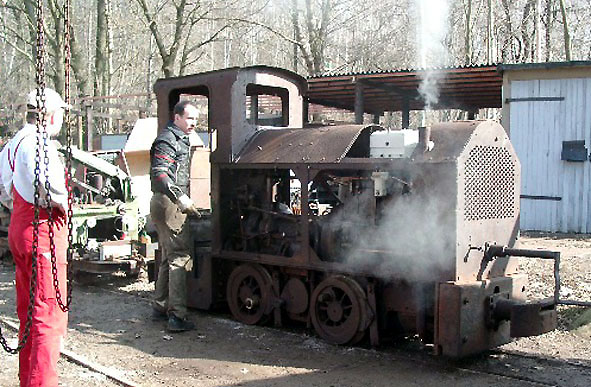
At the 9th of March the
engine (of course started by hand) was running the first time
and it run very consistent! Salutatory it pushed out much grime
and than it blowed out very beautiful rings of smoke.
Now it's to refurbish
the cooling system and the bearing of the coupling rod yet.





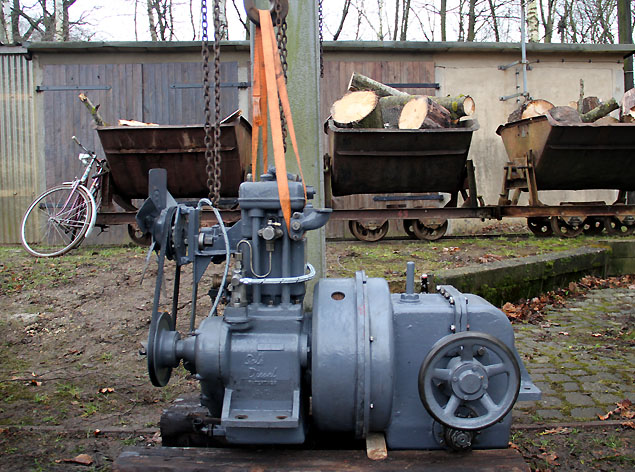


































 _
_ _
_